

1 week ago
Maharashtra Urges Publishers to Improve Affordable Educational Materials
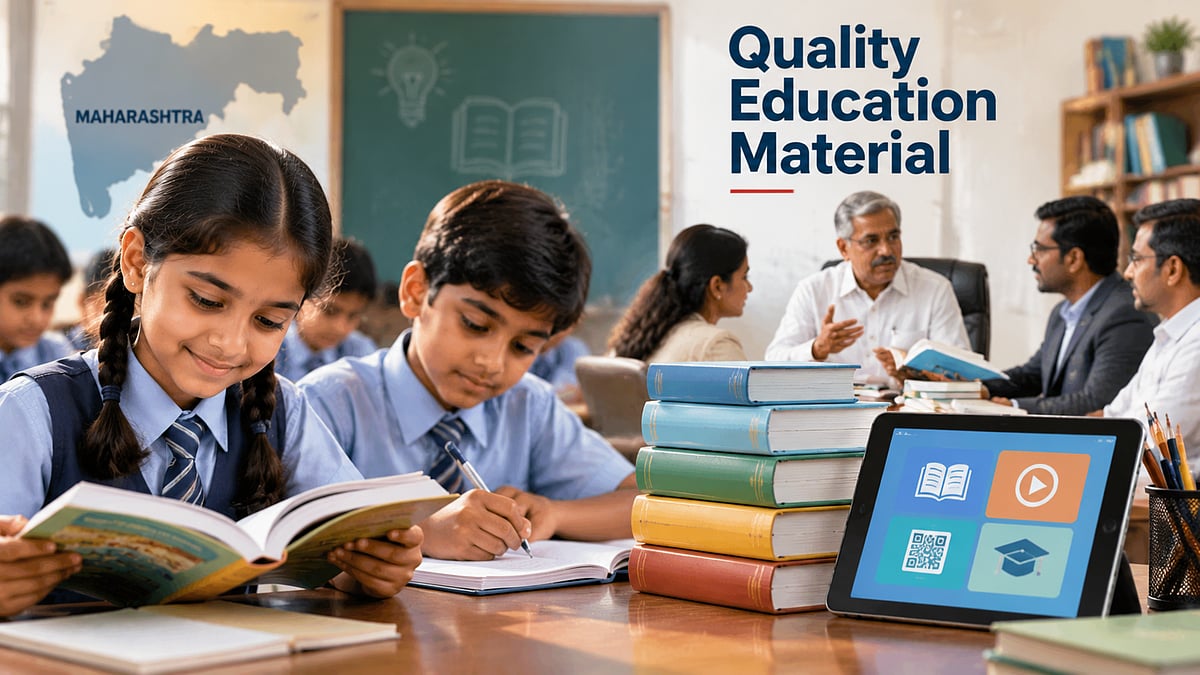
Maharashtra’s education minister met with publishers to discuss children’s learning materials.
He said books and other resources should be correct, affordable and suitable for children’s ages.
Experts should check the materials for mistakes in facts, grammar and history.
Digital tools such as e-books, videos and artificial intelligence should follow the school curriculum.
The minister also wants learning resources to respect students’ mother tongues and local dialects.
Schools, publishers and the government were asked to help lower costs for families.
The department wants more children to read books.
It suggested libraries, book festivals, reading contests and book exhibitions.

School Education Minister Dadaji Bhuse urged publishers to provide accurate, affordable and age-appropriate learning materials.
Publishers were asked to consult subject, grammar and history experts to prevent factual and language errors.
The government wants schools and publishers to find ways to reduce families’ education-related expenses.
Digital resources, including artificial intelligence, e-books, QR codes and videos, should align with curricula and students’ age groups.
Officials were directed to promote reading through school libraries, book festivals, competitions and the “Don’t give a bouquet, give a book” campaign.
- Who
- Maharashtra School Education Minister Dadaji Bhuse, publishers, schools and education officials.
- What
- The education department asked publishers to improve the accuracy, affordability and suitability of learning materials and promote reading.
- Where
- A meeting at Mantralaya in Mumbai.
- When
- Tuesday.
- Why
- To protect students’ interests, reduce parents’ expenses, improve educational quality and strengthen reading habits.
Key facts
- Minister
- Dadaji Bhuse, Maharashtra School Education Minister
- Meeting location
- Mantralaya, Mumbai
- Material standards
- Educational content should be accurate, affordable, age-appropriate, scientifically sound and fact-based.
- Quality checks
- Publishers were urged to use subject, grammar and history specialists.
- Digital learning
- Artificial intelligence, e-books, QR codes, video resources and practice question sets were discussed.
- Language focus
- Resources should consider students’ mother tongues and local dialects.
- Reading initiatives
- Proposals include small school libraries, book festivals, reading competitions and book exhibitions.
Sources
Related news
Balbharati Marks 60 Years of Maharashtra Educational Service
Gujarat, Amazon Partner on Free Textbook Home Delivery

Audit Flags Over INR 300 Crore in MPTBC Education Dues
Justice Varale Questions Kumbh Spending Amid Marathi School Closures
Yogi Promotes Exam Warriors at Gomti Book Festival

Justice Varale Urges More Education Spending for Marathi Schools
PMK Condemns Headmasters’ Alleged Costs for Tamil Nadu Breakfast Scheme

Vizag Probe Underway After Teacher Allegedly Slaps Six-Year-Old
Government seeks three years of Jadavpur University executive council records

Monsoon Halts Classes at 230 Building-Less Schools in Madhya Pradesh
