6 days ago
RBI Sells Rs 50,000 Crore Bonds to Drain Liquidity
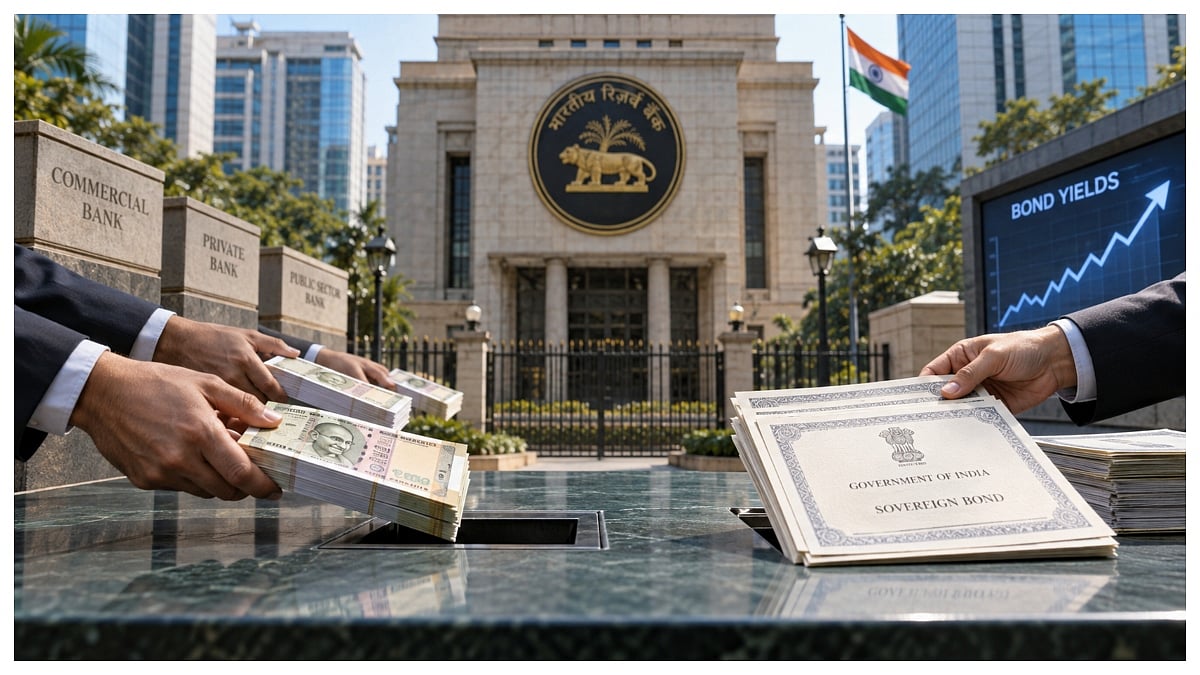
Banks had much more cash than they needed.
The Reserve Bank of India bought some of that cash by selling government bonds.
This removes money from the banking system for a longer period.
The RBI did this because very high cash levels can push short-term interest rates too low.
The sale does not directly change the repo rate.
Existing floating-rate loans will continue to follow their contract terms.
However, banks may later raise deposit and new-loan rates if they need more money.
People saving in fixed deposits could benefit if banks offer higher rates.

The Reserve Bank of India sold government bonds worth Rs 50,000 crore on September 17.
The sale was its first comparable net bond sale since November 2017.
The RBI acted after banks entered September with surplus liquidity of nearly Rs 10.25 lakh crore.
The auction was the first part of a planned Rs 1 lakh crore bond-sale programme.
Existing loan EMIs will not automatically rise, but future borrowing costs could increase if funding becomes more expensive.
- Who
- The Reserve Bank of India and Indian banks.
- What
- The RBI sold government bonds worth Rs 50,000 crore through an open market operation.
- Where
- The announcement and auction were reported from Mumbai.
- When
- The auction took place on September 17, with further sales planned for September 21 and September 28.
- Why
- The RBI wanted to remove excess liquidity from the banking system and keep short-term rates aligned with its policy level.
Liquidity Tightening Benefits
Potential Borrowing Costs
Effect on financial stability
Liquidity Tightening Benefits
The bond sale removes excess cash and can help keep overnight borrowing rates near the RBI's intended policy level.
Potential Borrowing Costs
Removing liquidity may leave banks with less spare cash and force them to seek deposits or other funding.
Impact on borrowers
Liquidity Tightening Benefits
Existing loan EMIs should not automatically rise because the bond sale does not change the repo rate.
Potential Borrowing Costs
New home, vehicle, personal and business loans could eventually become more expensive if banks face higher funding costs.
Impact on depositors
Liquidity Tightening Benefits
Banks competing for funds could raise fixed-deposit rates, potentially benefiting savers.
Potential Borrowing Costs
Higher deposit rates are not guaranteed after a single auction.
Key facts
- Bond sale
- Rs 50,000 crore of government securities
- Comparable previous sale
- November 2017
- Banking-system surplus
- Nearly Rs 10.25 lakh crore, or about 3.8% of deposits
- Overall programme
- Rs 1 lakh crore announced on September 11
- Remaining planned auctions
- Two sales of Rs 25,000 crore each on September 21 and September 28
- Securities sold
- Six government securities maturing between 2029 and 2032
- Largest allocation
- Rs 18,840 crore in the 8.28% Government Security maturing in 2032
Sources
Related news

RBI Announces ₹1 Lakh Crore Bond Sales to Drain Liquidity
RBI Sells ₹500 Billion Bonds to Drain Surplus Liquidity

RBI’s ₹1 Lakh Crore Bond Sales Hit Short-Term Securities
RBI Absorbs ₹25,000 Crore in Second OMO Bond Sale
RBI Absorbs Surplus Liquidity Through Variable Rate Reverse Repo Auctions

RBI Announces ₹1 Lakh Crore Government Bond Sales

Rani Mukerji’s Mother’s Prayer Meeting Set for September 27

Myntra Plans 26,000 Seasonal Jobs for Big Fashion Festival

Divi’s, MEIL Owners Lead Hyderabad’s Hurun Rich List

Matang Community Plans Statewide March Seeking SC Sub-Quota Implementation

Vehicle On Belapur-Uran Tracks Detains Local Train In Navi Mumbai