2 hrs ago
Modi’s 25-Year Governance Record Framed as Reform Legacy

The article says Narendra Modi has spent 25 years trying to change how government works.
It describes early projects in Gujarat that improved electricity, water management, farming and public complaints.
After 2014, the same approach was applied across India.
Examples include toilets, bank accounts, digital payments, tax reform and faster project monitoring.
The article says these programmes used technology to reach many people at once.
It also says reforms opened more opportunities for businesses, startups and private companies.
Some reforms focused on helping banks, homebuyers, workers and manufacturers.
The writer believes the biggest change is that people can increasingly use phones, bank accounts and online services instead of offices and middlemen.
The article concludes that Modi should be remembered primarily as a reformer.

The article portrays Narendra Modi’s 25-year political career as defined by structural governance reform and measurable delivery.
It links Gujarat initiatives such as Jyotigram, SWAGAT, water conservation and investment facilitation to later national policies.
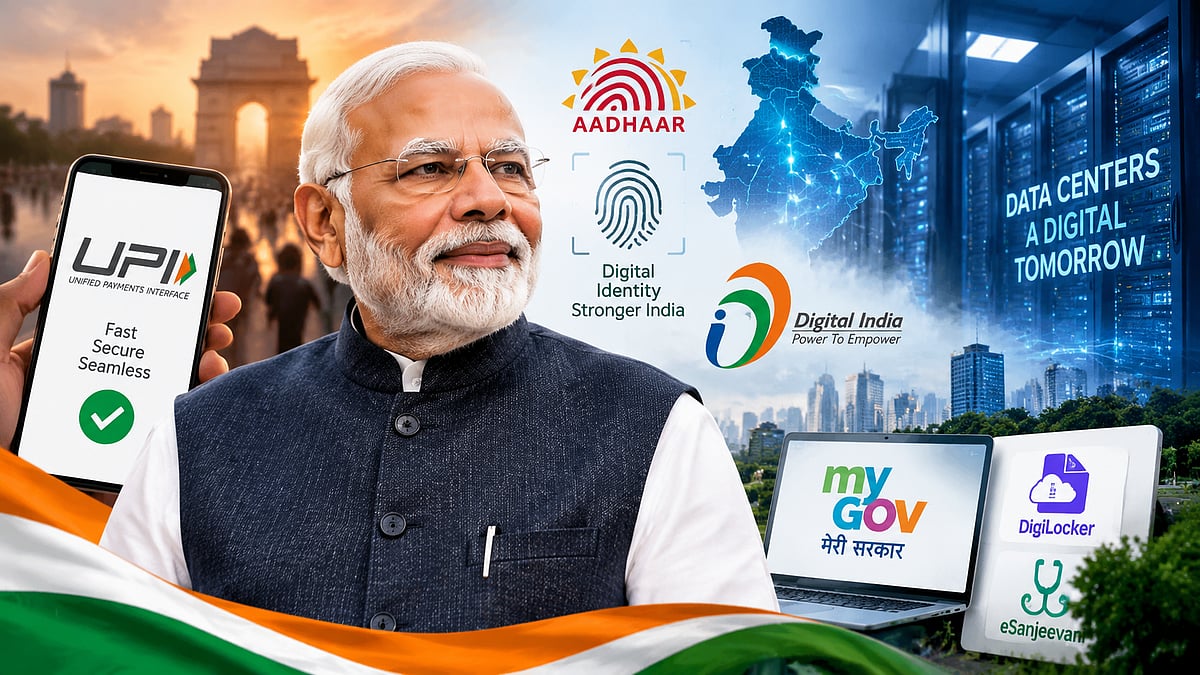
National reforms highlighted include Swachh Bharat, JAM, GST, the Insolvency and Bankruptcy Code, UPI and PRAGATI.
The article also credits Modi’s governments with opening space to private companies, promoting manufacturing, simplifying regulation and improving digital procurement.
It argues that technology and public infrastructure have changed how citizens experience the Indian state, while presenting Modi as India’s greatest reformer.
- Who
- Narendra Modi and the governments associated with his tenure; the article was written by a national spokesperson of the Bharatiya Janata Party.
- What
- An opinion article presents Modi’s 25-year political record as a sustained programme of governance and economic reform.
- Where
- The reforms described began in Gujarat and were later applied across India.
- When
- The article covers the past 25 years, including Gujarat initiatives beginning in 2003 and national reforms launched after 2014.
- Why
- The stated objective was to fix structural bottlenecks, simplify government systems, use technology and measure outcomes.
Key facts
- Early Gujarat initiatives
- Jyotigram and SWAGAT were launched in 2003, focusing on rural electricity and grievance redressal.
- Sanitation
- The article says rural sanitation coverage rose from 39% in 2014 to 100% in 2019, according to government data.
- Digital payments
- The article reports that UPI processed more than 24,000 crore transactions in FY2025-26.
- Project monitoring
- It says PRAGATI had reviewed projects worth more than ₹85 lakh crore by 2026.
- Industrial incentives
- The article reports that PLI investment exceeded ₹2.4 lakh crore and production or sales exceeded ₹22.6 lakh crore by 2026.
- Defence manufacturing
- Defence production reached ₹1.5 lakh crore in FY2024-25, while exports reached ₹23,622 crore, according to the article.
- Startup ecosystem
- More than two lakh Department for Promotion of Industry and Internal Trade-recognised startups were reported by 2026.
Sources
Related news
Modi’s 25-Year Leadership Record Highlights India’s Broad Transformation

Modi Pitches Deregulation and Reforms as India’s Growth Driver
Modi’s 25-Year Public Journey Framed as Service and Nation-Building
How Modi-Era Policies Reshaped India’s Digital Economy
Modi Calls India a Bright Spot for Global Growth

Policymaker Calls Deregulation Key to India’s Next-Generation Reforms
Gajendra Chauhan Praises PM Modi’s Development Pace on Birthday
Andhra Pradesh CM Chandrababu Naidu Wishes PM Modi Birthday

Anant Nag Praises Modi After Receiving Dadasaheb Phalke Award
Jackie Shroff Wishes Narendra Modi on 76th Birthday
Modi at 76: From Gujarat Chief Minister to National Leader