2 hrs ago
ISRO role remains central as private firms take routine manufacturing

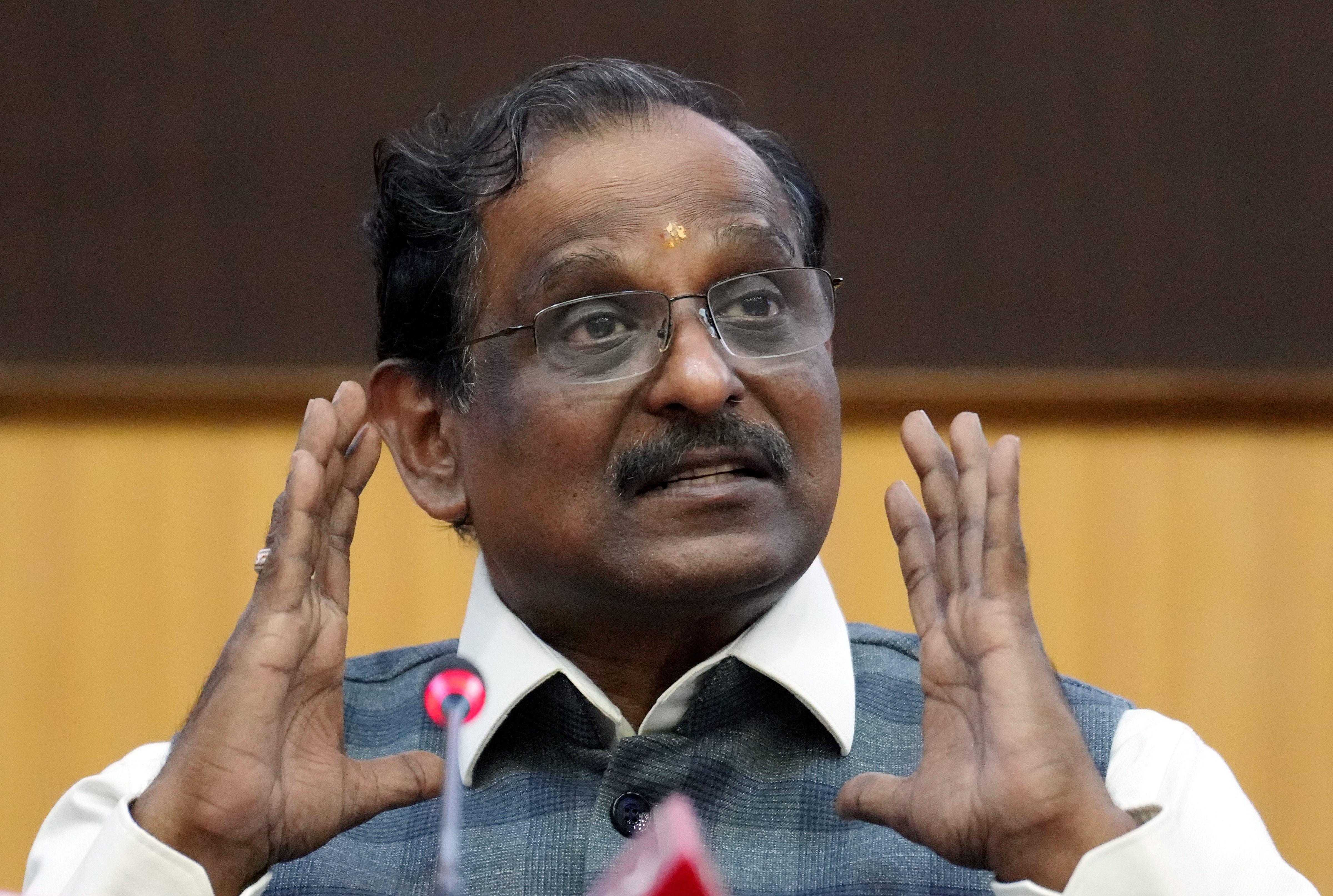
Pawan Goenka said India’s space agency, ISRO, is not becoming less important.
Some routine manufacturing jobs may move to private companies.
This process has already started with the Small Satellite Launch Vehicle.
Companies will need the right technical skills before they can build launch vehicles independently.
ISRO will help them during the transition, which could take six to seven years.
Important systems, including human-rated and strategic rockets, will stay with ISRO.
Goenka said technology is usually licensed rather than permanently given away.
He believes this will let ISRO spend more time on difficult missions and new technologies.

Pawan Goenka said ISRO is not being hollowed out by private-sector expansion.
Private companies and public-sector undertakings will gradually take on mature, routine manufacturing.
Independent private launch-vehicle manufacturing could take six to seven years, with ISRO support.
Human-rated, strategic and newly developed systems such as the RLV will remain with ISRO.
The transfer aims to free ISRO for advanced technologies, research and high-impact missions.
- Who
- Pawan Goenka, chairman of IN-SPACe, and the Indian Space Research Organisation were central to the discussion.
- What
- India is gradually transferring some mature and routine space manufacturing to private companies and public-sector undertakings.
- Where
- India’s space sector.
- When
- The transition is expected to take six to seven years for independent private launch-vehicle manufacturing.
- Why
- The aim is to increase launch frequency and expand the space economy while allowing ISRO to focus on advanced technology and major missions.
Concerns about ISRO’s role
Goenka’s position
Effect on ISRO
Concerns about ISRO’s role
Moving manufacturing to private companies could reduce ISRO’s work and importance.
Goenka’s position
Routine work will move outside ISRO so its employees can focus on research, development and high-impact missions; Goenka said the agency’s workload is growing.
Technology transfer
Concerns about ISRO’s role
Transferring mature technologies may be seen as ISRO giving up control of them.
Goenka’s position
Goenka said most transfers are licenses, allowing ISRO to retain, develop and use the technologies while earning licensing fees and royalties.
Workforce impact
Concerns about ISRO’s role
Greater private-sector participation could reduce ISRO’s workforce or lead employees to leave.
Goenka’s position
Goenka acknowledged that some employees may move to private companies but said ISRO retains a strong talent pool and institutional structure.
Key facts
- Speaker
- Pawan Goenka, chairman of IN-SPACe
- Transfer process
- Mature technologies and some routine manufacturing are being licensed or transferred to private companies and public-sector undertakings.
- Timeline
- Private companies could take six to seven years to manufacture launch vehicles independently.
- ISRO support
- ISRO will continue supporting companies during the transition and can continue using and improving transferred technologies.
- Excluded systems
- Human-rated and strategic launch vehicles, along with newer systems such as the reusable launch vehicle, will remain with ISRO.
- Policy framework
- The process is governed by the Indian Space Policy approved in 2023, with major decisions cleared by the Space Commission.
- Future workload
- Goenka cited Chandrayaan-4, the Bharat Space Station, lunar, Venus and Mars missions, NavIC expansion, the RLV and 21 SBS satellites.
Quotes
Pawan Goenka
Chairman of IN-SPACe, discussing the governance of technology transfers and private-sector participation in India’s space sector
“None of these things are ad hoc sort of actions being taken by a single body.”
 CNBC TV 18
Sources
Related news

ISRO Staff Seek Clarity Over Private Space-Sector Expansion

ISRO Shifts Launch Vehicle Manufacturing Toward India’s Private Sector
ISRO Rejects Privatisation Claims, Defends Future National Role

India targets 50 annual launches as ISRO, private sector expand
ISRO Rejects Privatisation Claims Amid Push for Private Space Growth

ISRO Staff Bodies Seek Clarity on Reported Privatisation Push

ISRO Chief Assures Employees Agency Will Remain Government-Run