

6 days ago
Congress Debates Who Should Pay for AI Data Centers
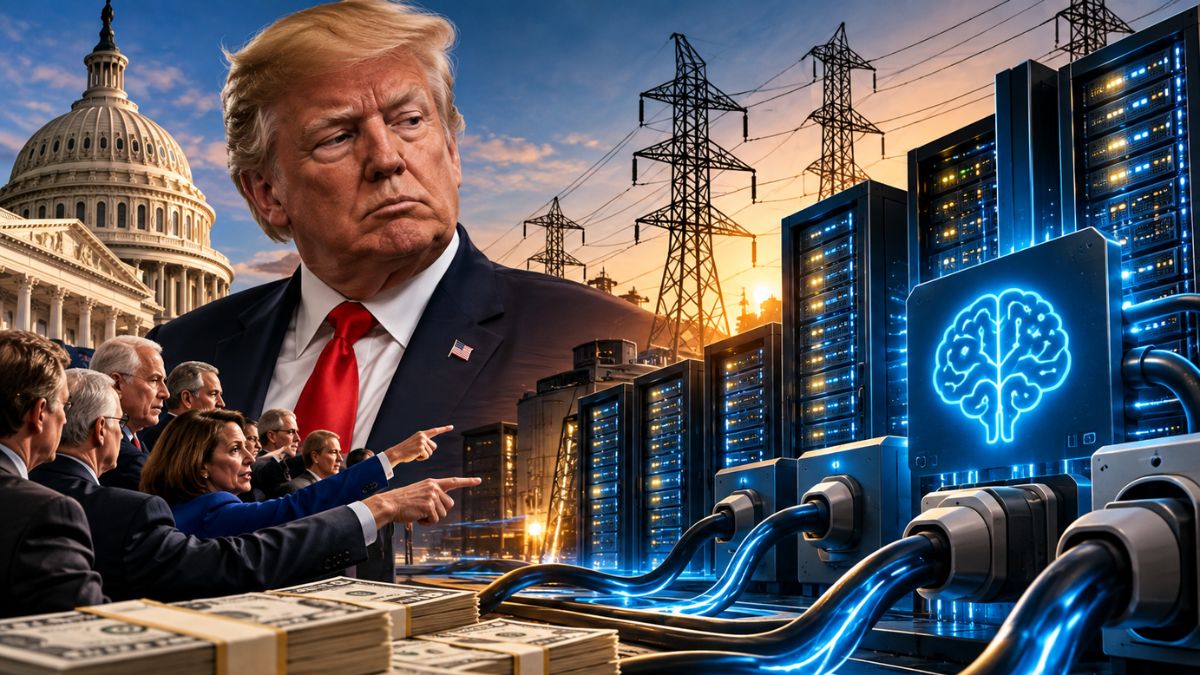
AI data centers are large buildings filled with computers that use a lot of electricity.
New data centers may require utilities to build more power plants, transmission lines, and local equipment.
The Ratepayer Protection Act would ask states to make these large customers pay the extra costs.
The House approved the bill by a vote of 417-3.
The Senate did not approve it by unanimous consent, and senators are expected to consider it again.
Supporters say families and small businesses should not pay for infrastructure used by large technology companies.
Critics say the bill is too weak because states would only have to consider its standards.
A competing proposal would create mandatory requirements for even larger electricity users.
The debate is growing as data centers also raise concerns about water use and local infrastructure.

The House passed the Ratepayer Protection Act 417-3 on September 16, with 12 lawmakers abstaining.
The bill would require states to consider making data centers using at least 100 megawatts pay for related grid upgrades.
The Senate previously rejected the measure by unanimous consent, and its future remains uncertain.
Supporters say the legislation would protect households and small businesses from subsidizing AI infrastructure.
Critics say the bill’s standards are voluntary and do not provide strong enough consumer protections.
- Who
- Members of Congress, utilities, large data-center operators, households, and small businesses are involved in the debate.
- What
- Congress is considering legislation about whether large AI data centers should pay the full cost of electricity infrastructure built for them.
- Where
- The legislation concerns electricity systems and data centers across the United States.
- When
- The House passed the bill on September 16; the Senate rejected it by unanimous consent on September 17 and is expected to take it up again this week.
- Why
- The debate is driven by rapidly rising electricity demand from data centers and concerns that households and small businesses could bear the cost of grid upgrades.
Critics of the bill
Supporters of the bill
Strength of requirements
Critics of the bill
Critics, including Senator Martin Heinrich and Senator Chuck Schumer, argue that the bill is voluntary because state utility commissions would only have to consider its standards.
Supporters of the bill
Supporters say the measure would encourage states to create rate structures and agreements requiring large electricity users to cover the incremental costs they create.
Consumer protection
Critics of the bill
Critics say the proposal does not provide enough protection and could increase costs for consumers across the board.
Supporters of the bill
Supporters say it would prevent families, farmers, seniors, and small businesses from paying for infrastructure needed by large data centers.
Alternative approach
Critics of the bill
Heinrich supports the GRID Savings Act, which would impose mandatory cost requirements on very large users and give the Federal Energy Regulatory Commission clearer authority over connections.
Supporters of the bill
The Ratepayer Protection Act’s supporters favor its approach of requiring states to consider protections while allowing the country to expand its AI infrastructure.
Key facts
- Bill
- Ratepayer Protection Act
- House vote
- Passed 417-3 on September 16, with 12 abstentions
- Coverage threshold
- Large electricity users with peak demand of at least 100 megawatts
- Supporters
- Say large data centers should pay for the new generation, transmission, and distribution infrastructure they require
- Senate status
- Previously rejected under unanimous consent; further consideration is expected
- Competing proposal
- The GRID Savings Act would target very large users, including data centers using at least 150 megawatts
- Electricity-demand figure
- Data-center operators requested 700 gigawatts of power-connection development from utilities in 2025
- Water use
- A medium-sized data center can use up to about 110 million gallons of cooling water annually, according to the Environmental and Energy Study Institute
Quotes

Martin Heinrich
New Mexico senator and top Democrat on the Senate Energy and Natural Resources Committee
“America can lead the world in AI without forcing families, farmers, seniors, and small businesses to foot the bill for the massive energy demands of data centers.”
 financialexpress.com
“Sen. Husted’s bill is a fraud, it’s voluntary, no company has to do it. The bill we have is mandatory. It is much stronger, and it is what is needed”
financialexpress.com
Sources
Related news

House Passes Ratepayer Protection Act Targeting AI Data Center Costs

US AI Boom Requires $110 Billion for New Power Plants
San Jose AI Data Center Boom Faces Local Resistance

AI Power Demand Drives America’s Electricity Infrastructure Race

AI Boom Brings Rising Demands for Power, Water and Land

India’s AI Expansion Faces Growing Power and Infrastructure Demands

Exelon Cuts Data Center Pipeline Amid AI Pushback
