

5 days ago
India Telecom Premiumisation Raises User Payments Without Tariff Hikes
India’s phone companies are trying to earn more money from each customer without immediately raising all prices.
This strategy is called premiumisation.
Airtel removed some cheaper plans, so some customers may choose plans that cost more.
Jio kept its Rs 299 plan but offered members protection from future price increases.
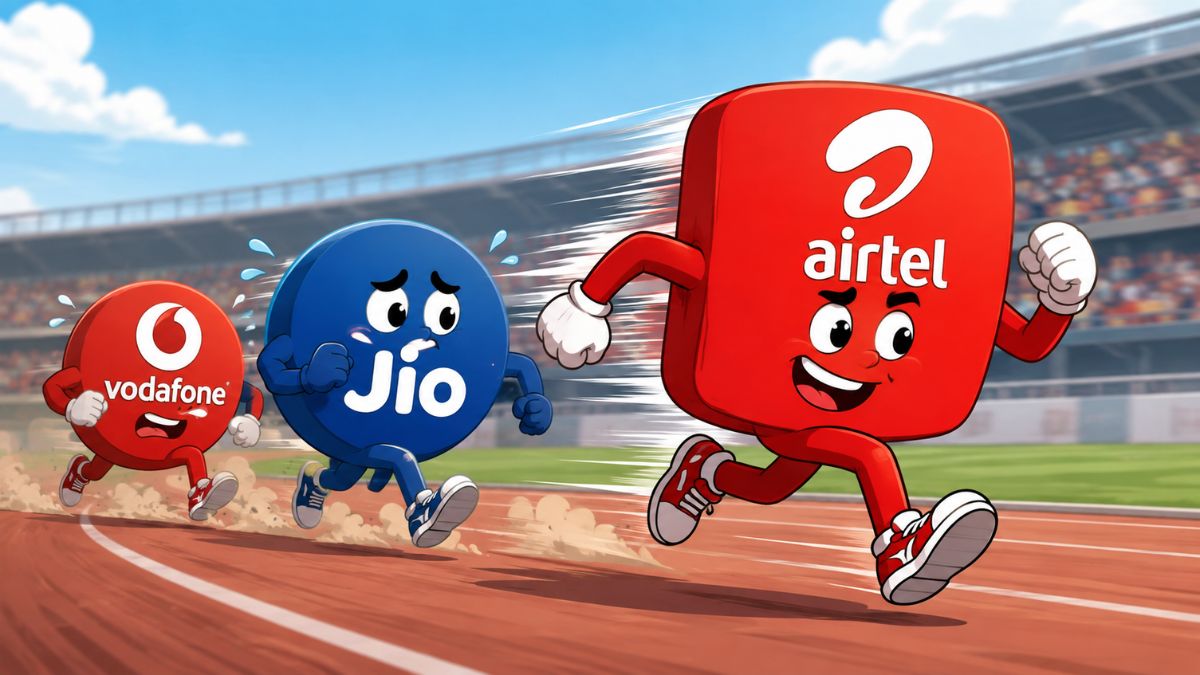
Airtel is growing faster than the overall telecom market and gaining share in several regions.
Vodafone Idea is still losing customers, although its revenue grew because its average customer payment increased.
Analysts expect phone prices to rise later, but they disagree about exactly when.
Companies are also expanding into broadband, cloud services, payments, data centres and AI to earn more from customers.

India’s mobile-sector revenue grew 8% year on year in the June quarter of FY27 to an annualised run rate of about $33 billion, without a tariff increase.
Bharti Airtel’s revenue rose 10%, supported by 7% ARPU growth and 3% subscriber growth, giving it nearly 45% of incremental industry revenue.
Airtel discontinued several prepaid plans, including its Rs 299 daily-data pack, making Rs 349 its cheapest daily-data option.
Reliance Jio revived its Rs 300 Jio Prime membership with tariff protection through September 2027 while retaining its Rs 299 unlimited plan.
Analysts disagree on the timing of the next industry-wide hike, with Nomura expecting December FY27 and Jefferies forecasting April 2027.
- Who
- Bharti Airtel, Reliance Jio and Vodafone Idea, with analysis from Jefferies, JM Financial, Nomura, Motilal Oswal and Axis Securities.
- What
- India’s telecom operators are increasing revenue per user through plan changes, membership benefits, subscriber growth and expansion into additional digital services.
- Where
- India, including Airtel’s reported market-share gains in Tamil Nadu, Maharashtra and both parts of Uttar Pradesh, and losses for Vodafone Idea in Mumbai and Gujarat.
- When
- The developments were reported for the June quarter of FY27, with Airtel’s plan withdrawals on August 12 and Jio Prime’s relaunch on August 17.
- Why
- Operators are seeking higher revenue and ARPU before the next expected tariff increases, while building businesses beyond mobile connectivity.
Earlier Tariff Increase
Later Tariff Increase
Timing of the next price hike
Earlier Tariff Increase
Nomura expects an industry-wide tariff increase of about 15% in the December quarter of FY27.
Later Tariff Increase
Jefferies expects the next tariff increase to occur in April 2027.
Airtel’s plan withdrawal
Earlier Tariff Increase
Analysts view removing lower-priced plans as a way to lift ARPU without a formal across-the-board tariff hike.
Later Tariff Increase
The change could cause customer churn if users do not accept the more expensive replacement plans; Vodafone Idea is waiting to assess Airtel’s response.
Jio’s price-protection strategy
Earlier Tariff Increase
Jio Prime could make customers more comfortable with a future tariff increase by offering protection against higher prices.
Later Tariff Increase
Customers may benefit from the Rs 300 fee only if a qualifying tariff increase occurs sufficiently soon; Motilal Oswal said the economics become less favourable if the increase comes later than March 2027.
Key facts
- Sector revenue
- India’s mobile-sector revenue reached an annualised run rate of about $33 billion in the June quarter of FY27.
- Airtel revenue growth
- Bharti Airtel’s revenue grew 10% year on year in the June quarter.
- Airtel ARPU
- Airtel’s ARPU was Rs 264 in the June quarter, according to JM Financial.
- Airtel plan change
- Airtel withdrew its Rs 299 daily-data plan; its cheapest daily-data plan now starts at Rs 349.
- Jio Prime fee
- Jio Prime costs Rs 300 as a one-time membership fee and includes tariff protection through September 2027.
- Vodafone Idea revenue
- Vodafone Idea’s revenue grew 3% year on year while its active subscriber base declined 3%.
- Market forecast
- Jefferies expects mobile-sector revenue to grow at a 12% compound annual rate from FY27 to FY29, reaching about $46 billion by FY29.
Sources
Related news
Jefferies Keeps Bharti Airtel as Top Telecom Stock Pick
Airtel phases out Rs 299 plan, signals industry-wide tariff shift
Airtel widens value lead over Jio with premiumisation push
Airtel Raises Entry Price as Jio Revives Prime Protection

JioPC Becomes Available Across India With Cloud Computing Plans

Delhi High Court Rejects Challenge to C-DOT Emergency Alert Deal
Jio Platforms IPO Clearance Could Revalue Reliance Industries Stake

Mukesh Ambani, Subhash Chandra Dispute Puts Wealth, Debt Under Spotlight
India Doubles 5G EMF Limit to Align With Global Standards
