

4 days ago
India Doubles 5G EMF Limit to Align With Global Standards
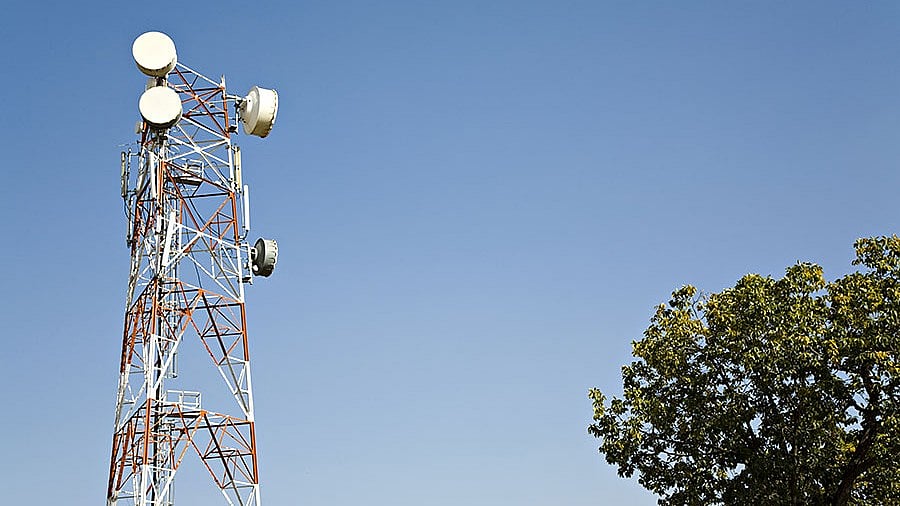
India is changing how much radio energy 5G mobile towers can use.
The allowed level will rise from 5 to 10 watts per square metre next month.
This matches a level recommended by an international organization.
A higher limit may let each tower send signals across a larger area.
Telecom companies might therefore need fewer new towers.
Vodafone Idea could use the change as it builds its 5G network.
Bharti Airtel and Reliance Jio may benefit from their existing 5G sites.
The industry says the older rules worked better for earlier mobile technologies than for 5G.

India will raise the permitted EMF power density for 5G base stations from 5 to 10 watts per square metre next month.
The new limit matches the level recommended by the International Commission on Non-Ionizing Radiation Protection.
Higher permitted emissions could allow towers to cover larger areas and reduce the number of sites needed.
Vodafone Idea may benefit as it expands 5G, while Bharti Airtel and Reliance Jio could reduce incremental network investment.
Telecom companies said earlier limits were less suited to efficient large-scale 5G deployment than to older networks.
- Who
- The Indian government, telecom operators, the International Commission on Non-Ionizing Radiation Protection, Vodafone Idea, Bharti Airtel and Reliance Jio.
- What
- India is raising the permitted 5G BTS EMF power density from 5 to 10 watts per square metre.
- Where
- Across India, bringing the limit in line with standards followed in many other countries.
- When
- The revised rules will take effect next month.
- Why
- The change is intended to make 5G expansion more efficient and may reduce the sites and investment needed for coverage.
Telecom Industry View
Stricter-Regulation View
Appropriate limit for 5G
Telecom Industry View
Telecom companies argued that earlier limits made large-scale 5G deployment less efficient and were designed more around older technologies.
Stricter-Regulation View
India had historically maintained stricter limits than international recommendations and had tightened ICNIRP-based norms in 2012.
Effect on network costs
Telecom Industry View
The industry expects the higher limit to improve coverage from each site, reduce the need for new towers and lower deployment costs.
Stricter-Regulation View
The articles describe these savings as potential outcomes, not guaranteed results.
Key facts
- New EMF limit
- 10 watts per square metre for a 5G base transceiver station.
- Previous limit
- 5 watts per square metre; India had previously used 1 watt per square metre.
- Effective date
- Next month.
- International benchmark
- The new limit matches the level recommended by the International Commission on Non-Ionizing Radiation Protection.
- Potential network effect
- Operators may cover larger areas from individual sites and need fewer new towers.
- Global comparison
- The report says similar norms are followed in around 137 countries, while ICNIRP guidelines are followed by around 135 countries.
- Operators mentioned
- Vodafone Idea, Bharti Airtel and Reliance Jio.
Sources

Related news

BSNL Plans 5G Rollout in Andhra Pradesh in Six Months

Vodafone Idea needs periodic tariff hikes to sustain 5G investment

India likely to reach 62 pc 5G adoption by 2030

Jio’s Homegrown 5G Technology Targets Overseas Markets Globally

Vodafone Idea Advances ₹45,000 Crore Capex Plan, Lender Talks Progress

JioPC Becomes Available Across India With Cloud Computing Plans

Delhi High Court Rejects Challenge to C-DOT Emergency Alert Deal

Jio Platforms IPO Clearance Could Revalue Reliance Industries Stake

Mukesh Ambani, Subhash Chandra Dispute Puts Wealth, Debt Under Spotlight
