2 weeks ago
Naours Ancient Underground City Open for Walking Tours
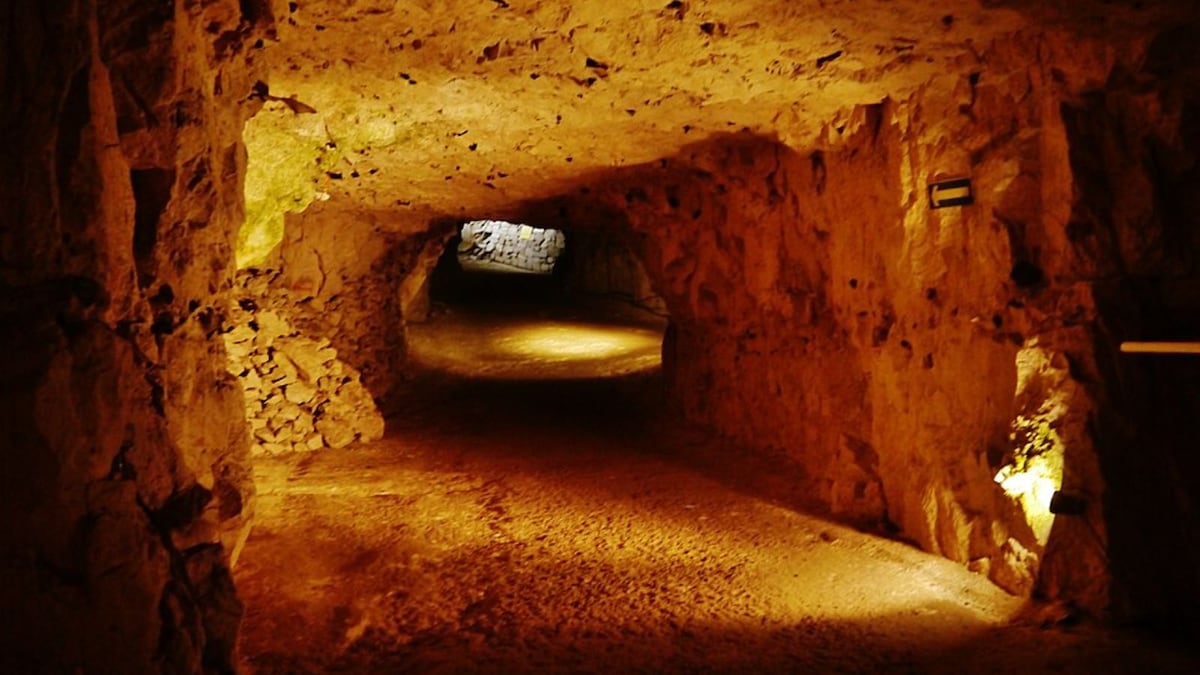
Long ago, people in France dug a huge underground city out of the ground.
It began as a quarry, where they collected limestone rock for building.
Over time, it became a hidden village called Naours, nicknamed 'Les Muches.'
The underground city has 300 rooms and 28 long passageways.
Inside, there are streets, homes with chimneys, stables, and even small chapels.
When armies came to fight, as many as 3,000 villagers could hide safely in this underground world.
During World War One, soldiers wrote and drew thousands of pictures and words on the chalk walls.
These drawings are still there today.
Now, visitors can take a walking tour with a recorded guide to see this amazing place.

The Underground City of Naours, in Picardy, France, began as a Roman-era limestone quarry in the 3rd century AD.
It was expanded into an organised subterranean village of 300 rooms and 28 galleries, known as 'Les Muches'.
The complex could shelter up to 3,000 villagers from invading armies during the Middle Ages and the Thirty Years' War.
It features underground stone streets, residential quarters, stables, chapels, and thousands of Allied soldiers' World War I graffiti.
The site is fully open for self-guided audio walking tours, a short drive from Amiens.
- Who
- Villagers of Naours, who hid from invading armies, and Allied soldiers who left graffiti during World War I.
- What
- An ancient underground city ('Les Muches') expanded from a Roman-era limestone quarry into a subterranean village.
- Where
- Naours, Picardy, France, a short drive from Amiens.
- When
- The quarry dates to the 3rd century AD; it served as a refuge during the Middle Ages and the Thirty Years' War, with World War I graffiti added later.
- Why
- To shield up to 3,000 villagers from invading armies.
Key facts
- Name
- Underground City of Naours (Cité Souterraine de Naours)
- Nickname
- 'Les Muches'
- Location
- Picardy, France
- Origin
- Roman-era limestone quarry, 3rd century AD
- Size
- 300 rooms and 28 galleries
- Shelter capacity
- Up to 3,000 villagers
- Periods of refuge
- Middle Ages and Thirty Years' War
- Visitor access
- Open for self-guided audio walking tours
Sources
Related news
Why Lascaux Cave, France's UNESCO Site, Remains Permanently Closed
Hyderabad Tunnel Discovery Revives Historic Secret Passage Rumours

Tunnel Discovery Near Qutb Shahi Tombs Revives Golconda-Charminar Mystery

Mont Saint-Michel: France’s Tiny UNESCO Island and Gothic Abbey
ASI Identifies Golconda Fort Tunnel Claim As Buried Chamber
Ten World Destinations Combining Ancient History and Natural Wonders