45 mins ago
Houthi Advance Threatens Bab al-Mandab and Global Shipping
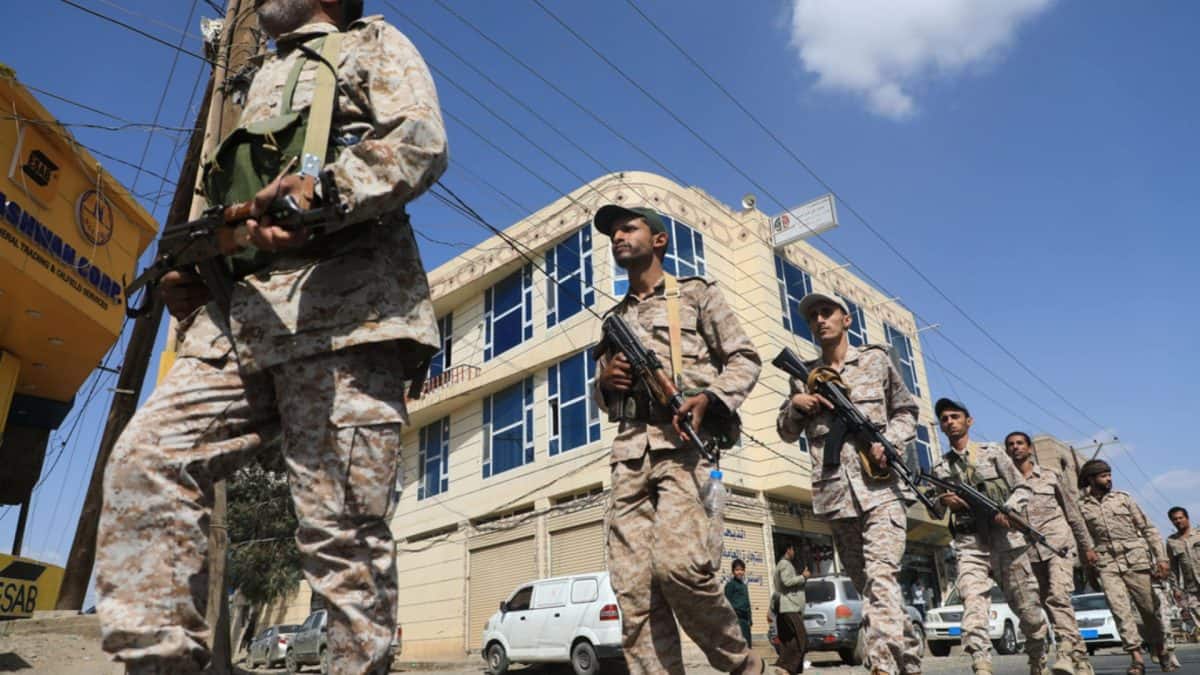
Yemen has been fighting a civil war for many years.
The Houthis control Yemen’s capital and large parts of the north and west.
They recently moved quickly along the Red Sea coast and captured important locations.
One of those locations is near Bab al-Mandab, a narrow waterway used by many ships carrying fuel and other goods.
If ships cannot safely use the waterway, they may have to take a much longer route around Africa.
This could raise transportation costs and affect energy supplies.
Saudi-backed forces are trying to push the Houthis back.
The United States must decide whether to become more involved, even though earlier air campaigns did not defeat the Houthis.
The fighting is also testing a new defense agreement involving Saudi Arabia, Pakistan, and Turkey.

Houthi forces captured Mocha and reached Perim Island during a rapid southward offensive along Yemen’s Red Sea coast.
The Bab al-Mandab Strait, a narrow gateway to the Red Sea and Suez Canal, carries about 7% of global petroleum supplies.
Saudi-backed Yemeni forces are trying to recover territory, while the United States has offered intelligence support but declined direct intervention.
The advance could give Iran-aligned forces influence over both Bab al-Mandab and the Strait of Hormuz, increasing pressure on energy and shipping routes.
The Houthi attacks are also testing whether the Saudi Arabia–Pakistan–Turkey Mecca Joint Defence Agreement creates real military obligations.
- Who
- The Houthis, Saudi-backed Yemeni forces, Iran, the United States, and the members of the Mecca Joint Defence Agreement are the principal actors discussed.
- What
- Houthi forces launched a rapid offensive, captured Mocha, and reached Perim Island near the Bab al-Mandab Strait.
- Where
- Along Yemen’s Red Sea coast, including Mocha, Perim Island, and the Bab al-Mandab Strait.
- When
- The offensive occurred after a fragile truce broke down; the articles do not give an exact date.
- Why
- The advance threatens a major shipping and energy chokepoint and could give Iran-aligned forces leverage over regional waterways.
Intervention advocates
Intervention skeptics
United States military involvement
Intervention advocates
The United States may need to act because Houthi control or disruption of Bab al-Mandab threatens freedom of navigation, energy supplies, and American security commitments.
Intervention skeptics
A new campaign could consume aircraft, ships, intelligence resources, and air-defense munitions, while previous Saudi-led and American strikes failed to defeat the Houthis.
Meaning of the Mecca defence agreement
Intervention advocates
The agreement’s collective-defense principle could require Pakistan and Turkey to provide practical assistance such as intelligence, air defense, naval support, weapons, or forces.
Intervention skeptics
The partners have different security priorities, and Pakistan has said that no military response under the agreement has been discussed, suggesting it may remain mainly diplomatic.
Key facts
- Houthi-held areas
- The Houthis control Sana’a and much of northern and western Yemen.
- Recent territorial gains
- Houthi forces captured the port of Mocha and reached Perim, also called Mayun, Island.
- Bab al-Mandab width
- The strait is about 29 kilometers wide at its narrowest point.
- Energy traffic
- About 7% of global petroleum supplies normally pass through Bab al-Mandab.
- Saudi-backed response
- Saudi-backed Yemeni forces are attempting to recover lost ground.
- United States position
- The United States has declined direct intervention while offering intelligence support.
- Mecca agreement
- Saudi Arabia, Pakistan, and Turkey agreed that an attack on one would be treated as an attack on all, but no military response under the pact has yet been discussed.
Sources
Related news

Houthis Near Control of Strategic Bab el-Mandeb Strait

Houthi Advances Raise Stakes Around Yemen’s Red Sea Coast

Houthi Capture of Mokha Raises Pressure on Saudi Arabia

Houthis Seize Yemen Port, Raising Threat to Red Sea Shipping

Houthis Reach Perim as Trump Rejects Saudi Strike Request
Houthis Seize Yemen’s Mocha, Raising Fresh Red Sea Shipping Risks
India’s August Wholesale Inflation Climbs on Food, Fuel Pressures
Reported US Navy Tanker Sinking Threatens China’s Iranian Oil Supply

Gold Slips as US Inflation Raises Federal Rate Hike Odds
India’s Wholesale Inflation Reaches 9.92% on Food and Fuel