

7 hrs ago
Ladakh’s Autonomy Debate Deepens Over Land, Water and Ecology
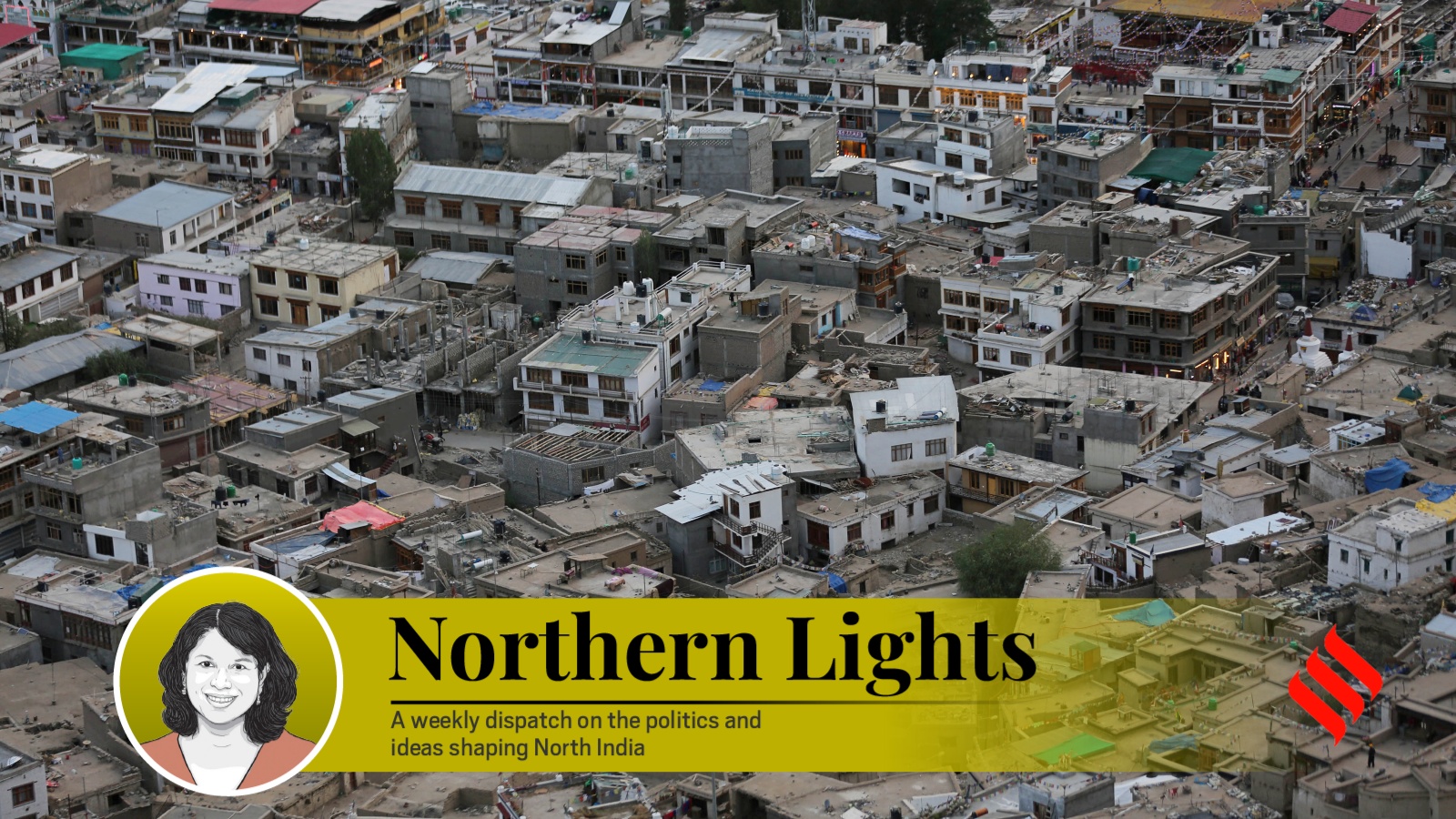
Ladakh is discussing how much control it should have over its own government.
The central government has suggested a new constitutional provision and a new governing body.
Local leaders want more elected representatives and protections for local land and jobs.
They also want officials to answer to elected leaders.
Many people worry that outside development could make land more expensive and put pressure on scarce water.
Ladakh’s glaciers and rivers also help provide water to places farther downstream.
This means decisions in Ladakh can affect both local communities and people in the plains.
Protests in September 2025 made trust between the sides weaker.
The bigger question is how to protect Ladakh’s environment while giving its people a stronger political voice.

The Centre has proposed Article 371(K) and a new Union Territory-level governance arrangement for Ladakh.
Local leaders seek stronger representation, land and job safeguards, and bureaucratic accountability to an elected body.
They oppose proposed land changes amid soaring prices and concerns about outside development in Leh.
Ladakh’s glaciers, snowfields and rivers support downstream water systems, including agriculture in the northern plains.
Trust remains fragile after September 2025 protests, and another round of talks is expected in October.
- Who
- The Government of India, Ladakh’s political groups, and local leaders including Chering Dorjay Lakruk are involved; activist Sonam Wangchuk is also campaigning for the demands.
- What
- They are negotiating Ladakh’s future governance, including constitutional safeguards, political representation, land protections, jobs, and environmental responsibility.
- Where
- Ladakh, particularly Leh, with consequences for downstream areas including Punjab, Haryana and Himachal Pradesh.
- When
- The latest talks are ongoing; another round is expected in October, while Sonam Wangchuk has announced a symbolic march for September 23.
- Why
- Local leaders seek greater control over development, land and administration, while Ladakh’s fragile ecology and water systems have effects beyond the region.
Ladakh’s Political Groups
The Central Government
Political representation
Ladakh’s Political Groups
Local leaders want direct elections through separate constituencies and an elected body with authority over major decisions.
The Central Government
The Centre has proposed a new Union Territory-level governance arrangement, but its precise powers and composition remain under discussion.
Land and development
Ladakh’s Political Groups
Local groups want a freeze on major land decisions and stronger safeguards, arguing that outside development and land speculation threaten Ladakh’s social and ecological character.
The Central Government
The proposed governance framework is presented as the Centre’s response to the political debate, while the article does not detail the government’s position on the specific land concerns.
Governance priorities
Ladakh’s Political Groups
Local leaders argue that Ladakh’s future must combine political autonomy with control over development in a water-scarce, fragile cold-desert environment.
The Central Government
Delhi has generally viewed Ladakh through security and development, which the article says are important but insufficient on their own.
Key facts
- Proposed constitutional measure
- Article 371(K)
- Proposed governance arrangement
- A new Union Territory-level body, whose powers and composition remain under discussion
- Local leaders’ demands
- Direct elections, land and job safeguards, and accountability of the bureaucracy to an elected body
- Land controversy
- Recent moves to place a ceiling on individual claims to barren land under the nautor system have angered locals
- Leh land prices
- Chering Dorjay Lakruk said one kanal in Leh can fetch Rs 40 lakh
- Water significance
- Ladakh’s glaciers, snowfields and rivers contribute to water systems supporting agriculture in the northern plains
- Recent unrest
- Four people were killed in police firing during September 2025 protests over statehood and constitutional safeguards
- Indus Waters Treaty
- India announced in April 2025 that it was placing the treaty in abeyance after the Pahalgam terror attack
Quotes
Chering Dorjay Lakruk
Leh Apex Body co-chairman and Ladakh political representative
“One kanal fetches Rs 40 lakh. This proposal seems another way of making land available for outsiders”
 indianexpress.com
Unnamed woman worker
A contract worker in Ladakh who spoke anonymously about political and economic influence
“People in the city are educated, but it is easy to lure villagers by offering them pieces of land, government jobs or contractorship”
indianexpress.com
Sources
Related news
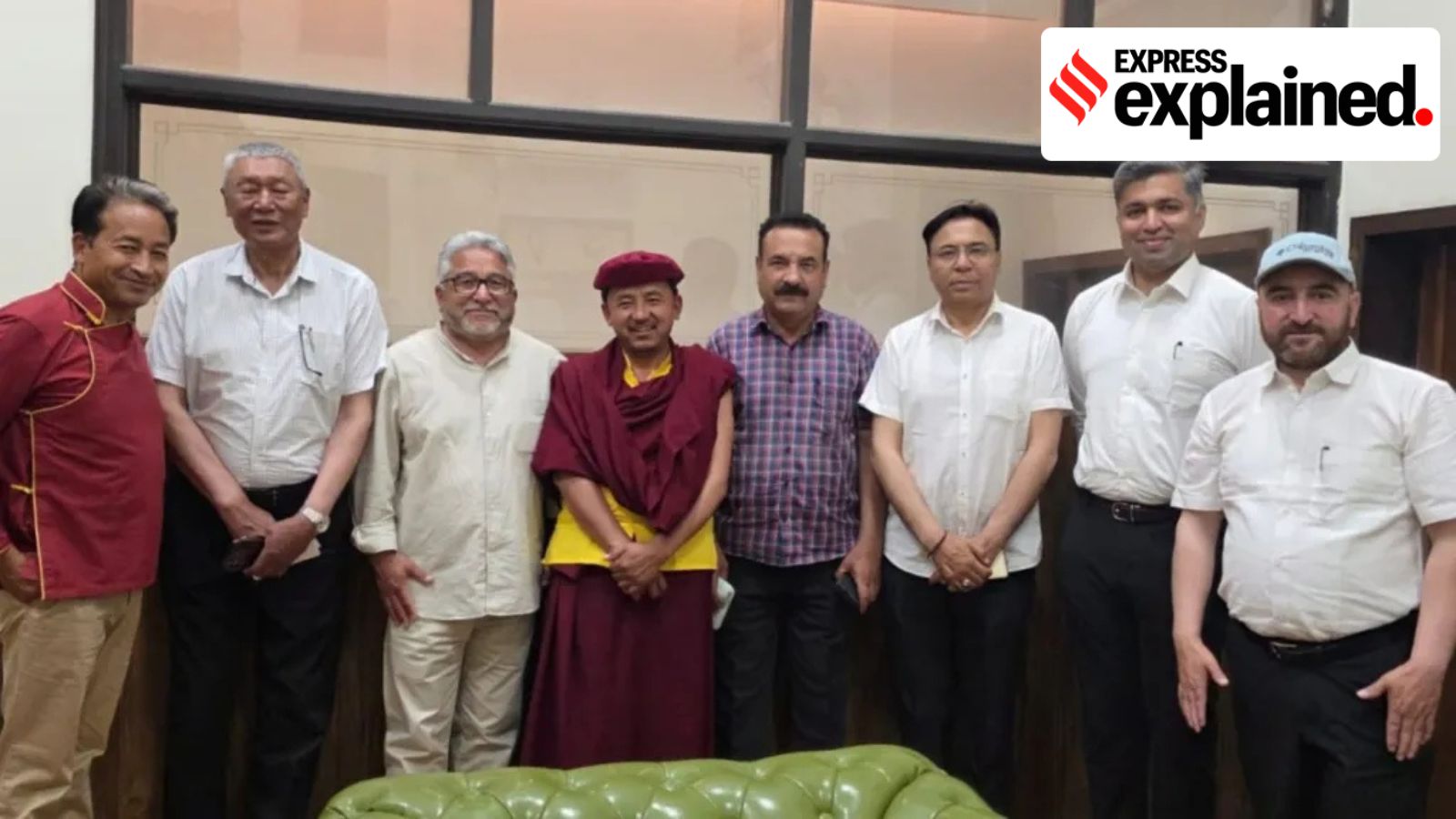
Centre Offers Article 371(K) as Ladakh Powers Remain Unclear
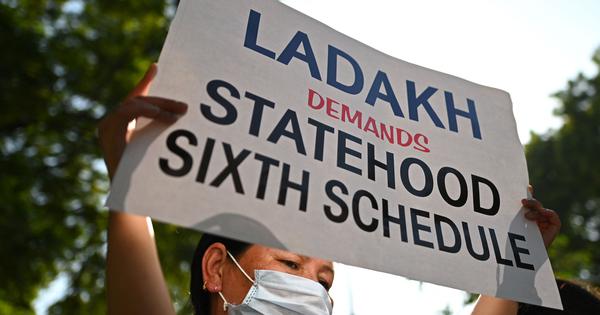
Ladakh Denied Statehood, Offered Unique Elected Body With Powers
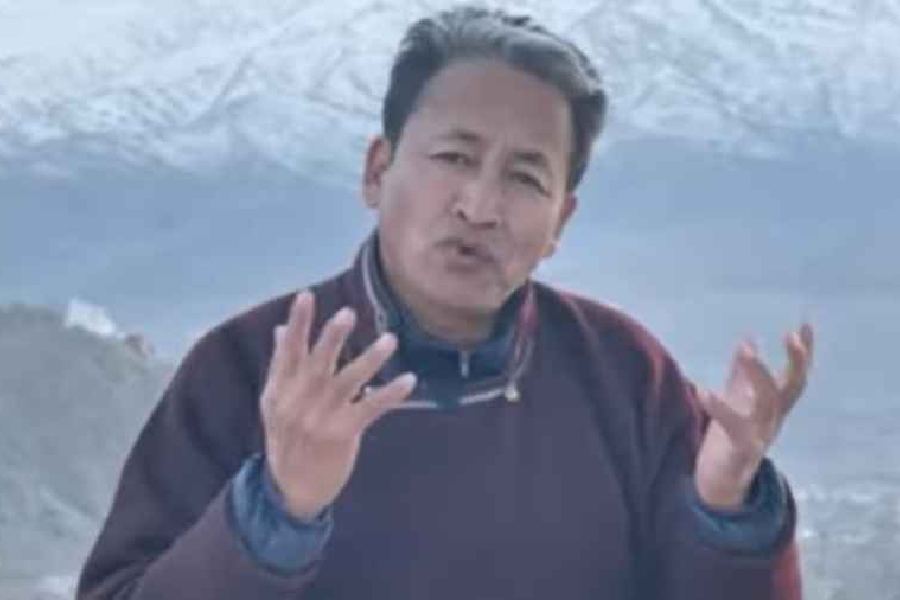
Ladakh Gets Proposed Article 371 Model, Leaders Seek More Safeguards

Ladakh Groups Plan Padyatra After Talks With Centre Stall
Ladakh Urged to Secure Gains While Talks Continue
Centre Seeks Details on Proposed Ladakh Governance Body
AAP Faces Law, Governance Challenges Ahead Of Punjab Polls

Delhi Exhibition Reexamines Emily Eden’s Portraits of India

Priya Hajela’s Novel Reexamines Colonial History Through Family Trauma
BJP Accuses Punjab CM, Wife in Alleged Rape-Case Racket
