

3 days ago
Priya Hajela’s Novel Reexamines Colonial History Through Family Trauma
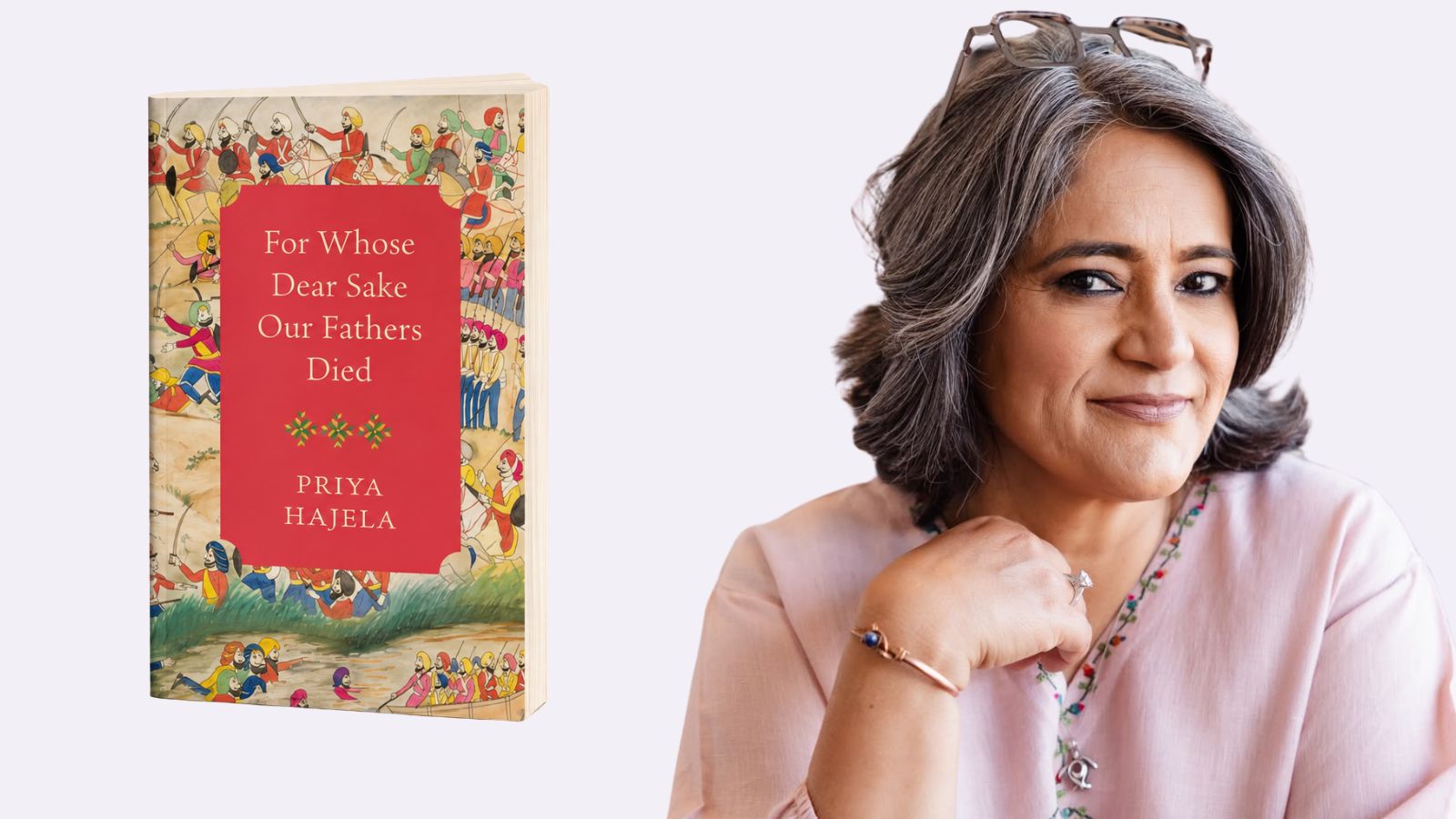
Priya Hajela wrote a novel about a family living through major changes in Punjab’s history.
The story follows four generations of the Uppal family.
One important character, Balwant, must serve in the British Indian Army even though he dislikes British rule.
His father died fighting a force connected to the British.
Balwant is also ordered to fight people who look and speak like him.
This leaves him feeling confused and guilty.
Hajela studied both Indian and British accounts because each told the past differently.
She tells the story through what Balwant can see and understand.
She hopes the book makes people think about history and stand up for what they believe is right.

Priya Hajela’s novel follows four generations of the Uppal family through nearly a century of upheaval in Punjab.
The story centers on Balwant Singh Uppal, who struggles with serving a British officer after his father dies fighting the British-led Calcutta army.
Hajela researched competing Indian and British historical accounts, including records of the 1857 uprising and the Anglo-Sikh wars.
She narrowed the narrative to Balwant’s limited perspective to avoid presenting history like a textbook.
The author hopes the novel encourages readers to recognize injustice, take a stand and preserve difficult stories across generations.
- Who
- Author Priya Hajela and the fictional Uppal family, especially Balwant Singh Uppal and his granddaughter Beant Kaur.
- What
- Hajela discussed For Whose Dear Sake Our Fathers Died, a historical novel about family trauma, colonial rule and conflicting loyalties.
- Where
- The novel is rooted in Punjab and British India, while Hajela’s research and life also took her to the United States and Vermont.
- When
- The story begins after Maharaja Ranjit Singh’s death and ends before the Jallianwala Bagh massacre; Hajela completed her MFA in 2017.
- Why
- Hajela wrote to understand her heritage and explore how ordinary people experienced colonial conflict, war and inherited memory.
Lived Memory and Indian Experience
Official and Colonial Records
Whose history is emphasized?
Lived Memory and Indian Experience
Hajela foregrounds ordinary people, including soldiers and families, whose experiences are often missing from accounts focused on leaders.
Official and Colonial Records
British accounts reflect the perspective of the victors, while Indian accounts may emphasize heroes and martyrs; neither perspective is treated as complete on its own.
Balwant’s divided loyalty
Lived Memory and Indian Experience
Balwant sees the East India Company as an evil force and feels guilt when Sikh soldiers are ordered to fight people who resemble them.
Official and Colonial Records
After the Sikh army was dismantled and taxes damaged farming, joining the British Indian Army appears to Balwant as his only practical option, even though he opposes British power.
Key facts
- Author
- Priya Hajela
- Novel
- For Whose Dear Sake Our Fathers Died
- Publisher
- Speaking Tiger
- Family covered
- Four generations of the Uppal family
- Historical span
- From after Maharaja Ranjit Singh’s death to before the Jallianwala Bagh massacre
- Earlier novel
- Ladies’ Tailor, which examines the aftermath of 1947
- Key research approach
- Reading Indian-authored histories against British accounts and using diaries from the Lucknow residency siege
- Central conflict
- Balwant Singh Uppal despises the East India Company but serves a British officer in the British Indian Army
Quotes
Priya Hajela
Author of For Whose Dear Sake Our Fathers Died and Ladies’ Tailor.
“The world is becoming really strange. You can’t just coast. Believe in something and believe strongly, and then do something for that cause.”
 indianexpress.com
“What drives me is actually to get an understanding of who I am and where I come from.”
indianexpress.com
Sources
Related news
Cross-Border Team Turns Partition Memories Into Book of Empathy

Novelist Gurpreet Singh Dhugga’s Journey From Medicine to Cinema
Films revisit Partition, remind India who she used to be

Learning Shahmukhi Preserved a Sikh Grandfather’s Partition Memory
India's 80th Independence Day: Sen and Chaterji reflect on freedom
10 seminal novels questioning what freedom looked like after 1947
BJP Accuses Punjab CM, Wife in Alleged Rape-Case Racket

Gorilla-Led Traffic Campaign Draws Attention In Indore
AAP’s Punjab Power Chessboard Faces Growing Political Pressure

BJP Joins Calls for Mann Resignation Over ₹5 Crore Claim
