1 hr ago
Ladakh Urged to Secure Gains While Talks Continue
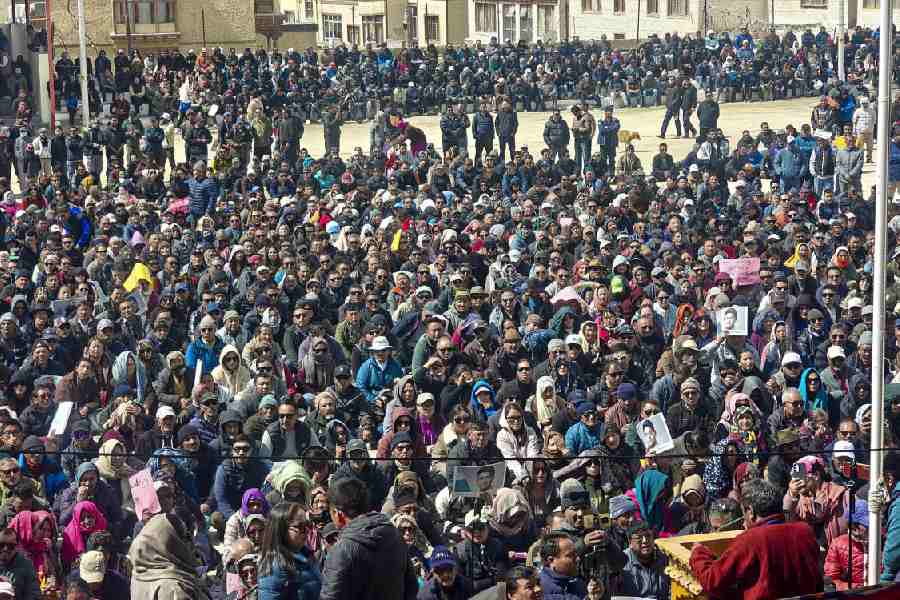
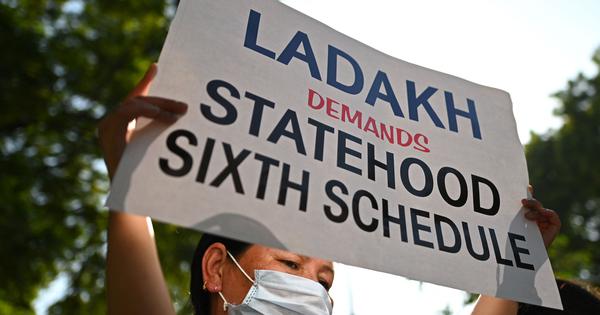
Ladakh has been negotiating with the central government for more protections and local decision-making.
The government has agreed to several important steps.
These include a directly elected territorial body and protections for land, culture, nature and resources.
Other agreements reserve most government jobs for local people and add protections for women and tribal communities.
The biggest disagreement is about which responsibilities should belong to the new body and which should stay with hill councils.
Some Ladakh leaders say the talks achieved little, while others call them productive.
Some groups want elections and major decisions paused until everything is settled.
The article argues that elections and recruitment should continue because people are waiting for them.
More talks are expected in early October.

A September 9 meeting accepted a directly elected Union Territory body with legislative, executive and financial powers.
The Centre also accepted separate Ladakh delimitation and Article 371 safeguards for land, culture, heritage, environment and natural resources.
Earlier measures reserved 85% of government posts for locals, notified five official languages and reserved one-third of hill council seats for women.
The main unresolved issue is how powers will be divided between the proposed territorial body and existing hill councils.
The article urges Ladakh to proceed with elections and implementation while continuing negotiations before the next talks in early October.
- Who
- The Union Home Ministry, Ladakh representatives, the Leh Apex Body, the Kargil Democratic Alliance, Sonam Wangchuk and other Ladakh leaders.
- What
- Negotiations are addressing Ladakh’s proposed elected territorial body, constitutional safeguards, elections and the division of powers.
- Where
- The key meeting was held in New Delhi, concerning governance across Ladakh.
- When
- The key meeting took place on September 9; further talks are scheduled for early October.
- Why
- The parties are seeking stronger local powers and protections while resolving how authority should be divided between the territorial body and hill councils.
Continue negotiations and implementation
Demand a complete settlement first
Assessment of the talks
Continue negotiations and implementation
Thupstan Chhewang and Ladakh MP Mohmad Haneefa Jan describe the talks as productive and say the government is serious about the proposed legislative structure and Article 371 safeguards.
Demand a complete settlement first
The Leh Apex Body, the Kargil Democratic Alliance and Sonam Wangchuk’s position, as described in the article, treat the meeting as offering nothing new and demand further assurances.
Elections and administration
Continue negotiations and implementation
The article argues that panchayat and hill council elections should proceed because existing institutions are independent of the proposed territorial body and residents are waiting for representation and services.
Demand a complete settlement first
Sonam Wangchuk and sections of the Kargil Democratic Alliance have argued that these elections should be delayed until the territorial body is created.
Negotiating strategy
Continue negotiations and implementation
The article supports securing agreed measures now while continuing talks on unresolved matters such as power-sharing, policing and delimitation.
Demand a complete settlement first
The all-at-once approach seeks to keep broader action paused until the full constitutional and administrative settlement is completed.
Key facts
- Proposed body
- A Union Territory-level elected body with legislative, executive and financial powers.
- Election method
- Members would be directly elected from constituencies rather than chosen indirectly through hill councils.
- Constitutional safeguards
- Protection has been accepted for land, culture, heritage, environment and natural resources under a special provision of Article 371.
- Government jobs
- Eighty-five per cent of government posts are reserved for locals, including 80% of those posts for Scheduled Tribes.
- Existing institutions
- Ladakh has 193 panchayats: 95 in Leh and 98 in Kargil.
- Unresolved issue
- The division of powers between the proposed territorial body and the hill councils remains unsettled.
Sources
Related news

Ladakh Talks Stall as Groups Demand Empowered Elected Government

Ladakh Groups Plan Padyatra After Talks With Centre Stall
Sonam Wangchuk Warns Fresh Ladakh Agitation After Talks Stall
Centre Offers Article 371(K) as Ladakh Powers Remain Unclear
Ladakh Denied Statehood, Offered Unique Elected Body With Powers

Ladakh Padyatra Deferred Ahead of Crucial September 9 Talks
Ladakh Gets Proposed Article 371 Model, Leaders Seek More Safeguards

Ladakh Buddhists Seek Senior Leaders’ Inclusion Before Safeguards Talks