2 days ago
Record Campaign Spending Fails to Shift Midterm Polls
The 2026 US midterm elections are expected to cost more than previous elections.
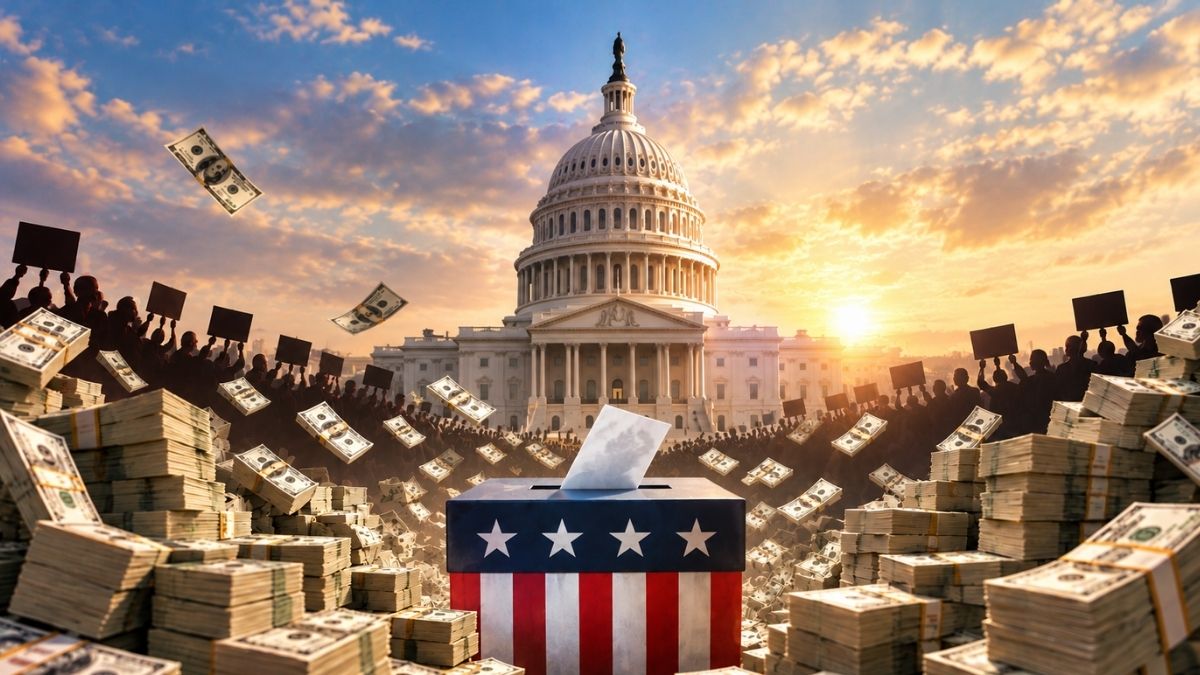
Wealthy people, companies, political parties and interest groups are spending money to influence races.
Some of that money comes from groups that do not have to reveal who gave it.
Republicans have spent about $500 million on races recently, but polls have not moved clearly in their favour.
Money can help candidates advertise and encourage people to vote, but it does not guarantee a win.
In some races, candidates are making their opponents’ outside support a campaign issue.
Some analysts warn that too many negative ads could make voters tune out.
Montana voters will decide whether to ban corporations from spending money on elections.

The 2026 US midterms are expected to set campaign spending records, according to the Brennan Center for Justice.
At least $1 billion in dark money was spent during the primary elections, according to a New York Times analysis cited by The Washington Post.
Republicans have spent about $500 million on races in recent weeks, but polls have not shifted decisively in their favour.
Artificial intelligence and cryptocurrency groups spent more than $100 million during the primaries and are preparing further spending.
The closely watched Texas Senate race and a Montana ballot measure on corporate election spending highlight the wider influence of campaign money.
- Who
- Billionaires, corporations, political parties, special-interest groups and candidates in the 2026 US midterm elections.
- What
- Campaign spending is nearing record levels, including at least $1 billion in dark money during the primaries.
- Where
- United States, including congressional and state-level races in Texas, Ohio, Michigan, Wisconsin and Montana.
- When
- The 2026 election cycle; the article describes spending in recent weeks and during the primaries.
- Why
- Campaign funding is used to advertise, raise candidates’ visibility, influence voters and encourage supporters to vote.
Potential benefits and limits of campaign spending
Campaign spending’s possible risks
What campaign money can accomplish
Potential benefits and limits of campaign spending
Funding lets candidates advertise, increase their visibility, shape how voters see them and encourage supporters to turn out.
Campaign spending’s possible risks
The article reports that heavy spending has not produced a decisive polling shift for Republicans, and analysts warn that sustained negative campaigning could make voters tune out.
Corporate spending in elections
Potential benefits and limits of campaign spending
The article describes corporations as major sources of campaign funding and notes that political spending can support candidates and causes.
Campaign spending’s possible risks
Montana voters will consider whether to prohibit corporations from spending money on elections; the article also describes concerns about undisclosed dark money and wealthy donors’ influence.
Key facts
- Election cycle
- 2026 US midterm elections
- Estimated spending outlook
- Expected to set new campaign spending records, according to the Brennan Center for Justice
- Dark money in primaries
- At least $1 billion, according to a New York Times analysis cited by The Washington Post
- Recent Republican spending
- About $500 million in races in recent weeks
- Technology and crypto groups
- Spent more than $100 million during the primaries
- Texas Senate contest
- Republican Ken Paxton and Democrat James Talarico are in an extremely close race, according to polls cited by The Washington Post
- Montana ballot measure
- Voters will decide whether to prohibit corporations from spending money on elections
Sources
Related news
Seven 2026 US Races Draw Major Campaign Spending

Wealthy Donors Pour Millions Into 2026 US Midterm Campaigns

Republican-Aligned Groups Mobilize Major Fundraising Advantage Against Democrats
Republicans Rush Funds Into Dozens Of Once-Safe House Races
Musk Criticizes Ambani Donations Despite His Own Record Spending
Montana Voters Test New Corporate Election Spending Limits
Vivek Ramaswamy Pitches Tax Cuts and Medicaid Fraud Crackdown
Trump's Profane Ohio Rally Targets Democrats Ahead of Midterms
Ramaswamy’s $2.3 Billion Fortune Shapes Ohio Governor’s Race

Armed Individual Lunges at Ohio Governor Candidate at Fair