0 months ago
Eastern Lesser Bamboo Lemur Survives Dangerous Bamboo Diet
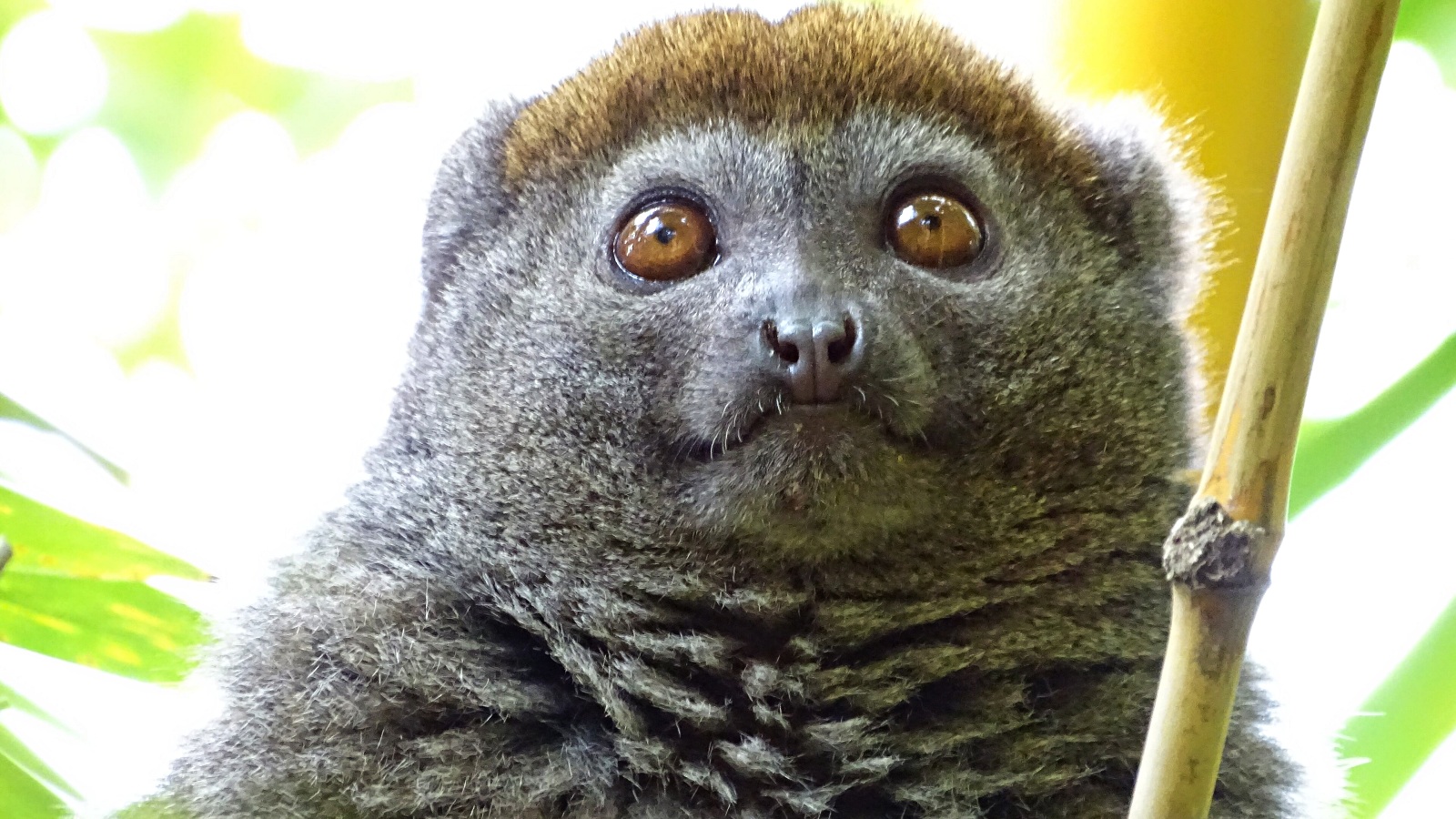
The eastern lesser bamboo lemur is a small primate from Madagascar.
It spends much of its time climbing through bamboo forests.
The lemur eats bamboo shoots, leaves, and stems.
In some seasons, bamboo makes up most of its food.
Bamboo can contain chemicals that produce poisonous cyanide.
The lemur has special adaptations that help it handle these chemicals.
This is similar to how giant pandas also depend on bamboo, even though pandas and lemurs are very different animals.
Cutting down bamboo forests makes it harder for the lemurs to find food and survive.

The eastern lesser bamboo lemur is native to Madagascar and lives mainly in bamboo forests.
It feeds heavily on bamboo shoots, leaves, and stems, sometimes relying on bamboo for most of its diet.
Bamboo can contain cyanogenic compounds that release toxic cyanide.
The lemur appears specially adapted to tolerate and process bamboo’s chemical defences.
Deforestation and habitat degradation threaten the rare species because it depends heavily on bamboo.
- Who
- The eastern lesser bamboo lemur, also called the gray bamboo lemur, gray gentle lemur, or Mahajanga lemur.
- What
- It has evolved to survive on a bamboo-heavy diet despite bamboo containing potentially toxic cyanogenic compounds.
- Where
- Bamboo forests in Madagascar.
- When
- Why
- Its specialized adaptations allow it to tolerate bamboo’s chemical defences, while habitat loss threatens its survival.
Key facts
- Scientific subject
- Eastern lesser bamboo lemur
- Other names
- Gray bamboo lemur, gray gentle lemur, and Mahajanga lemur
- Native range
- Madagascar
- Main habitat
- Bamboo forests
- Primary food
- Bamboo shoots, leaves, and stems
- Dietary danger
- Some bamboo species contain cyanogenic compounds that can release toxic cyanide.
- Main threat
- Deforestation and the clearing or degradation of bamboo forests
Sources
Related news

Himalayan Grey Langur: Mountain Primate Facing Fragmented Habitats
Odisha Zoo Cares for Five Rescued Baby Orangutans

Sedated Leopard Breaks Cage, Attacks Forest Guard in Nepal

Human Food Is Changing Monkey Behaviour Across India

How Assam Artisans Turn Bamboo Into Hundreds of Everyday Products

Garbage Dumps Draw Sloth Bears Into Nilgiris Settlements