1 hr ago
Strengthening Lower Traps May Help Shoulder Blade Control

The trapezius is a group of muscles around your neck and upper back.
Some parts help move and steady your shoulder blade.
Mike Reinold wrote about a study comparing activity in the upper and lower parts of this muscle.
People with shoulder impingement had a higher upper-to-lower muscle activity ratio than people without symptoms.
The reported ratios were 3.15 and 1.80, respectively.
Reinold says strengthening the lower part may help with shoulder blade control.
The article does not give specific exercises in the information provided.

Physical therapist and strength coach Mike Reinold discussed differences in upper- and lower-trapezius activity among people with and without shoulder impingement.
His website article is titled “Upper and Lower Trapezius Imbalances May Cause Subacromial Impingement.”
The article reports an upper-to-lower trapezius activity ratio of 1.80 in asymptomatic participants.
For participants with impingement, the reported ratio was 3.15 during scapular-plane elevation.
Reinold recommends strengthening the lower trapezius to improve shoulder blade control.
- Who
- Mike Reinold and people with and without shoulder impingement discussed in the cited comparison.
- What
- An article reports different upper-to-lower trapezius activity ratios and recommends strengthening the lower trapezius.
- Where
- On Mike Reinold’s website, mikereinold.com.
- When
- Why
- Reinold recommends lower-trapezius strengthening to improve shoulder blade control.
Key facts
- Article title
- “Upper and Lower Trapezius Imbalances May Cause Subacromial Impingement”
- Author
- Mike Reinold
- Asymptomatic group ratio
- Upper-to-lower trapezius activity ratio of 1.80
- Impingement group ratio
- Upper-to-lower trapezius activity ratio of 3.15
- Movement assessed
- Scapular-plane elevation
- Recommendation
- Strengthen the lower trapezius to improve shoulder blade control
Quotes
Mike Reinold
American physical therapist and strength and conditioning coach
“Results show that subjects with impingement had a greater ratio of upper trapezius to lower trapezius than the control group. Asymptomatic subjects had an upper trap (UT) to lower trap (LT) ratio of 1.80 while symptomatic subjects had a ratio of 3.15. What this means is that the upper trapezius is a little more than 3 times more active than the lower trapezius during scapular plane elevation in patients with subacromial impingement.”
 livemint.com
Sources
Related news
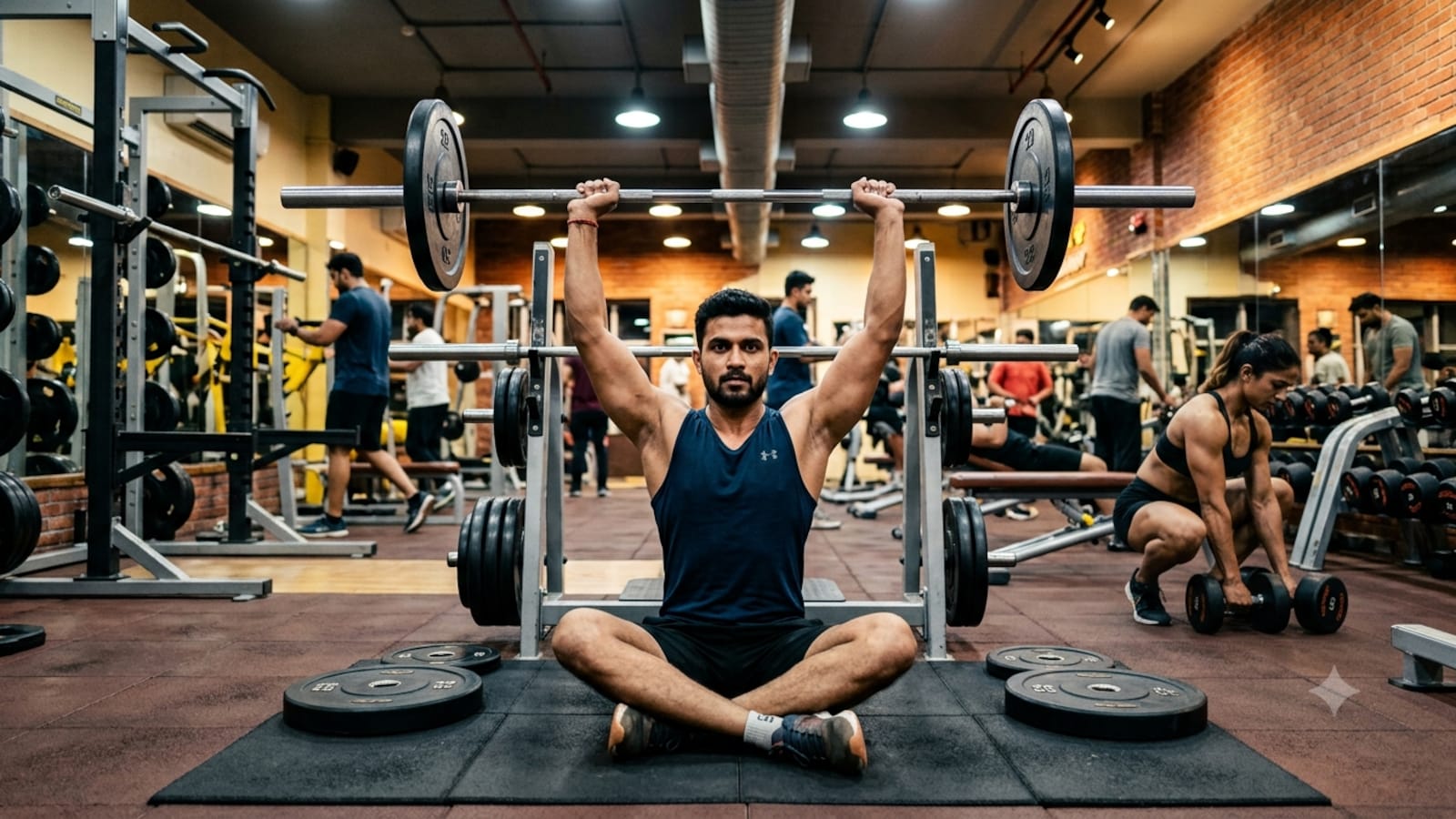
Z Press Builds Shoulder Strength Through Controlled Seated Pressing

Tejasvi Surya’s Viral Mike Tyson Push-Up: Technique and Precautions

Research Questions Whether Three Sets Are Needed for Hypertrophy

Yug Devgn's Workout Highlights Safe Strength Training For Teenagers

Pinkie Roshan Shows Safe Strength Training Can Continue at 71