1 hr ago
India’s Undertrial Crisis Keeps Nearly Three-Quarters Behind Bars
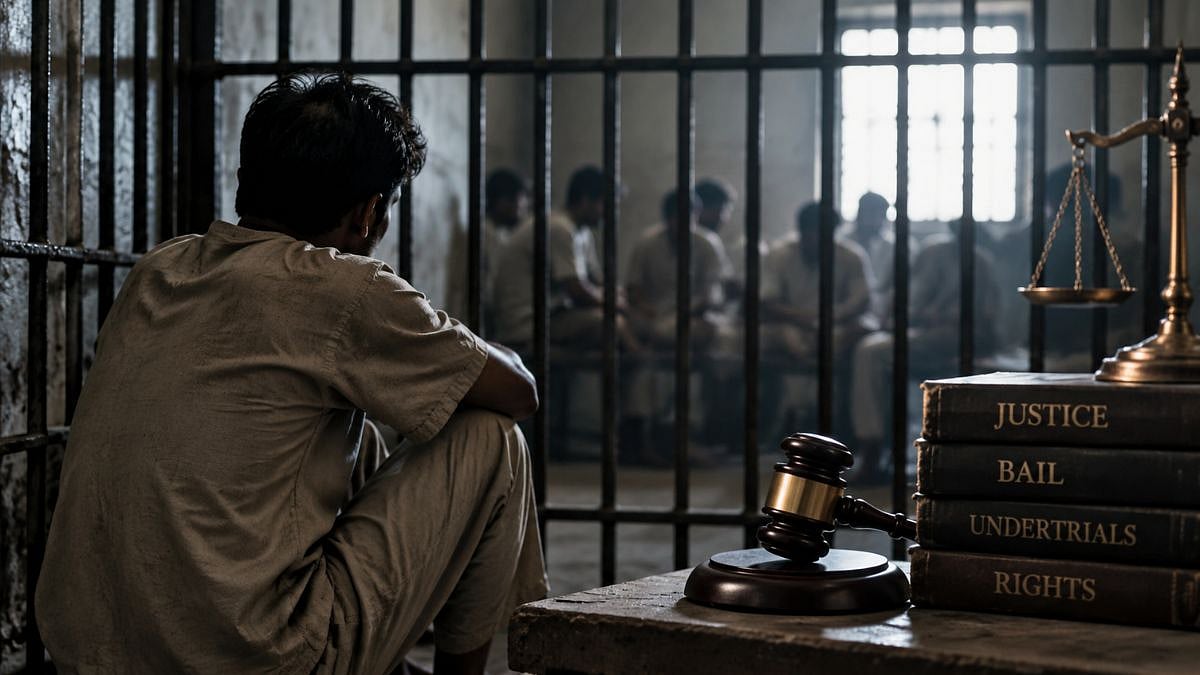
Many people in India’s prisons have not been found guilty of a crime.
About three out of every four prisoners are still waiting for their trials.
Some remain in jail because their cases move slowly or they cannot afford bail or sureties.
India’s courts have said that jail should usually be used only when necessary.
They have also said that poor people should be able to seek release through personal bonds.
Laws provide release after an undertrial has spent part of the possible sentence in custody.
However, these protections are not always applied quickly.
The article says better monitoring and less reliance on money-based bail could reduce unnecessary detention.

The National Crime Records Bureau reports 5,11,542 people in Indian jails, with 72.6% awaiting trial without conviction.
National prison occupancy stands at 112.7%, while Delhi records the highest rate at 194.6%.
The article links prolonged detention to delayed trials, routine arrests and bail conditions requiring money or property.
Supreme Court rulings have emphasized speedy trials, free legal aid, personal bonds and limits on unnecessary arrests.
The Bharatiya Nagarik Suraksha Sanhita provides release safeguards for eligible undertrials, but implementation remains inconsistent.
- Who
- The affected population is India’s undertrial prisoners, alongside police, courts and prison authorities responsible for applying bail and release safeguards.
- What
- A reported 72.6% of India’s 5,11,542 prisoners are awaiting trial, raising concerns about delayed justice, bail barriers and prolonged detention before conviction.
- Where
- Across India, with particularly high prison occupancy reported in Delhi, Meghalaya, Jammu and Kashmir, Madhya Pradesh and Maharashtra.
- When
- The figures and analysis were published on September 5, 2026; the article also discusses Supreme Court rulings from 1979, 2014 and 2022.
- Why
- The article attributes the crisis to delayed proceedings, unnecessary or routine custody, inconsistent enforcement of legal safeguards and bail conditions that some people cannot afford.
Key facts
- Total prisoners
- 5,11,542 people were in Indian jails, according to the cited National Crime Records Bureau report.
- Undertrial share
- 72.6% of prisoners had not been convicted.
- National occupancy
- India’s reported prison occupancy rate was 112.7%.
- Highest occupancy
- Delhi had the highest reported occupancy rate at 194.6%, with undertrials making up more than 87% of its prison population.
- Age profile
- About 86.3% of prisoners were between 18 and 50 years old.
- Education profile
- The article says 26.2% of prisoners were illiterate and 41.6% had not studied beyond Class 10.
- BNSS safeguard
- Section 479 of the Bharatiya Nagarik Suraksha Sanhita provides release safeguards after specified periods of undertrial detention, including stronger protection for first-time offenders.
Quotes

Supreme Court of India
The Supreme Court Bench in Arnesh Kumar v. State of Bihar, addressing routine arrests and remands.
“The existence of the power to arrest is one thing, the justification for the exercise of it is quite another... The attitude to arrest first and then proceed with the rest is despicable.”
 freepressjournal.in
Sources
Related news
Supreme Court Denies Bail, Orders Burglary Trial Within Six Months

Intellectuals Urge CJI to Uphold Liberty in Umar Khalid Case
Bombay High Court Grants Bail to Young Murder Accused

Allahabad HC grants bail to PFI members over slow trial
CJI Says Indian Judiciary Proactively Tackles Digital Arrest Scams
Bengal Promises Transparent Teacher Recruitment After SSC Panel Scrapped
CJI Surya Kant Links BRICS Justice Cooperation With Shared Prosperity

India and Russia Deepen Judicial Cooperation at BRICS Forum
NIA Court Convicts 10 in 2013 Jhiram Ghati Attack