2 weeks ago
Kim, Putin reaffirm ties as North Korea marks Liberation Day
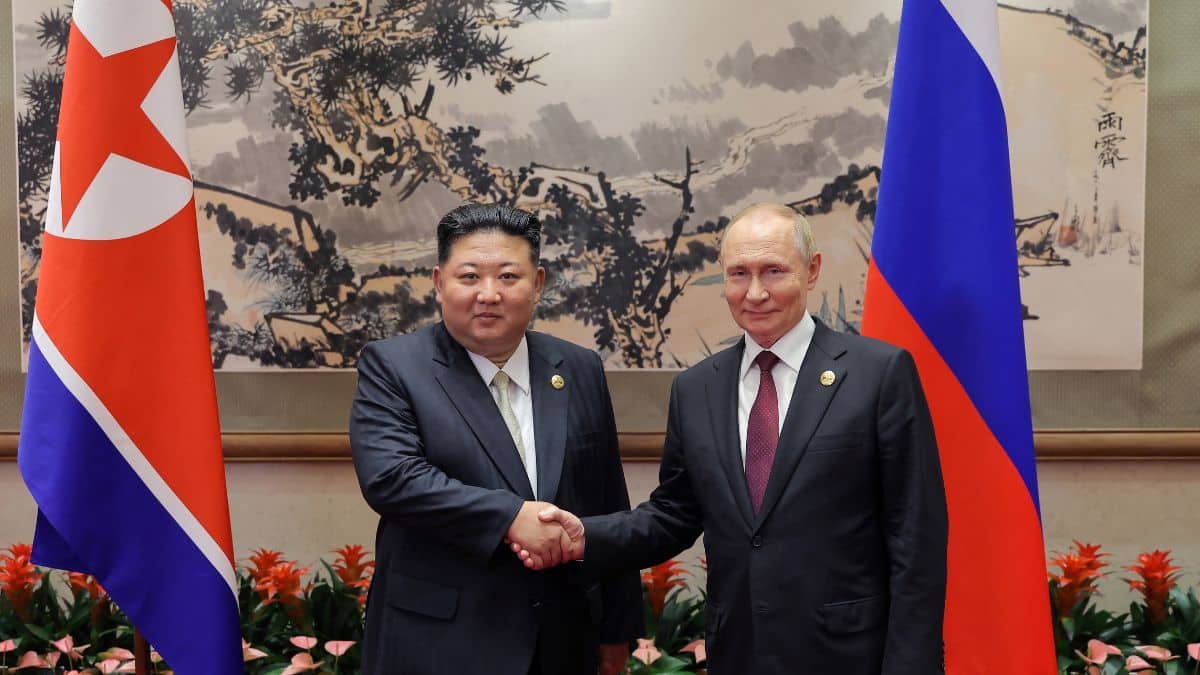
Kim Jong Un is the leader of North Korea, and Vladimir Putin is the leader of Russia.
They are friends and want to stay close.
Kim sent Putin a message on a special day for his country called Korean Liberation Day.
That day remembers when Japan lost World War Two and stopped ruling over Korea 81 years ago.
Russia and North Korea have become closer because North Korea is helping Russia in a war with Ukraine.
A Russian ship even visited a port in North Korea to celebrate the day.
South Korea's leader, Lee Jae Myung, wants to talk peacefully with North Korea and end the old war between them.
But North Korea said no to those talks.
Russia's leader also visited a small island near Japan, which made Japan upset.

Kim Jong Un reaffirmed deepening North Korea-Russia ties in a reply to Vladimir Putin's congratulatory message as Pyongyang marked the 81st anniversary of Japan's WWII surrender.
Putin said the bond was forged in the Soviet fight against Japan and that cooperation would continue 'in all the sectors.'
North Korea has deployed troops and weapons to support Russia's war in Ukraine — its most significant involvement in a war since the 1950s.
The Russian ship Pallada arrived at Wonsan port for a goodwill visit tied to the liberation anniversary.
South Korean President Lee Jae Myung called for talks to replace the Korean War armistice with a 'peace regime,' but Pyongyang rejected the overtures and criticized U.S.-South Korean military exercises as provocations.
- Who
- North Korean leader Kim Jong Un, Russian President Vladimir Putin, and South Korean President Lee Jae Myung.
- What
- Kim Jong Un reaffirmed deepening North Korea-Russia ties in a reply to Putin's congratulatory message as Pyongyang marked Korean Liberation Day, while Seoul renewed calls for inter-Korean dialogue on a 'peace regime.'
- Where
- Pyongyang and Wonsan port in North Korea; Seoul in South Korea; an island off Hokkaido claimed by Tokyo and seized by Moscow after Japan's 1945 surrender.
- When
- On Saturday, the 81st anniversary of Japan's WWII surrender; reported by KCNA on Sunday, Aug 16.
- Why
- To reaffirm a friendship rooted in the Soviet fight against Japan and deepened by North Korea's support for Russia's war in Ukraine; Lee sought dialogue to formally end the Korean War.
Dialogue and Peace Regime
Rejection and Deterrence
Inter-Korean talks
Dialogue and Peace Regime
South Korean President Lee Jae Myung called for talks with North Korea aimed at peaceful coexistence, proposing safeguards to prevent conflict and replacing the armistice with a 'peace regime' to formally end the 1950-1953 Korean War.
Rejection and Deterrence
Pyongyang rejected Lee's overtures and criticized U.S.-South Korean military exercises as provocations.
Disputed island visit
Dialogue and Peace Regime
Japan condemned Putin's visit to an island off Hokkaido that Tokyo claims and that Moscow seized in the days after Japan's 1945 surrender.
Rejection and Deterrence
Putin carried out the visit, while Russia and North Korea emphasized a friendship forged through the Soviet fight against Japan in World War Two.
Key facts
- Event
- Korean Liberation Day (81st anniversary of Japan's WWII surrender)
- Date
- Saturday anniversary; reported by KCNA on Sunday, Aug 16
- North Korean leader
- Kim Jong Un
- Russian president
- Vladimir Putin
- South Korean president
- Lee Jae Myung
- Russian goodwill visit
- Ship Pallada at Wonsan port
- Ukraine war context
- North Korea deployed troops and weapons to support Russia
- Korean War status
- 1950-1953 war ended in armistice with no peace treaty
Quotes

Vladimir Putin
Russian President
“"carried forward the history of common struggle for justice and precious traditions of friendship"”
 theprint.in
“cooperation would continue "in all the sectors"”
theprint.in
 firstpost.com
Sources
Related news

Kim tells Putin: 'more excellent future' ahead in Russia ties
Kim Jong Un Says He's 'Proud' of North Korea-Russia Ties

Putin says Russia, North Korea coordinating on regional security
Lavrov Says Russia, North Korea Seek New Righteous World Order
Zelensky warns Russia to deploy 50,000 North Korean troops

South Korean President Proposes Talks to End Korean War

Japan Cricket Boss Defends Asian Games Facilities Against Concerns

Mitsubishi Revives Pajero With 201PS Fifth-Generation SUV

Europe's Bond Selloff Deepens as Middle East Tensions Lift Oil

Uday Kotak Warns Global Bond Markets Face Roller-Coaster Volatility
Global Bond Sell-Off Pushes Japan Yields To 30-Year High