

1 day ago
Foreigner Describes Indian Honking As A Small Radar

Damon Zumbroegel made a video about the many horns heard on Indian roads.
He said drivers in India often honk to tell others that they are nearby.
In some Western countries, honking can sound more like scolding or anger.
Damon compared Indian honking to a small radar that helps people notice traffic around them.
He said drivers use their eyes and ears together while moving through busy roads.
Many people online agreed that the horn can act like a communication system.
Some commenters said the meaning of honking changes depending on the country.
Others explained that friendly warning honks are also used in places such as Vietnam and Nepal.

Architect and creator Damon Zumbroegel said Indian drivers often use horns to signal their presence, rather than express anger.
He compared the constant honking to a small radar that helps drivers sense nearby vehicles in busy traffic.
Zumbroegel said frequent honking can be interpreted very differently in Western countries, where it may seem aggressive.
The video prompted commenters to describe Indian horns as a communication medium, language, or form of Morse code.
Others noted that similar warning-focused honking is also used in countries including Vietnam and Nepal.
- Who
- Architect and creator Damon Zumbroegel, along with commenters responding to his video.
- What
- A viral video discussed why horns are used frequently on Indian roads and whether honking communicates presence rather than anger.
- Where
- The observation concerns Indian roads, with comparisons to Western countries, Vietnam, Nepal, and the United States.
- When
- The video was recently posted on X; the article does not give a specific date.
- Why
- Zumbroegel said honking helps drivers signal where they are amid busy traffic, while commenters discussed how its meaning differs across countries.
Honking As Communication
Honking As Aggression
Meaning of the horn
Honking As Communication
Zumbroegel and several commenters said Indian drivers often honk to announce their presence or warn approaching traffic.
Honking As Aggression
Zumbroegel and commenters said honking in the United States and other Western countries is more likely to be understood as scolding, impatience, or aggression.
Driving environment
Honking As Communication
Supporters argued that frequent signals can help drivers stay aware of vehicles in dense, complicated traffic.
Honking As Aggression
Another commenter cautioned that Indian driving should not be compared directly with Western driving because population density and traffic conditions differ.
Key facts
- Observer
- Damon Zumbroegel, an architect and creator
- Platform
- X
- Main comparison
- Indian honking was described as communication, while honking in many Western countries was described as more aggressive.
- Zumbroegel’s analogy
- He compared a vehicle horn to a small radar.
- Online reaction
- Commenters called the horn a communication medium, Morse code, and a language.
- Other countries mentioned
- Vietnam, Nepal, and the United States
- Traffic setting
- The video showed scooters, cars, and tuk-tuks moving through busy traffic.
Quotes
Damon Zumbroegel
Architect and creator who discussed Indian driving practices in a video on X
“And for some reason, nobody really crashes.”
 NDTV
NDTV
“They want to kill you.”
NDTV
Sources
Related news

Mercedes-Benz S-Class Bhutan Drive Reveals True Meaning of Motoring Freedom

Harsh Goenka Joins Debate Over Indian Tourists’ Bus Singing

Gorilla-Led Traffic Campaign Draws Attention In Indore

Indian Man Challenges Foreigner’s Backhanded Compliment in Viral Video

India proposes mandatory vehicle-to-vehicle communication for new vehicles

Indore Traffic Violators Manage Roads During Awareness Drive

Nepal Thanks India as Glacial Disaster Rescue Efforts Continue

Nepal Warns of Heavy Rain After Deadly Floods
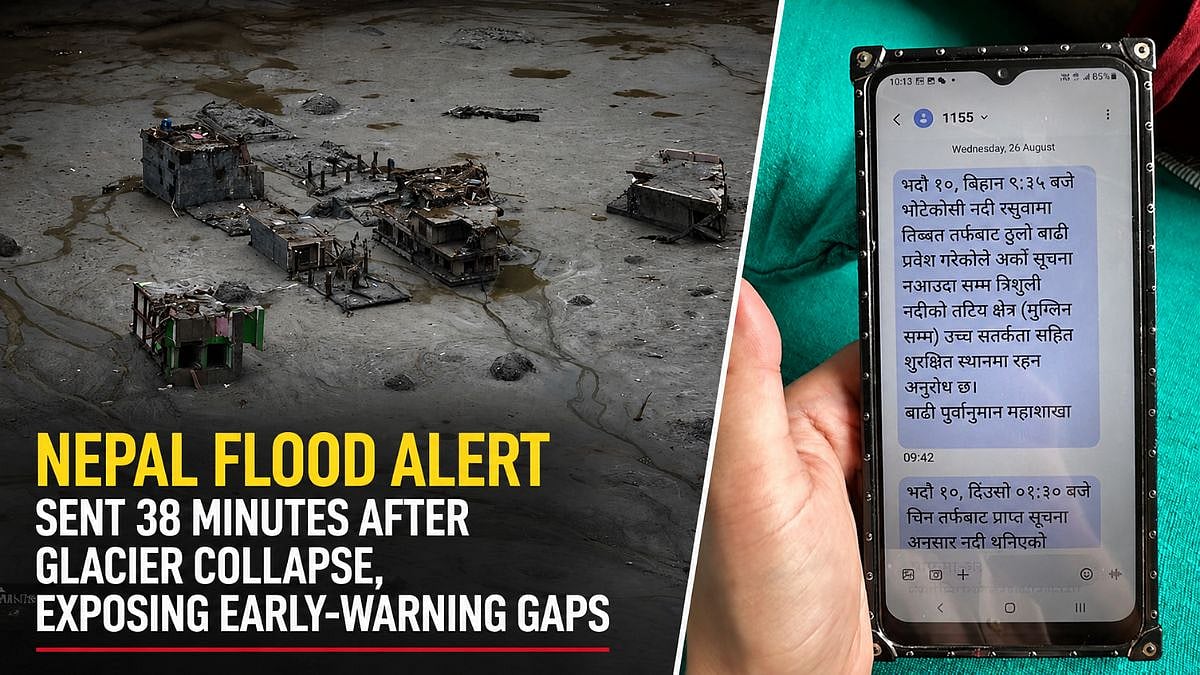
Nepal Flood Exposes Delayed Alerts and Cross-Border Warning Gaps

India to Rebuild Nepal School After Principal Saves 1,600

Maharashtra Mountaineers Join Search for Missing Nepal Trekkers
