

3 weeks ago
Russia-linked accounts spread far-right propaganda online amid Ceuta crisis

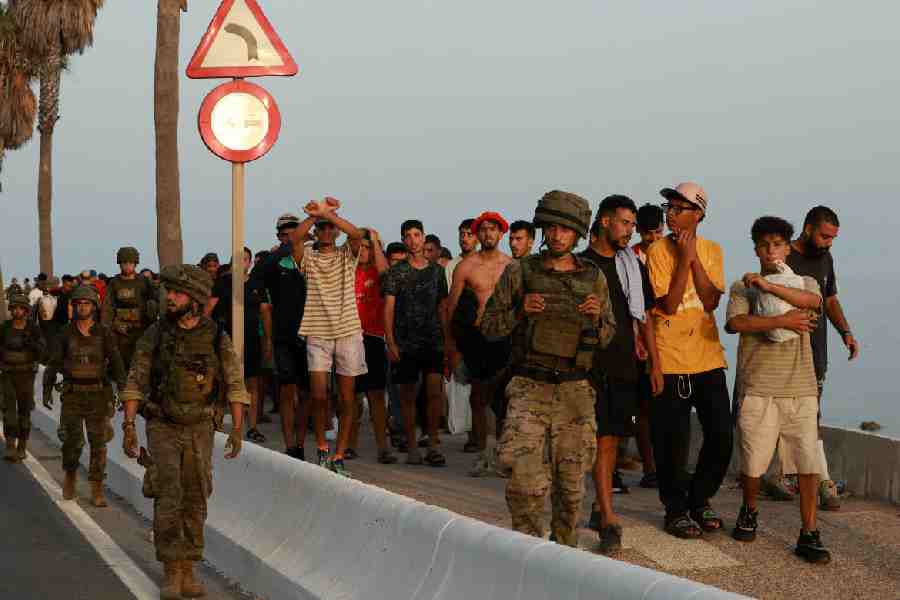
After a very large group of people tried to enter a small Spanish city in Africa called Ceuta, many angry messages appeared online about them.
Some of those messages came from accounts connected to Russia's military.
People who study fake information found that these messages reached more than half a million people.
About 72,000 people tried to get into Ceuta from Morocco, and most were sent back.
The messages called the event a planned attack and said Spanish leaders helped make it happen.
Some of the messages used hateful ideas about religion.
The messages were written in seven different languages and got more than 720,000 views in just six hours.
The researchers say the same groups seemed to be working together, like a machine.
They worry this machine is ready to spread more fake news the next time something like this happens in Europe.

Russia-linked accounts promoted far-right narratives following the Ceuta migration crisis, reaching more than 500,000 people, according to analysis by counter-disinformation group 411.
Around 72,000 migrants were estimated to have entered the Spanish enclave of Ceuta from Morocco, with the vast majority swiftly returned.
Accounts framed the migration as a deliberately coordinated 'assault' and suggested Spanish authorities were complicit, including Islamophobic and antisemitic conspiracy theories.
The narratives spread in seven languages and drew more than 720,000 views within six hours on 1 August, based on roughly 4.5 million social media posts examined.
The analysis traced the propaganda's origin to Rybar, a Telegram channel linked to Russian intelligence, amplified by 'repeater' accounts including those linked to the Pravda network.
- Who
- Russia-linked social media accounts, including ones connected to the Russian military and the Telegram channel Rybar, spread the narratives; the analysis was shared by counter-disinformation group 411.
- What
- Coordinated far-right propaganda that framed the Ceuta migration as a deliberate 'assault', suggested Spanish authorities were complicit, and used Islamophobic and antisemitic conspiracy theories.
- Where
- Ceuta, the Spanish enclave in North Africa; the narratives spread across Europe in seven languages.
- When
- In the days following 1 August, when the migration influx into Ceuta began.
- Why
- Analysts say the coordinated disinformation exploits migration crises to push destabilising far-right narratives across Europe.
Key facts
- Estimated migrants entering Ceuta
- ~72,000
- Start of propaganda influx
- 1 August
- People reached by posts
- More than 500,000
- Views in six hours on 1 August
- More than 720,000
- Social media posts examined
- Roughly 4.5 million
- Languages of narratives
- Seven
- Origin channel
- Rybar, a Telegram channel with links to Russian intelligence
Quotes
Saman Nazari
Lead researcher at Alliance4Europe, a Brussels‑based nonprofit
“We keep seeing this across Europe, and we find it very interesting. It seems like there is some type of machinery in place, or structure.”
 firstpost.com
Sources
Related news

Russia Exploits Poland-Ukraine WWII Massacre Dispute in Disinformation Push

Ceuta on edge: Spain, Morocco brace for new migrant incursion

OpenAI Shuts Down Russian Accounts in Covert Influence Campaign
Meta and TikTok agree to fact-check Spain border crossing content

Ikea cuts European prices as cost pressures weaken demand

Europe's Bond Selloff Deepens as Middle East Tensions Lift Oil

China’s Rapid Car Development Faces Growing Safety Scrutiny

CNG Prices Rise Rs 2 per Kilogram in Pune

China Challenges US Leadership in Escalating Global AI Contest