3 hrs ago
Experts Warn Hebbal Tunnel Could Threaten Groundwater and Worsen Flooding
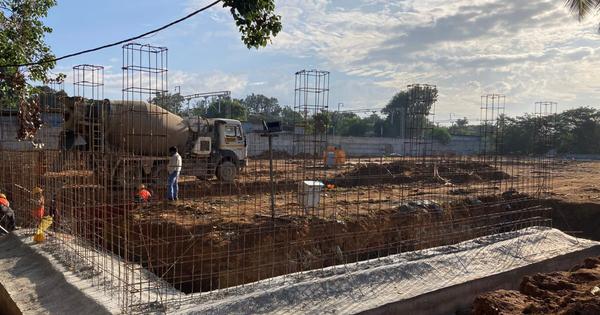
Bengaluru is planning a road tunnel near Hebbal Lake to help cars move more easily.
The tunnel would cost about ₹1,385 crore.
Some traffic experts say it may not solve traffic because jams could simply move to the tunnel’s entrances and exits.
Water experts are worried because the tunnel would be dug deep into the ground.
Digging could temporarily lower groundwater and might change underground water pathways.
The finished tunnel could also affect how rainwater reaches the lake and groundwater.
The tunnel entrance would be in a low place that can flood during heavy rain.
Officials say the tunnel will be watertight and will use pumps, drains and barriers to manage water.
A court has asked the state to explain how the project will protect Hebbal Lake’s water flows.

The proposed 2.2-kilometre, three-lane bidirectional tunnel is estimated to cost ₹1,385 crore.
An Indian Institute of Science analysis says the tunnel may shift congestion to its entry and exit points and reach capacity by 2047.
Experts warn excavation and a permanent watertight structure could disrupt groundwater recharge and underground water flows.
The tunnel entrance is near Hebbal Lake in a flood-prone, low-elevation area, while the DPR acknowledges inadequate stormwater capacity.
The Bangalore Development Authority says hydrological studies and flood-control measures have been undertaken, but detailed assessments have not been publicly released.
- Who
- The Bangalore Development Authority is executing the project, while citizens, environmental experts and researchers have raised objections; the Karnataka High Court is examining a related public interest litigation.
- What
- A proposed 2.2-kilometre, three-lane bidirectional tunnel near Hebbal Lake is facing criticism over traffic performance, flooding and groundwater risks.
- Where
- The tunnel would run from the Hebbal flyover junction through the Gandhi Krishi Vigyana Kendra campus and end at the Karnataka Veterinary, Animal and Fisheries Sciences University campus in north Bengaluru.
- When
- Groundwork reportedly began in early August; the Karnataka High Court held relevant hearings on August 6 and September 3.
- Why
- It is intended to ease congestion at Hebbal Junction, but critics say it could shift traffic bottlenecks and harm flood mitigation and groundwater recharge.
Project critics and researchers
Project authorities and supporters
Traffic benefits
Project critics and researchers
The Sustainable Transportation Lab at the Indian Institute of Science says the tunnel is a highly localised improvement that may merely shift congestion to its entry and exit points. Satya Arikutharam says faster arrivals could create quicker queue build-ups and local traffic jams.
Project authorities and supporters
The project is intended to ease congestion at Hebbal Junction, a major interchange connecting the airport with the rest of Bengaluru.
Lake and groundwater impacts
Project critics and researchers
Environmental experts and petitioners say the project lacks a publicly available hydrological, groundwater or lake-impact assessment and could reduce recharge, disrupt underground flows or reduce the lake’s flood-storage capacity.
Project authorities and supporters
The Bangalore Development Authority says it has undertaken hydrological studies. A geotechnical report before the court states that the lake’s inflow and outflow would not be affected.
Flood protection
Project critics and researchers
Researchers say the tunnel entrance is at a low point likely to flood and that construction in or near Hebbal Lake’s buffer zone could reduce floodplain storage and worsen flooding.
Project authorities and supporters
The DPR proposes a watertight tunnel, continuous drainage, flood barriers, sump pumps, canopies and side drains to manage seepage and rainwater.
Key facts
- Estimated cost
- ₹1,385 crore
- Tunnel length
- A little over 2 kilometres; the DPR describes it as 2.2 kilometres
- Design
- Three-lane, bidirectional tunnel built using the cut-and-cover method
- Excavation depth
- Up to 18.5 metres, or about 60 feet
- Hebbal Lake size
- 141 acres
- Traffic projection
- The IISc analysis says the tunnel would operate at or beyond capacity in all modelled scenarios by 2047
- Groundwater status
- The Central Ground Water Board identifies Yelahanka taluk, where Hebbal falls, as overexploited
Quotes
TJ Renuka Prasad
Retired professor of geology at Bangalore University
“The water stored in the underlying layer in the buffer zone is the water that, during the post-monsoon period, comes to the lake. That’s how the lake becomes perennial.”
 scroll.in
“If you cut the supply of water through these drainage systems, then there will be less groundwater recharge.”
scroll.in
Sources
Related news
Karnataka High Court Keeps Hebbal Tunnel Construction Moving
IISc Study Questions Cost and Traffic Benefits of Hebbal Tunnel

IISc Report Says Hebbal Tunnel May Shift Bengaluru Traffic Chaos

Bengaluru BJP MPs Challenge Tunnel Road Project Safeguards

BJP Says Bengaluru Law Changes Threaten Parks, Lakes, Planning
GSI Warns Hebbal Tunnel Could Threaten Lalbagh’s Ancient Rock
Nanobody Antivenom Shows Promise Against Indian Cobra Venoms
IIT Kanpur Announces Third Cohort Of AI Course

Karnataka's SFAL Signs Seven Semiconductor Partnerships at SEMICON India

Experts Call for New Skills as India Builds Semiconductor Industry