

1 week ago
Why India’s Parties May Need Their Own Thatcher Moments

Margaret Thatcher was a powerful British leader, but many people eventually became tired of her leadership.
Her Conservative Party replaced her because it feared losing the next election.
The party then won again under a new leader.
The article asks whether some Indian political parties face a similar problem.
It says leaders such as Mulayam Singh Yadav and Prakash Singh Badal left their parties, which later survived.
It argues that the Congress party has struggled to replace its leadership.
It also says family members do not always have the ability to win elections.
New parties and new leaders may therefore become more important in India.

Margaret Thatcher’s Conservative Party replaced her in 1990 after her leadership became an electoral liability.
The article argues that leaders can become liabilities when voters grow tired of their style or repeated electoral failures.
Several Indian parties, including the Congress party, Samajwadi Party and Akali Dal, are discussed as examples of leadership succession or stagnation.
The Dravida Munnetra Kazhagam’s defeat by actor-politician C. Joseph Vijay’s new party is presented as evidence of political change in Tamil Nadu.
The article predicts more leadership changes in Indian politics as parties respond to voter disenchantment and dynastic decline.
- Who
- The article discusses Margaret Thatcher, Indian political leaders, and parties including the Congress party, Samajwadi Party, Akali Dal, Dravida Munnetra Kazhagam, Trinamool Congress, Bharatiya Janata Party and Communist Party of India (Marxist).
- What
- It examines when a political leader becomes a liability to their party and argues that leadership changes may be needed to remain electorally competitive.
- Where
- The discussion covers the United Kingdom and India, particularly Tamil Nadu.
- When
- The article was published on August 23, 2026, and discusses Thatcher’s removal in 1990 as well as recent and expected developments in Indian politics.
- Why
- The author argues that voter fatigue, electoral defeats and the declining effectiveness of dynastic succession can force parties to seek new leaders or create new political organizations.
Key facts
- Thatcher’s removal
- Margaret Thatcher resigned in 1990 after members of her Conservative Party turned against her.
- Conservative election result
- The Conservative Party won the 1992 election after replacing Thatcher.
- Indian comparison
- The article compares Thatcher’s ouster with leadership changes involving Mulayam Singh Yadav and Prakash Singh Badal.
- Congress party
- The author argues that the Congress party’s leadership has become a liability but says it has not acted on that realization.
- Tamil Nadu contest
- C. Joseph Vijay’s party is described as winning 49 seats more than the Dravida Munnetra Kazhagam.
- Dynastic succession
- The article says that sons and daughters taking over political parties are not guaranteed to win elections.
- Future outlook
- The author predicts that more ‘Thatcher moments’ will occur in Indian politics.
Quotes
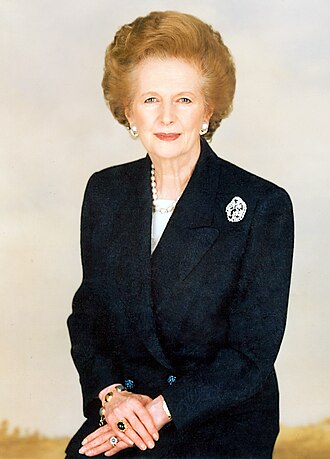
Margaret Thatcher
Former British prime minister discussing the authority expected of the office
“I think sometimes the prime minister should be intimidating. There’s not much point being a weak, floppy thing in the chair, is there?”
 thehindubusinessline.com
“people need to be a bit scared of you if you’re going to get your own way”
thehindubusinessline.com
Sources
Related news

Youth buried Congress; power intoxication caused downfall: Yogi Adityanath
Congress Leader Gets Opposition Front-Row Seat Amid TVK Tensions
After Jantar Mantar, BJP and Congress Face Internal Tests

Mamata's Trinamool Faces Rebel Challenge After Assembly Defeat

Tata Sons Begins Succession Race After Chandrasekaran Steps Down
Mahua Moitra Questions India’s 7.8% GDP Growth Figures
Expired Fire Certificate Prompts Notice to Seal Abhishek Office

Kolkata Janmashtami Committee Shift Sparks Religious Harmony Debate

North Dinajpur TMC Leader Arrested; Missing Balurghat Boys Rescued
Bengal’s New BJP Government Faces Test Beyond Victory
