1 week ago
Indian Railways Launches Drive to Improve Station Drinking-Water Safety
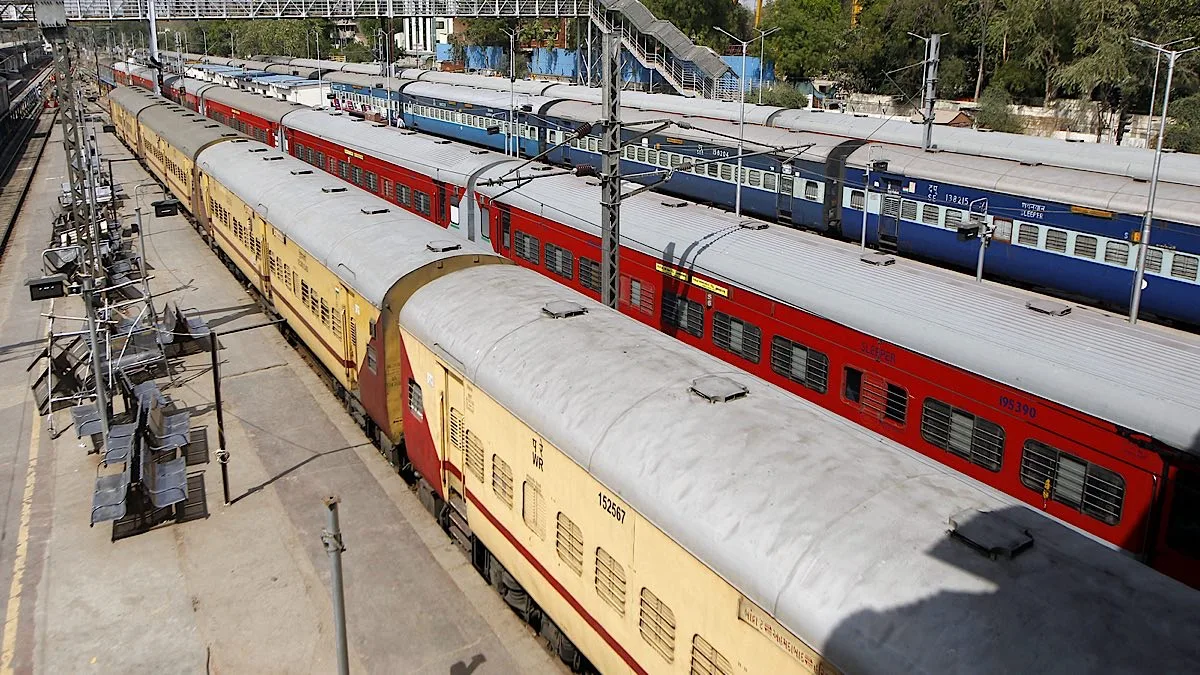
Indian Railways is cleaning and checking drinking-water systems at stations.
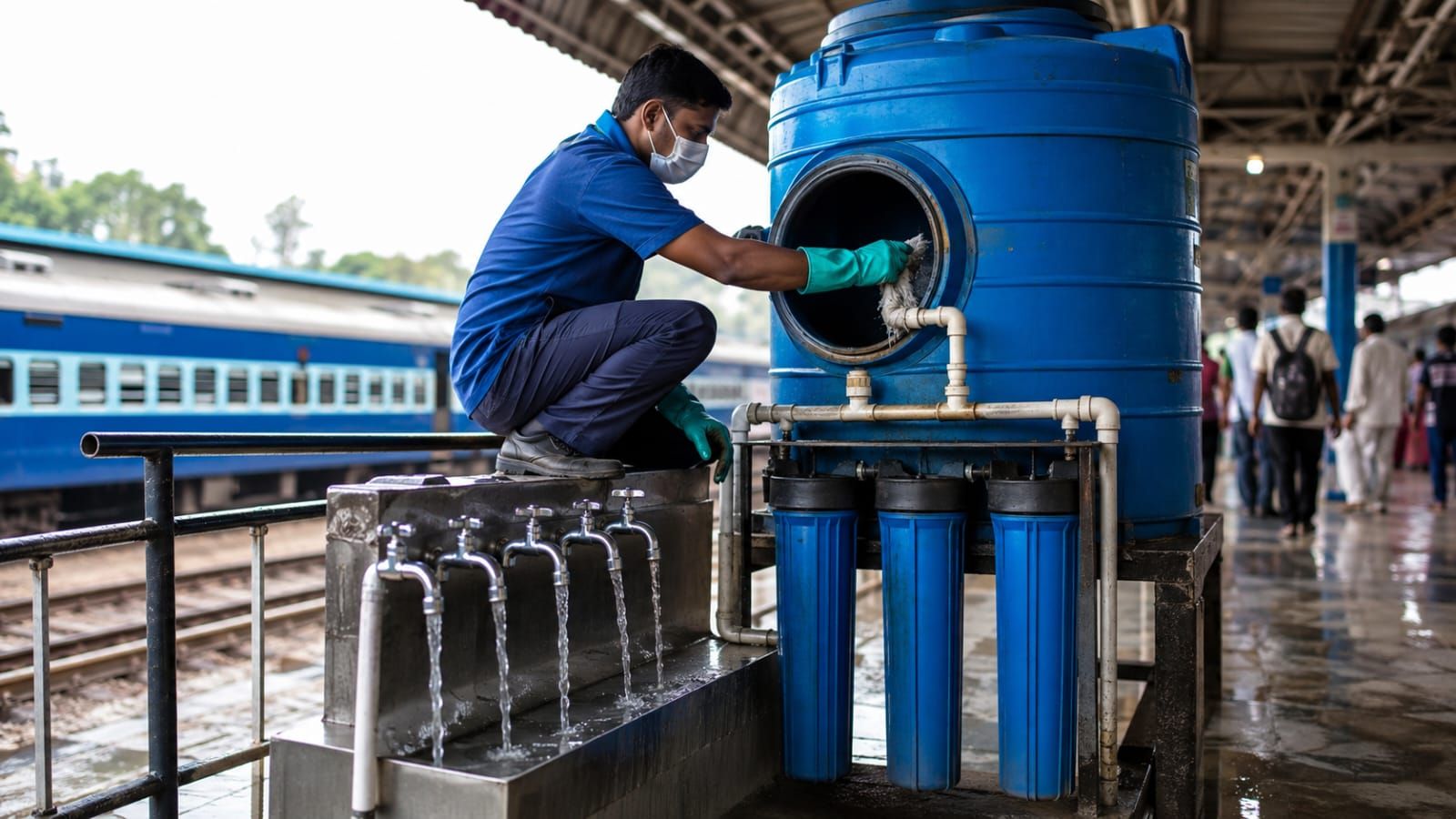
Workers will drain, scrub and disinfect water tanks.
They will inspect pipes, taps, filters, coolers, pumps and water vending machines.
Broken equipment and leaks will be repaired or replaced.
Officials will test water for chemicals and harmful bacteria.
They will also check chlorine levels every day.
The work will include railway colonies and workplaces, not just passenger areas.
The drive follows an audit that found E. coli bacteria in samples from some stations.
The goal is to provide safer and cleaner drinking water.

Indian Railways has launched a network-wide drive to clean and disinfect drinking-water tanks, filters and related facilities.
Zonal railways will inspect water sources, treatment plants, tanks, taps, coolers, purification systems and vending machines.
Tanks will be drained, desludged, scrubbed and disinfected, while damaged equipment and leaking pipelines will be repaired or replaced.
Water samples will undergo physical, chemical and bacteriological testing, alongside daily residual-chlorine monitoring and re-chlorination when necessary.
A Comptroller and Auditor General of India report found E. coli in samples from eight of 49 inspected railway stations.
- Who
- Indian Railways, the Railway Board and zonal railway authorities.
- What
- A special drive to inspect, clean, disinfect, repair and test drinking-water infrastructure.
- Where
- Railway stations across the network, as well as railway colonies and workplaces.
- When
- The articles do not specify a launch date; the audit is described as recent.
- Why
- To improve drinking-water hygiene and safety, prevent contamination, address infrastructure deficiencies and strengthen water-quality monitoring.
Audit Findings and Concerns
Railway Corrective Measures
Water-quality compliance
Audit Findings and Concerns
The Comptroller and Auditor General of India reported E. coli and total coliforms in some samples, as well as deficiencies in residual-chlorine, bacteriological and chemical testing.
Railway Corrective Measures
Indian Railways is introducing testing from water sources through points of consumption, daily residual-chlorine monitoring and corrective measures such as re-chlorination.
Inspection and maintenance
Audit Findings and Concerns
The audit said water-supply inspections were not conducted at the prescribed frequency and that testing requirements under the Uniform Drinking Water Quality Protocol were missed for several parameters.
Railway Corrective Measures
The Railway Board has directed comprehensive inspections, tank cleaning, infrastructure repairs, filtration-system maintenance and station-wise reporting.
Scope of the response
Audit Findings and Concerns
The audit identified water-quality problems at eight of 49 inspected stations, including stations in Mumbai and cases in Kerala, Tamil Nadu and Jharkhand.
Railway Corrective Measures
The special drive is intended to cover the railway network, passenger facilities, railway colonies and workplaces.
Key facts
- Infrastructure covered
- Water sources, treatment and filtration plants, underground and overhead tanks, PVC tanks, taps, booths, coolers, hand pumps, borewells and vending machines.
- Tank treatment
- Tanks will be drained, desludged, scrubbed and disinfected, with covers, vents and overflow points protected from contamination.
- Repairs
- Damaged tanks, pipelines and filters will be repaired or replaced, and leaks will be addressed.
- Water testing
- Samples will receive physical, chemical and bacteriological testing at sources, treatment outlets, tanks, coolers, vending machines and representative taps or booths where feasible.
- Chlorine monitoring
- Residual chlorine will be checked daily, with re-chlorination or other corrective action when required.
- Station reporting
- Zonal railways will submit station-wise deficiencies and corrective actions for time-bound monitoring.
- Audit finding
- The Comptroller and Auditor General of India reported E. coli in samples from eight of 49 inspected stations, including cases in Mumbai, Kerala, Tamil Nadu and Jharkhand.
Quotes

Comptroller and Auditor General (CAG) report
India's public auditor, whose report assessed passenger amenities and sanitation at non-suburban railway stations
“Inspection of the water supply systems was not carried out as per prescribed periodicity.”
 indianexpress.com
Sources

Related news
Indian Railways Plans Major Water Safety Overhaul Across Stations

Railways Launch 10-Day Water Cooler Inspection Drive After CAG Findings
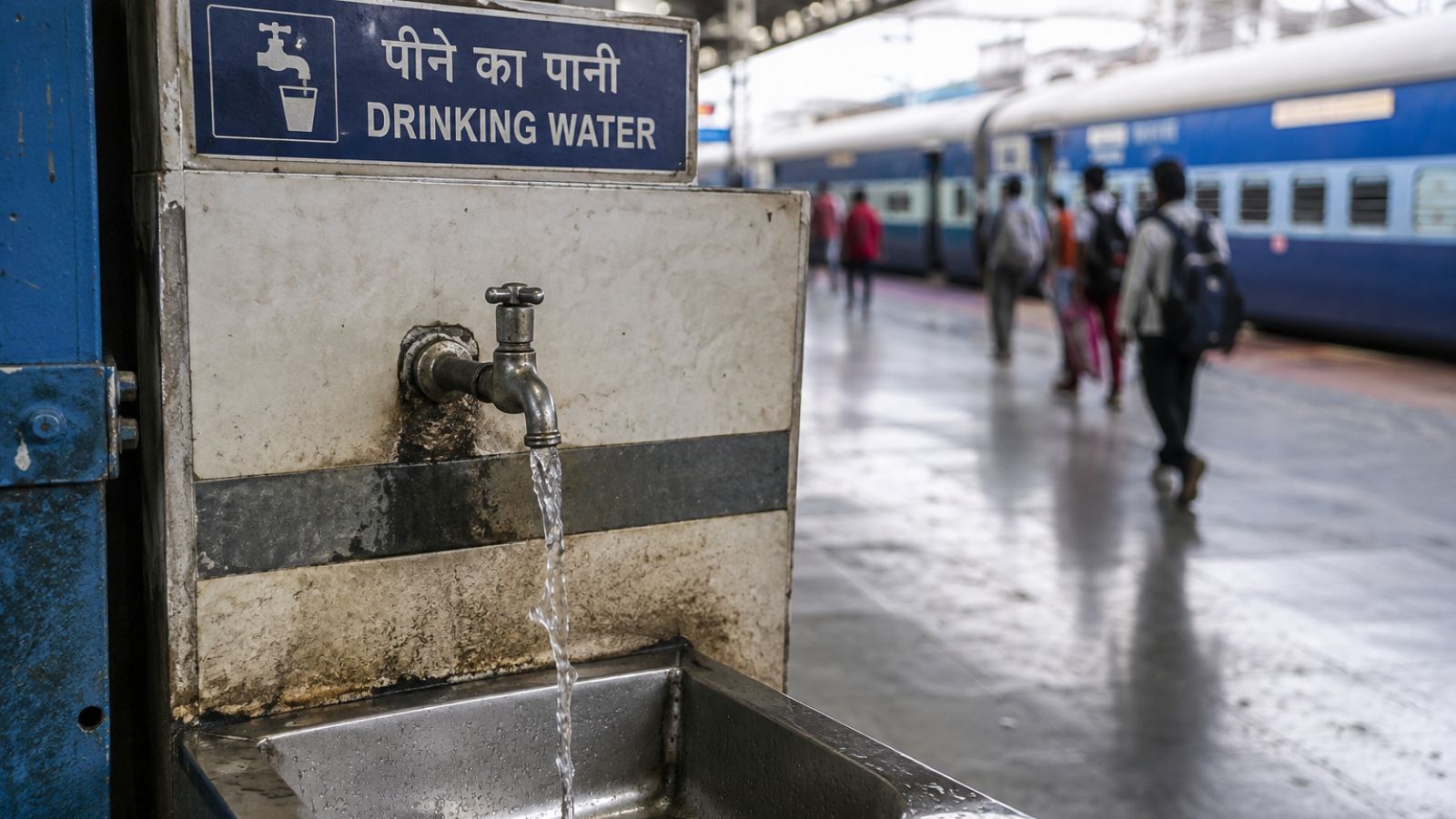
Railways order filtration at 20,000 locations after E. coli report
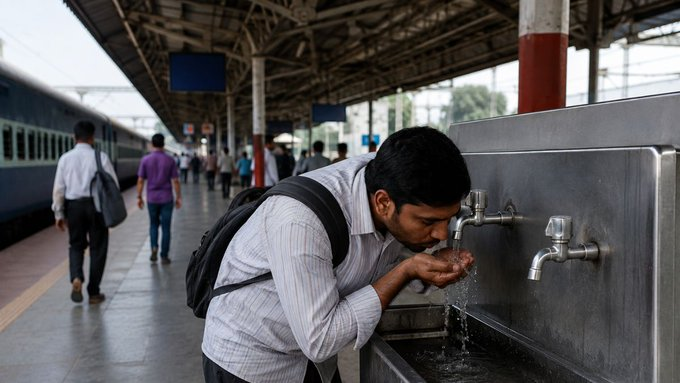
Railways Order Safe Drinking Water Drive After CAG Report

CAG flags E. coli bacteria in railway station drinking water

CAG Report Finds E.coli in Railway Station Drinking Water

India Study Finds Resistant Infections Deadlier and More Expensive

Stanford AI creates new synthetic viruses, raising biosecurity concerns

AI Helps Scientists Create 16 New Viruses Targeting Resistant Bacteria