1 hr ago
CJI Surya Kant says judicial trust depends on fair process
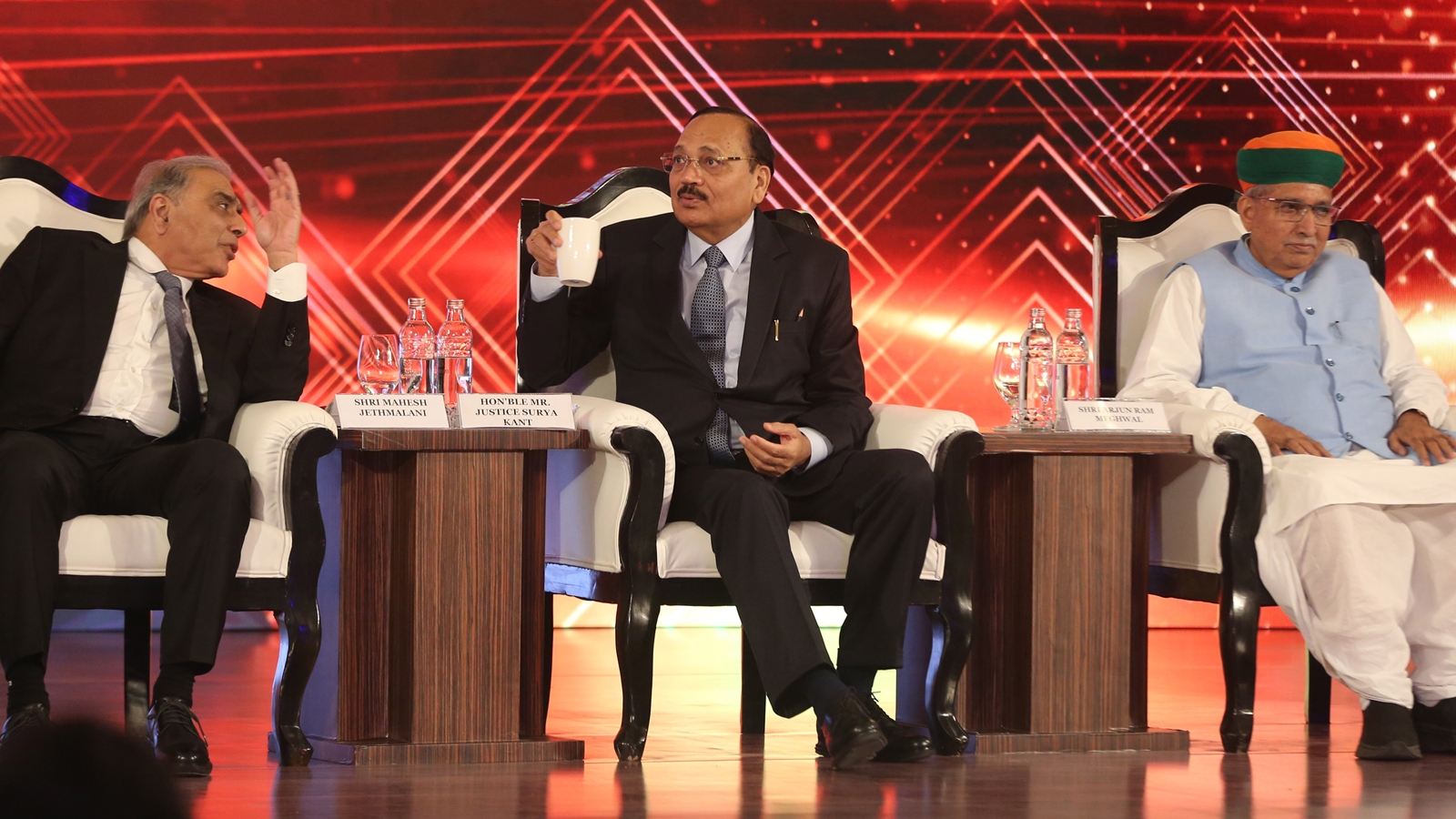
Chief Justice Surya Kant explained that people do not have to like a court’s decision to trust it.
Trust means believing that the court used a fair process.
Courts should explain why they made their decisions, not just announce the result.
They should also allow people to ask questions and offer criticism.
Kant said courts need to keep improving and should not remain unchanged.
He defended the systems used to appoint judges and handle complaints.
He said publishing every complaint could sometimes be misused.
The goal is for courts to be open, fair, and responsible.

Chief Justice of India Surya Kant said public trust differs from public approval and depends on fair procedures.
He said courts must explain their reasoning, remain open to scrutiny, and accept questioning or criticism when necessary.
Speaking at the Ram Jethmalani Memorial Lecture in Delhi, Kant described transparency as more than open hearings.
He said judicial reforms are necessary, while defending existing mechanisms for appointments and complaints against judges.
Kant said internal complaint mechanisms may better protect objectivity than publishing every complaint against judicial officers.
- Who
- Chief Justice of India Surya Kant, with comments from Senior Advocates Harish Salve and Mahesh Jethmalani.
- What
- Kant addressed judicial transparency, public trust, criticism, appointments, reforms, and complaints against judges.
- Where
- Delhi.
- When
- Monday, at the 6th Ram Jethmalani Memorial Lecture.
- Why
- To discuss transparency and public trust as pillars of the legal system, including the need for scrutiny and reform.
Greater public transparency and reform
Strong internal safeguards and institutional processes
Judicial reform
Greater public transparency and reform
Speakers including Harish Salve and Mahesh Jethmalani raised the need for administrative reforms, including changes related to judicial appointments.
Strong internal safeguards and institutional processes
Surya Kant agreed that reform is necessary but said some issues are not prudent to address from a public platform and defended the development and functioning of the Collegium system.
Complaints against judges
Greater public transparency and reform
Public disclosure of complaints could increase scrutiny and accountability of judicial officers.
Strong internal safeguards and institutional processes
Kant warned that complaints could be filed over routine judicial actions and said a strong, objective internal mechanism may be preferable to placing every complaint on a public website.
Meaning of trust
Greater public transparency and reform
Public confidence can be strengthened when courts remain open to examination, questioning, and criticism.
Strong internal safeguards and institutional processes
Trust does not require courts to deliver popular outcomes; it requires people who lose cases to still believe the decision-making process was fair.
Key facts
- Speaker
- Chief Justice of India Surya Kant
- Event
- 6th Ram Jethmalani Memorial Lecture
- Lecture topic
- ‘Justice seen to be done: Transparency and public trust as pillars of the legal system’
- Core distinction
- Public trust is based on fairness of process, not public approval of outcomes.
- Transparency standard
- Courts should make the reasoning behind decisions available for examination, not only the results.
- Judicial criticism
- Kant said the judiciary is not and cannot be averse to legitimate criticism.
- Reform position
- He said reform is welcome and that institutions cannot survive by remaining static.
Quotes
Surya Kant
Chief Justice of India speaking at the Ram Jethmalani Memorial Lecture
“A court that announces its verdicts but keeps its reasoning to itself has not really been transparent, whatever else it may have done.”
 indianexpress.com
“A court does not earn trust by being liked, or by handing out the outcomes people wanted.”
indianexpress.com
Sources
Related news

CJI Surya Kant Urges Due Process in Rajasthan Controversy
Yogi Adityanath Links Public Trust to Stronger Democratic Governance
Harish Salve Calls for Judicial Reset Over Delays and Accountability

CJI Surya Kant Praises Justice Sanjay Karol At Farewell
Letters Against Rajasthan Justice Expose India’s Judicial Accountability Gap
India’s Chief Justice Sets Limits on AI in Courts

RTI Reply Withholds Parliament Disruption Costs as Productivity Falls
Bhagwat’s New York Speech Draws Contrast With Mamdani

Supreme Court Grants Interim Bail to Anwar Dhebar in CSMCL Case

BJP accuses CJP of hypocrisy over party video