13 hrs ago
Kaata Wash Protects Delicate Dhakai Jamdani Saris
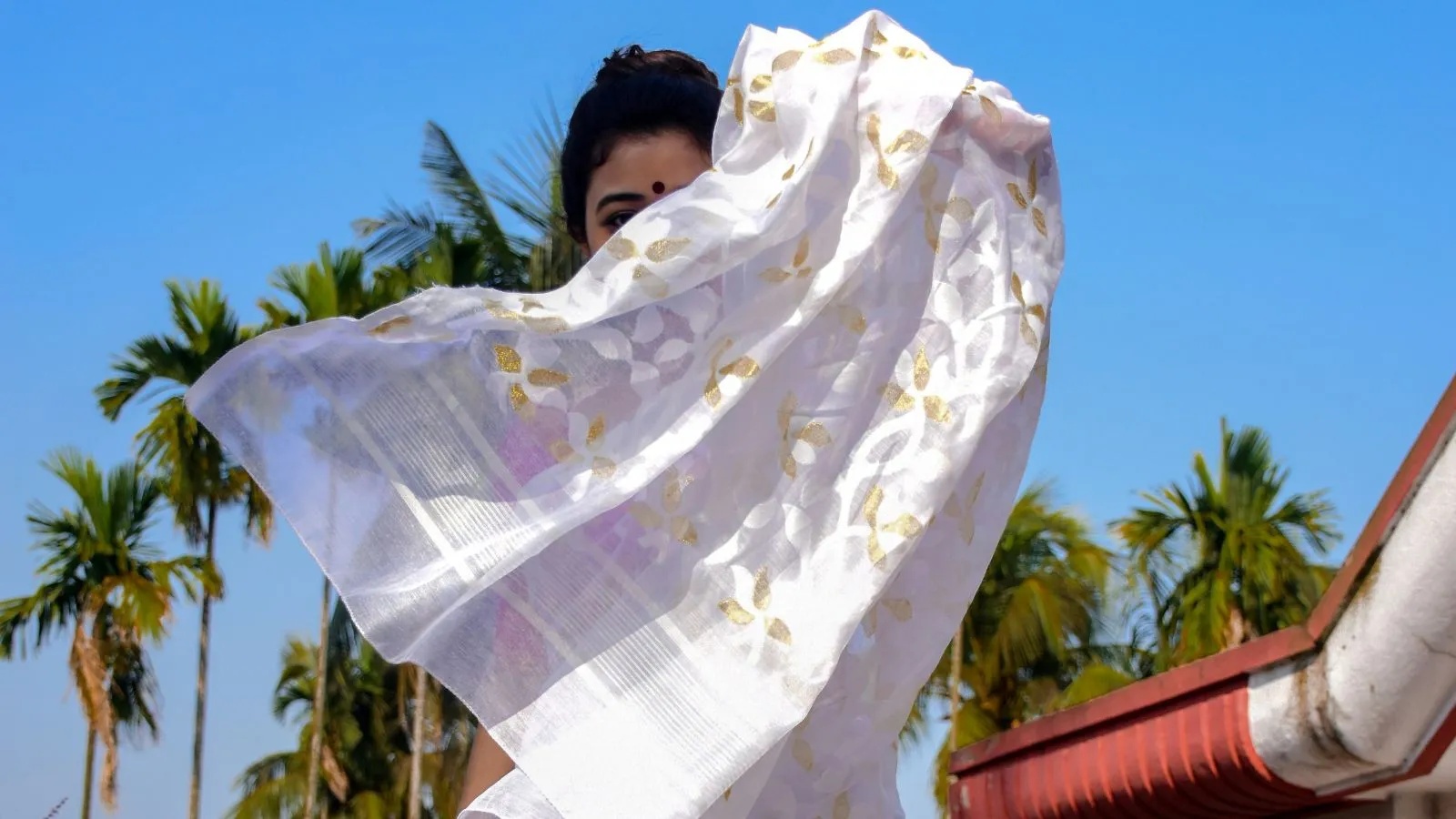
A Dhakai Jamdani sari is made from fine fabric with detailed designs woven into it.
Because it is delicate, rough washing can damage its threads and patterns.
Kaata wash is a special cleaning method used for many authentic handloom Jamdani saris.
The sari is pinned to a bamboo frame so it stays flat and does not shrink or sag.
It is then gently cleaned with water and a mild natural cleanser.
Experts say the best cleaning method can depend on the sari’s fibers, dyes, weave, and decorations.
If it must be cleaned at home, it should not be rubbed, twisted, or put in a washing machine.
It should dry in the shade and be stored in breathable cloth.
A seller or specialist can arrange kaata washing and any needed repairs.

Kaata wash stretches a Jamdani sari on a bamboo frame to prevent shrinkage and loosened threads.
The process uses gentle, pH-neutral cleaners such as reetha, followed by careful rinsing without twisting or wringing.
Experts differ on whether water itself is the sari’s main enemy or whether care should depend on its materials and construction.
Home washing, if necessary, should use cold water and mild detergent without rubbing, scrubbing, twisting, or wringing.
Saris should be dried in shade, folded with zari facing inward, and stored in breathable fabric rather than plastic.
- Who
- Dr Khonika Gope, Sneha Yadav, Dileep Kumar Goli, and Nabanita Ghosh provide advice on cleaning and storing Dhakai Jamdani saris.
- What
- The article explains kaata washing and other methods for cleaning and preserving delicate Dhakai Jamdani saris.
- Where
- Kaata washing is associated with Jamdanis made around Dhaka and Narayanganj in Bangladesh, usually arranged through the sari seller.
- When
- The guidance follows a recent video by Dr Khonika Gope and accompanying expert comments; no specific date is given.
- Why
- The techniques are intended to protect the sari’s fine weave, woven motifs, zari, and threads from damage, shrinkage, or loss of sheen.
Kaata Wash as the Safest Standard
Care Should Match the Individual Sari
The role of water
Kaata Wash as the Safest Standard
Dr Khonika Gope says water is the number one enemy of Dhakai Jamdani and advises against handwashing, machine washing, and dry cleaning at home.
Care Should Match the Individual Sari
Sneha Yadav says water itself is not necessarily the problem; the appropriate care depends on the sari’s fibers, yarn, dyes, weave, zari, decorations, and finishing.
Whether alternatives are acceptable
Kaata Wash as the Safest Standard
Dr Khonika considers kaata wash the best way to clean a Dhakai Jamdani sari.
Care Should Match the Individual Sari
Sneha says careful handwashing or dry cleaning is not always wrong and recommends following instructions from the weaver or a professional familiar with handwoven fabrics.
Cleaning at home
Kaata Wash as the Safest Standard
The kaata-wash approach sends the sari to the seller or specialists, who can clean it while keeping the fabric stretched and protected.
Care Should Match the Individual Sari
Nabanita Ghosh says home washing can be done only when necessary, using cold water and mild detergent while avoiding rubbing, twisting, and wringing.
Key facts
- Kaata wash
- A cleaning process in which claw-like kaata clips pin the sari to a bamboo frame so it remains flat and taut.
- Cleaning agent
- Natural pH-neutral agents such as reetha may be used for gentle handwashing.
- Drying method
- The sari should be air-dried without twisting or wringing, preferably in a shaded, well-ventilated area.
- Home washing
- If necessary, use cold water and mild pH-neutral liquid detergent without rubbing or scrubbing.
- Machine washing
- Handloom Dhakai Jamdani saris should not be machine-washed.
- Cleaning time
- Kaata washing may take a few days to a week, depending on logistics.
- Estimated cost
- Cleaning may cost from a few hundred rupees for washing to a couple of thousand rupees when restoration or repairs are needed.
- Storage
- Fold with the zari facing inward and store in breathable cotton or muslin rather than plastic or polythene.
Quotes
Dileep Kumar Goli
CEO of Missamma, explaining the traditional washing technique
“I would not say that washing by hand or using dry cleaning is always wrong. For a Jamdani that’s expensive, it is best to learn about the specific fabric first and then follow the care instructions from the weaver or from a professional who works with handwoven fabrics.”
 indianexpress.com
“The name is derived from the claw-like clips, known as kaata, that are used to pin the sari onto a bamboo frame to stretch the fabric.”
indianexpress.com
Sources
Related news

Malini Awasthi Shares Traditional Tips for Preserving Sarees

Why Rani Mukerji’s Green Sari Was Mistaken for Paithani
Kutch Maldhari Motifs Revived Through Traditional Ajrakh Block Printing

Sobhita Dhulipala Champions Living Heritage Through Aadyam Handwoven
Kangana Ranaut Showcases Handcrafted Meghalayan Ahimsa Silk Saree

India Choose Batting Against Sri Lanka in Asian Games Final

India Defeat South Korea 63–31 in Asian Games Kabaddi
Pakistan Women Win Asian Games Bronze Against Bangladesh

Extremist Group Books Sold Openly Across Bangladesh Bookstores