2 hrs ago
New Book Reframes Disability Through India’s Social and Cultural Lens
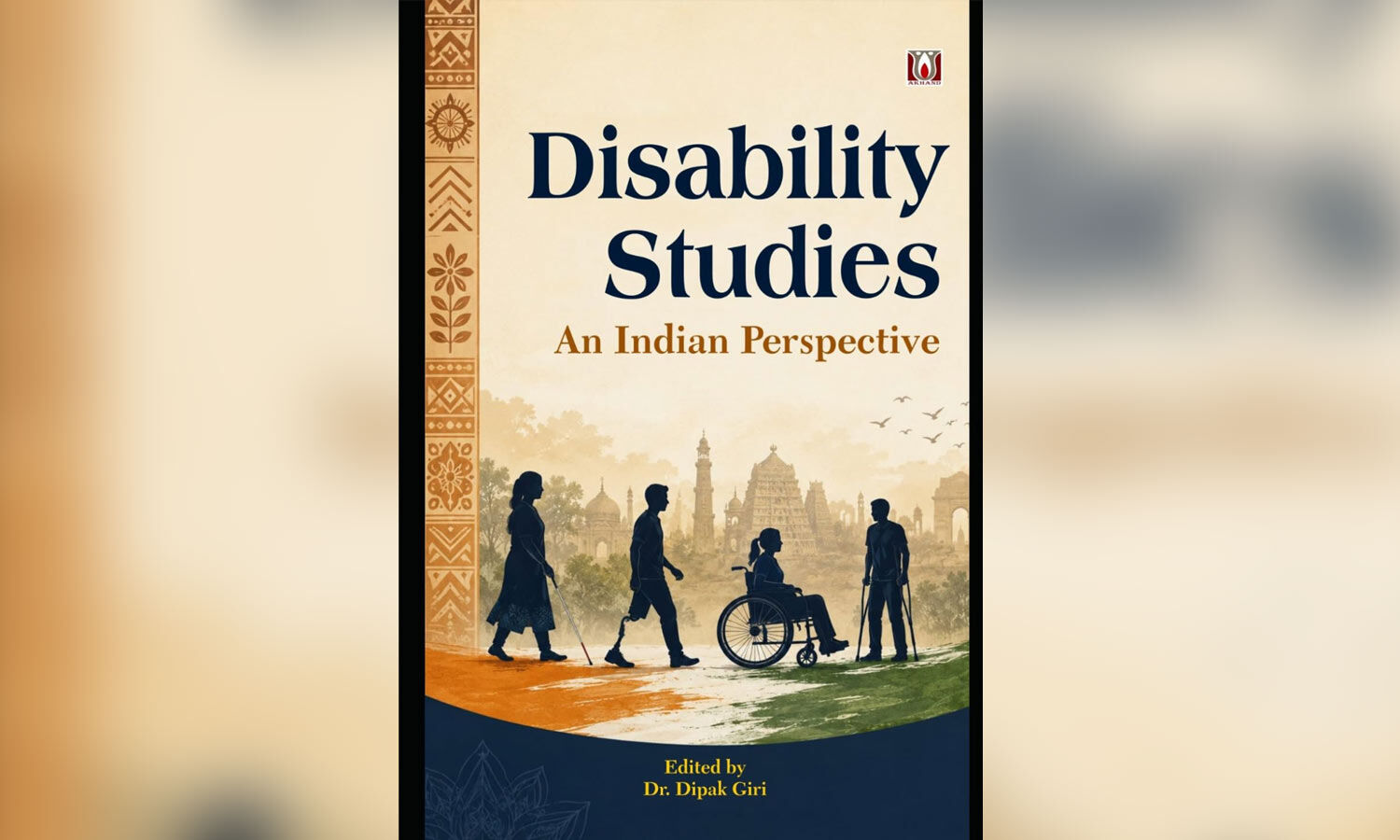
Dr Dipak Giri has published a book about disability in India.
It explains that disability is not only about a person’s body or health.
Society, culture, laws, and barriers can also shape people’s experiences.
The book looks at films, stories, plays, and schools.
It discusses how disabled people can face extra unfair treatment because of caste, gender, class, or where they live.
It also examines whether schools are truly inclusive.
The contributors say that laws have expanded recognition of disability, but everyday life does not always match those promises.
The book encourages readers to listen to disabled people’s experiences and challenge unfair ideas.

Dr Dipak Giri’s book examines disability in India through cultural, social, and legal perspectives.
It describes a shift from the 1995 disability law to the broader Rights of Persons with Disabilities Act of 2016.
Contributors analyze disability portrayals in Bollywood, regional literature, theatre, and social life.
The collection explores how disability intersects with caste, gender, class, and regional inequalities.
Essays also discuss barriers to inclusive classrooms and the gap between legal mandates and practice.
- Who
- Dr Dipak Giri and contributors to the book.
- What
- A collection examining disability in India through cultural, social, legal, literary, and educational perspectives.
- Where
- India.
- When
- Recently published; the article does not give a publication date.
- Why
- To challenge medicalised views of disability and examine lived experience, social barriers, and intersecting forms of marginalisation.
Traditional framing
Book’s social and rights-based framing
How disability is understood
Traditional framing
The older medicalised or essentialist view treats disability mainly as an individual physical deficit requiring clinical intervention or charity.
Book’s social and rights-based framing
The book presents disability as a socially, culturally, and politically shaped experience, as well as a matter of rights.
Representation in popular culture
Traditional framing
Mainstream Indian cinema can portray disabled people through pity or token inspiration.
Book’s social and rights-based framing
The contributors call for authentic portrayals and examine narratives in which disabled people develop their own ways of understanding their lives.
Law and everyday inclusion
Traditional framing
Legal mandates do not necessarily ensure inclusive classrooms or accessible everyday conditions in practice.
Book’s social and rights-based framing
The expanded legal framework offers broader recognition, while the book argues that practical spaces and institutions must better deliver inclusion.
Key facts
- Book
- Disability Studies: An Indian Perspective
- Editor/author named
- Dr Dipak Giri
- Earlier law discussed
- Persons with Disabilities (PwD) Act of 1995
- Later law discussed
- Rights of Persons with Disabilities (RPwD) Act of 2016
- International convention discussed
- United Nations Convention on the Rights of Persons with Disabilities, adopted in 2006
- Recognized disability types
- The article says the RPwD Act recognizes 21 types of disabilities.
- Topics covered
- Cinema, literature, theatre, caste, education, and intersectional marginalisation
Sources
Related news
Five New Books Explore Faith, Craft, Queerness and Loss
Indian Cinema Moves From Caste Sympathy Toward Resistance
Neera Chandhoke Calls for Plural Indian Political Theory

Four New Books Span Gandhi, Childhood, History and Hollywood

Ten Authors and Their Diverse Works Worth Reading