3 weeks ago
Nirantoro Reimagines Tagore’s Meditation on Life and Death
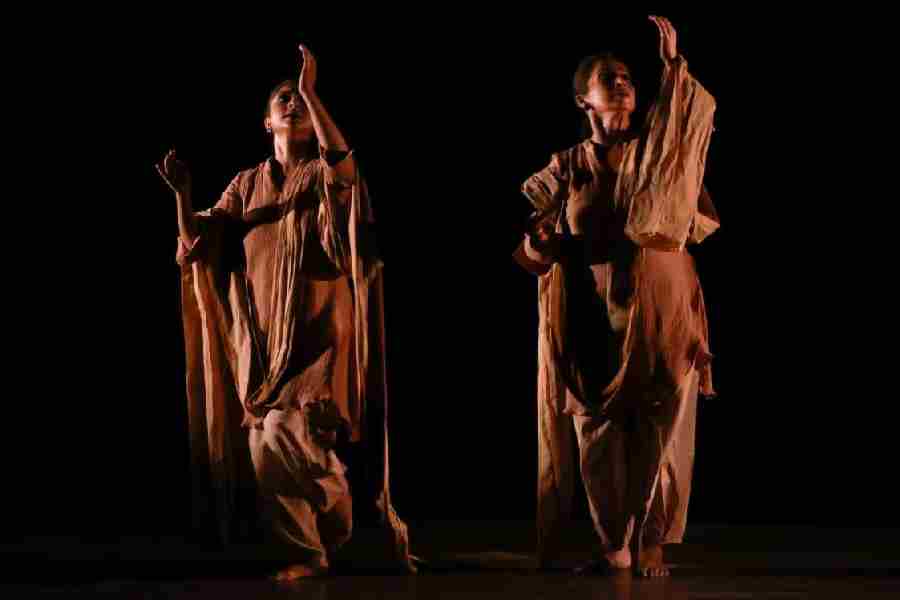
Nirantoro is a dance performance inspired by a poem by Rabindranath Tagore.
Tagore wrote the poem when he was 21.
The poem says that death is not something separate from life.
Instead, death is part of the natural rhythm of existence.
Two Kathak dancers perform the work using careful and quiet movements.
Words, music, lights and film projections help create its atmosphere.
The performance does not treat death only as something sad or frightening.
It suggests that death can also contain beauty and the possibility of renewal.

Nirantoro, staged at Gyan Manch by Samskritiki Shreyaskar, draws on Rabindranath Tagore’s poem “Ananta Maran.”
The poem presents death as an essential movement within existence rather than a terrifying end.
Kathak dancers and choreographers Debashree Bhattacharya and Sohini Debnath created the production as a contemporary duet.
Dance, text, music, lighting and film projections combine to produce a hypnotic visual and philosophical experience.
Music, textual readings, film montages and lighting were contributed by several artists, including Rajeswary Ganguly Banerjee, Nageen Tanvir, Lubdhak Chatterjee and Dinesh Poddar.
- Who
- Kathak dancers and choreographers Debashree Bhattacharya and Sohini Debnath, with contributions from the production’s musicians, readers, filmmaker and lighting designer.
- What
- Nirantoro, a contemporary dance work inspired by Rabindranath Tagore’s philosophical poem “Ananta Maran.”
- Where
- Gyan Manch.
- When
- The performance was staged recently; the article does not provide a specific date.
- Why
- The production explores Tagore’s view that death is an indispensable part of existence rather than a terrifying ending.
Key facts
- Production
- Nirantoro
- Inspiration
- Rabindranath Tagore’s poem “Ananta Maran”
- Presenters
- Samskritiki Shreyaskar
- Venue
- Gyan Manch
- Dance artists
- Debashree Bhattacharya and Sohini Debnath
- Musical score
- Rajeswary Ganguly Banerjee
- Visual elements
- Film montages by Lubdhak Chatterjee and lighting by Dinesh Poddar
Sources
Related news

‘Bhakti’ Brings India’s Mystic Poetry to Mumbai Through Dance

Kathak Recital Turns Devotion Into A Dialogue With The Divine

Leela Tandavam Explores the Eternal Unity of Hari and Hara
Mayuri Upadhya Explores Faith, Love And Surrender Through Dance
India’s Cultural Calendar Highlights Music, Dance, Theatre and Art
Newtown Literature Festival Examines Creativity in the AI Era
Letters Debate Faith, History, Diplomacy and Climate Responsibility
Karnataka Vande Mataram Row Escalates Over Two-Stanza Limit

Bengal Colleges to Host IAS Officers for Student Classes
Amit Shah Links Indian Languages With Cultural Nationalism
Bengali Writer and Tagore Translator Ketaki Kushari Dyson Dies