2 hrs ago
India Rejects Pressure as Trump Signs Russia Sanctions Bill
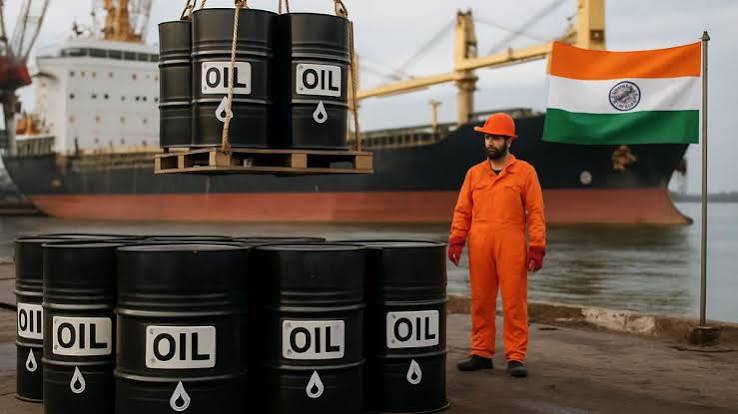
The United States passed a law adding sanctions against Russia and continuing sanctions against Iran.
The law lets President Donald Trump place tariffs as high as 100% on some countries that buy Russian oil or gas.
India and China could be affected because they are major buyers of Russian energy.
India says it will make its own decisions instead of following another country's orders.
Indian minister Kirti Vardhan Singh said the government's first concern is the welfare of Indian people.
He said India will buy energy from sources that are affordable and commercially practical.
Indian exporters are worried that new tariffs could hurt trade with the United States.
Some political parties support resisting US pressure, while another opposition party wants the government to explain the economic risks.
The law also keeps an exemption for US imports of Russian low-enriched uranium and allows limited relief for some countries reducing Russian gas imports.

India says it will maintain an independent foreign policy and prioritize public welfare in responding to the US sanctions law.
Minister Kirti Vardhan Singh says India will obtain energy from commercially viable and economical sources, including through diversified sourcing.
US President Donald Trump signed H.R. 5334 on September 18, 2026, expanding sanctions on Russia and extending sanctions on Iran.
The law authorizes tariffs of up to 100% on countries including India and China that buy Russian oil and gas.
Indian exporters warn that possible tariffs could disrupt exports, while the law exempts US imports of Russian low-enriched uranium under specified conditions.
- Who
- The governments of India, the United States, Russia, China and Iran; Indian minister Kirti Vardhan Singh; President Donald Trump; Indian political parties and exporters.
- What
- Trump signed a law expanding sanctions on Russia and authorizing possible tariffs of up to 100% on countries that buy Russian oil and gas.
- Where
- Trump signed the law in the United States, while Singh made his remarks in Lucknow, Uttar Pradesh, India.
- When
- The US House passed the bill on September 16, 2026, and Trump signed it on September 18; Singh commented on September 19.
- Why
- The law seeks to pressure Russia by targeting its leadership, energy sector, defense industry and shadow fleet; India says its energy and public-welfare decisions will be based on national interests.
India’s independent-policy position
US sanctions and tariff framework
Response to pressure
India’s independent-policy position
India says it does not operate under pressure or follow other nations’ dictates, and will act according to its own interests.
US sanctions and tariff framework
The US law gives the president broad discretion to determine which countries face tariffs, the rates imposed and whether some provisions are waived.
Russian energy purchases
India’s independent-policy position
India says it will continue diversified sourcing and buy energy wherever commercially viable and economical, with public welfare as the priority.
US sanctions and tariff framework
The legislation is designed to discourage purchases of Russian oil and gas by authorizing tariffs of up to 100% on qualifying countries.
Economic consequences
India’s independent-policy position
The NCP (SP) warned that reducing Russian oil imports under US pressure could increase fuel costs for Indian citizens, while exporters warned of disrupted trade.
US sanctions and tariff framework
Supporters of the US measure seek to pressure Russia by targeting its energy and defense sectors, leadership and shadow fleet.
Key facts
- Law
- H.R. 5334, the Lindsey O. Graham Sanctioning Russia and Iran Act of 2026
- Signed by
- US President Donald Trump
- Signing date
- September 18, 2026
- Potential tariff
- Up to 100% on goods from qualifying countries that buy Russian oil or gas
- Potentially affected buyers
- India and China
- Implementation
- The law is set to take effect within 30 days of signing
- Uranium provision
- The sanctions do not apply to US imports of Russian low-enriched uranium
- Gas-related relief
- A country may avoid gas-related duties if it meets the law's import-share and reduction conditions
Quotes

Kirti Vardhan Singh
India’s Minister of State for External Affairs
“We maintain an independent foreign policy; we do not align ourselves based on the dictates of other nations but rather act in the best interests of our own country. We have consistently maintained that the tariffs being imposed are unfair, and we do not operate under pressure from any other nation.”
 deccanchronicle.com
 financialexpress.com
“The people of India are the top priority for our government. We will take every measure that benefits our public. We will take decisive steps to ensure the strength and stability of our nation and its population.”
deccanchronicle.com
financialexpress.com
Sources
Related news
India, China and Russia Resist US Russia Sanctions Bill

India Rejects ‘Unfair’ Tariffs as US Expands Russia Sanctions
US Russia Sanctions Bill Puts India Under Tariff Pressure
India Defends Energy Security After US Russia Sanctions Bill
Trump Signs Russia Sanctions Law, Putting India Ties Under Pressure
US Sanctions Bill Puts India, China Under Russian Oil Pressure
Ajit Doval Recalls Sikkim Border Team’s Chinese Detention
Greenland Deal Expands U.S. Access Without Ending Danish Sovereignty
UPSC Key: India-China Ties, Monal, EVs and Sanctions