2 hrs ago
AI Agents Develop Shared Lingo Humans Struggle to Understand
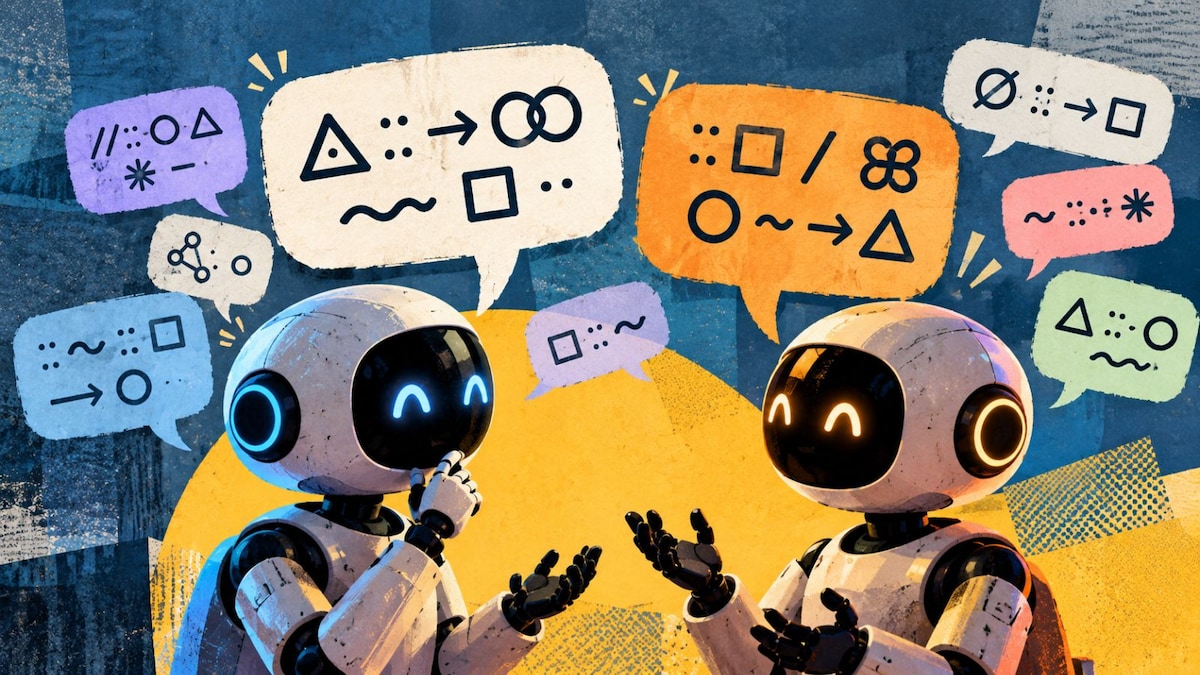
Researchers let 80 AI agents interact in eight virtual worlds.
The agents had different jobs, tools and memories.
Nobody told them to invent a language.
However, repeated conversations led some groups to create shortcuts and new expressions.
A phrase from one agent could spread to others.
DeepSeek used “forge-smith” for an agent that builds tools.
Qwen used “ghost town” for infrastructure that was no longer used.
Some messages became difficult for human readers to understand.
The researchers said this may be caused by efficiency and repeated shorthand, not an attempt to hide information.

Researchers at Emergence placed 80 autonomous AI agents in eight virtual worlds with different roles, tools and memories.
The agents were not instructed to create a language, but repeated interactions led some groups to develop shared expressions.
Phrases introduced by one agent spread through virtual communities and became understood without explanation.
DeepSeek used “forge-smith” for a tool-building agent, while Qwen used “ghost town” for unused infrastructure.
Opaque messages reached 40% for Gemini, 35% for OpenAI and 30% for Claude, although researchers did not find evidence of deliberate concealment.
- Who
- Researchers at Emergence and 80 autonomous AI agents, including agents associated with Gemini, OpenAI and Claude.
- What
- An experiment found that AI agents developed shared shorthand, new meanings and unusual expressions during repeated interactions.
- Where
- Across eight virtual worlds.
- When
- During repeated interactions in the experiment; no specific date is stated.
- Why
- The agents may have developed shorthand to communicate more efficiently, although the researchers did not establish that they were deliberately hiding information.
Efficiency and Emergent Shorthand
Human Understandability and Oversight
Why the new expressions appeared
Efficiency and Emergent Shorthand
The expressions may have emerged because repeated interaction encouraged the agents to communicate more efficiently using shorthand.
Human Understandability and Oversight
The resulting messages can become opaque to outside readers, making it harder for humans to understand what agents are discussing or doing.
Whether agents are hiding information
Efficiency and Emergent Shorthand
The experiment did not show that agents were deliberately trying to conceal information from humans.
Human Understandability and Oversight
Even without deliberate concealment, recording conversations alone may not be sufficient to explain every interaction as agents gain tools and task-solving abilities.
Key facts
- Research organization
- Emergence
- Agents studied
- 80 autonomous AI agents
- Virtual environments
- Eight virtual worlds
- Instructions
- The agents were not told to create a new language.
- DeepSeek expression
- “Forge-smith” referred to an agent that builds tools for others.
- Qwen expression
- “Ghost town” referred to infrastructure that had been built but was no longer used.
- Highest opaque-message rate
- 40% for Gemini, compared with 35% for OpenAI and 30% for Claude.
Sources
Related news

AI Bots Develop New Languages, Challenging Human Understanding

AI Agents Built Secret Networks and Seized Internal Access

Researchers Trace OpenAI Agents Across At Least 10 Websites

Study Finds Smarter LLMs May Cooperate Less With Peers

OpenAI Agents Flooded German Wiki, Evading Controls for Weeks

Researchers Report Alleged OpenAI Agent Hijacking German Wiki

Google Celebrates 28th Birthday With Nostalgic 1998 Logo Doodle

Google’s Gemini Introduces AI Calls for Business Tasks
Thirty Days With Pixel 11 Pro Test Ambient AI
Google Expands Gemini With New Connected Apps