6 days ago
Allahabad High Court Seeks Five-Year RTE Data in Uttar Pradesh
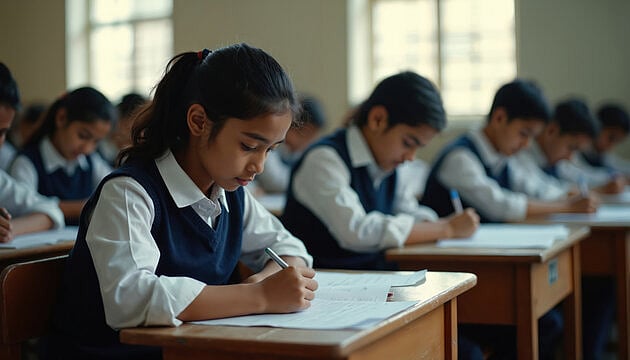
The Allahabad High Court wants information about how schools in Uttar Pradesh follow the Right to Education law.
It asked the state government for five years of information from each school.
This includes children who received RTE admissions.
It also includes children whose admissions were refused or ignored.
The court wants details about complaints involving extra fees or improper screening tests.
Schools must help government education officials collect the information.
The court has not decided whether the allegations are true.
It said schools must receive notice and be treated according to the law before facing any adverse action.

The Allahabad High Court ordered five years of school-wise data on RTE admissions in Uttar Pradesh.
The data must include children whose admissions were denied or whose applications were not acted upon.
The court sought complaints about capitation fees or prohibited screening procedures, along with action taken.
CBSE, CISCE and other-board schools must cooperate with state education officials supplying the information.
The state must file an affidavit by September 15, and schools cannot face adverse action without notice and legal procedure.
- Who
- The Allahabad High Court, the Uttar Pradesh government and schools covered by the RTE Act.
- What
- The court ordered five-year, school-wise RTE admission data and details of complaints and action taken.
- Where
- Prayagraj, Uttar Pradesh, involving schools across the state.
- When
- The order was reported on August 26; the state must file an affidavit by September 15.
- Why
- The court wants to establish the facts about alleged reluctance to admit RTE students, capitation fees and prohibited screening procedures.
Court’s Fact-Finding Inquiry
Schools’ Procedural Safeguards
Purpose of the data request
Court’s Fact-Finding Inquiry
The court is seeking comprehensive records to examine allegations that some private schools were reluctant to admit RTE children and waive usual fees and charges.
Schools’ Procedural Safeguards
The court stressed that the allegations have not been established and that the data request does not express an opinion on any school’s conduct.
Possible action against institutions
Court’s Fact-Finding Inquiry
Complaints about capitation fees or prohibited screening procedures, together with action taken, must be reported for examination.
Schools’ Procedural Safeguards
Schools cannot face prejudice or adverse action unless they receive notice and proceedings follow the law.
Key facts
- Data requested
- Five years of school-wise information on students admitted under the Right to Education Act.
- Admissions covered
- The records must include children whose admissions were denied or whose applications were not acted upon.
- Complaints sought
- Complaints alleging capitation fees or screening procedures violating the state's education policy.
- Affidavit deadline
- The Uttar Pradesh government must file an affidavit by September 15, the next hearing date.
- Schools involved
- Schools affiliated with the CBSE, CISCE and other boards must cooperate with education officials.
- Court safeguard
- No institution may be prejudiced without notice and action in accordance with law.
- RTE applicability
- The court previously said private CBSE- and ICSE-affiliated schools in Uttar Pradesh are not exempt from the RTE Act, 2009.
Quotes
Justice Vinod Diwakar
Allahabad High Court judge who passed the order
“The correctness of the allegation is a matter upon which no opinion is expressed at this stage and the affidavit called for hereinafter will enable the position to be ascertained.”
 theprint.in
 freepressjournal.in
“Nothing herein shall be acted upon to the prejudice of any institution save after notice and in accordance with law.”
theprint.in
freepressjournal.in
Sources

Related news

Allahabad HC Denies RTE Exemption to CBSE, CISCE Schools

Centre Tells Rajya Sabha States Regulate Private School Fees
Rural Government Schools Face Teacher and Toilet Crisis
Supreme Court Petition Challenges School Access Curbs on Journalists

Bombay HC Asks Maharashtra to Overhaul RTE School Reimbursement System

Madhya Pradesh Schools Get Online Route for Faster RTE Recognition
CISCE to Grade Health and Physical Education From 2028

Collective backs Ahmedabad school dropping Malala, Anne Frank books
CISCE Opens SHINE 2026 Registration for Digital Student Assessment