1 hr ago
Supreme Court Questions Police Request for Journalist's Digital Data
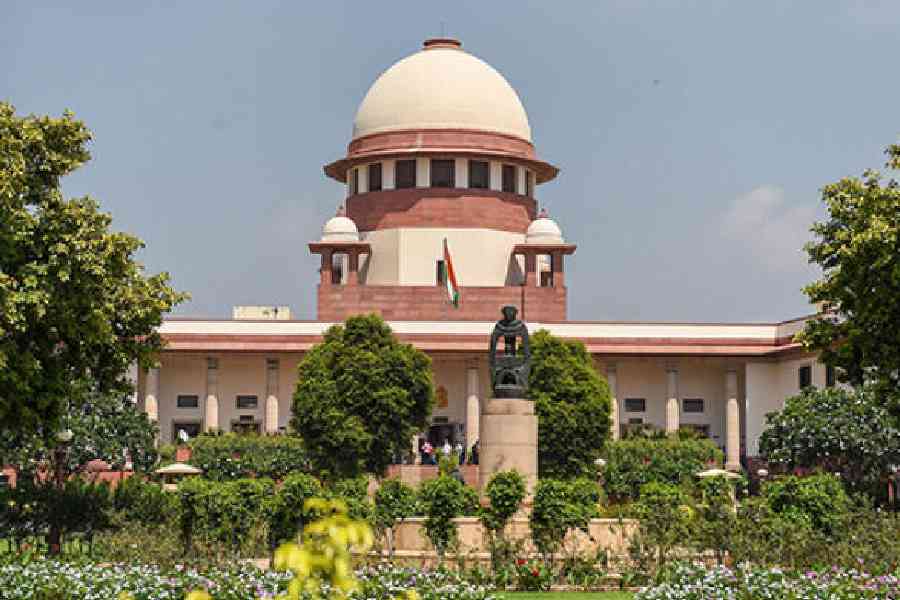
The Supreme Court is examining a police case against journalist Abhishek Upadhyay.
The case concerns an alleged road-rage incident in Ghaziabad.
Police asked X for some of Upadhyay’s digital information.
The judges questioned why such information was needed for this kind of case.
They asked police to explain exactly what data they want.
Upadhyay says the case was created because of his reporting about alleged corruption.
Police say an eyewitness has provided a statement and that the investigation is still continuing.
The court wants to balance privacy with the needs of the investigation.
It has also protected Upadhyay from coercive action for now.

The Supreme Court asked Ghaziabad Police to explain what information it seeks from X in a road-rage investigation.
The bench questioned why police would need the journalist’s digital footprint in a road-rage case.
Journalist Abhishek Upadhyay says the case was planted after his reporting on alleged corruption and Ram temple donation irregularities.
Police cited an eyewitness statement and said the investigation could be closed if no wrongdoing is found.
The court earlier protected Upadhyay from coercive action and said police must provide him with the FIR copy.
- Who
- The Supreme Court, Ghaziabad Police, journalist Abhishek Upadhyay, and X are involved.
- What
- The court is reviewing a road-rage FIR and questioning police requests for the journalist’s digital information.
- Where
- The case concerns an FIR registered at Indirapuram in Ghaziabad, Uttar Pradesh.
- When
- The Supreme Court raised the questions on Monday; it had granted Upadhyay protection from coercive action on August 25.
- Why
- Police say the information is sought for the road-rage investigation, while Upadhyay says the FIR was planted because of his reporting.
Journalist’s Privacy and Case Challenge
Police Investigation Needs
Need for digital information
Journalist’s Privacy and Case Challenge
Upadhyay’s counsel questioned the request for social-media information and IMEI details and sought guidelines for accessing an accused person’s digital data.
Police Investigation Needs
Police were asked to explain the information sought from X and said it was connected to the ongoing investigation.
Basis of the FIR
Journalist’s Privacy and Case Challenge
Upadhyay claims the FIR was planted because of his reporting on alleged corruption and irregularities involving donations at Ayodhya’s Ram temple.
Police Investigation Needs
Police counsel referred to an eyewitness statement in the road-rage case and said the matter remains under investigation.
Conduct surrounding evidence
Journalist’s Privacy and Case Challenge
Upadhyay claims police are forcing nearby shopkeepers to delete CCTV footage from the relevant time.
Police Investigation Needs
Police counsel urged the court to consider Upadhyay’s allegations against an engineer associated with the Ram temple’s construction and defended examining the case.
Key facts
- Case
- Road-rage FIR against journalist Abhishek Upadhyay
- Investigating agency
- Ghaziabad Police
- Requested information
- Police are seeking information from X and, according to Upadhyay’s counsel, social-media information and IMEI details.
- Court
- A three-judge Supreme Court bench headed by Chief Justice of India Surya Kant
- Police position
- Police cited an eyewitness statement and said the case could be closed if nothing is found against Upadhyay.
- Journalist’s claim
- Upadhyay says the FIR was planted over his reporting on alleged corruption in Uttar Pradesh.
- Earlier protection
- The Supreme Court granted Upadhyay protection from coercive action on August 25.
Quotes
Ghaziabad Police counsel
Lawyer representing the Ghaziabad Police in the investigation.
“He is talking about regulation of police. What about regulation of this kind of journalism?”
 telegraphindia.com
“In a road-rage case, why will you require the digital footprint of the accused?”
telegraphindia.com
Sources
Related news
Journalist Challenges Police Request for Digital Activity Data

Supreme Court Shields Journalist Challenging Ghaziabad Road Rage FIR

Journalist alleges UP police sought sources over temple reports

Supreme Court to Hear Abhishek Upadhyay’s Ghaziabad FIR Plea

Supreme Court Protects Journalist in Ghaziabad Road-Rage Case

Journalist Faces Ghaziabad Road-Rage FIR, Calls Case Planted
Delhi Building Collapse Toll Rises as Courts Hear Cases
ITAT Quashes Reassessment Over Rs 41.45 Lakh Deposits
Ashwani Kumar Mishra Becomes Punjab and Haryana Chief Justice

Tathastu ICS Hosts GURU SAMVAD 2026 for Teachers’ Day