4 hrs ago
October Sky Offers Meteor Showers, Galaxies, Planets and Zodiacal Light
October will offer many interesting things to see in the night sky.
Saturn will be visible all night around October 3 and 4.
On October 5, Mars will appear close to the crescent Moon.
The Moon will pass in front of Jupiter on October 6, although this will not be visible from India because it happens during the daytime there.
Around October 8, people in very dark places may see a faint pyramid-shaped glow called zodiacal light.
The Draconid meteor shower will also peak then and may produce 5 to 10 meteors each hour.
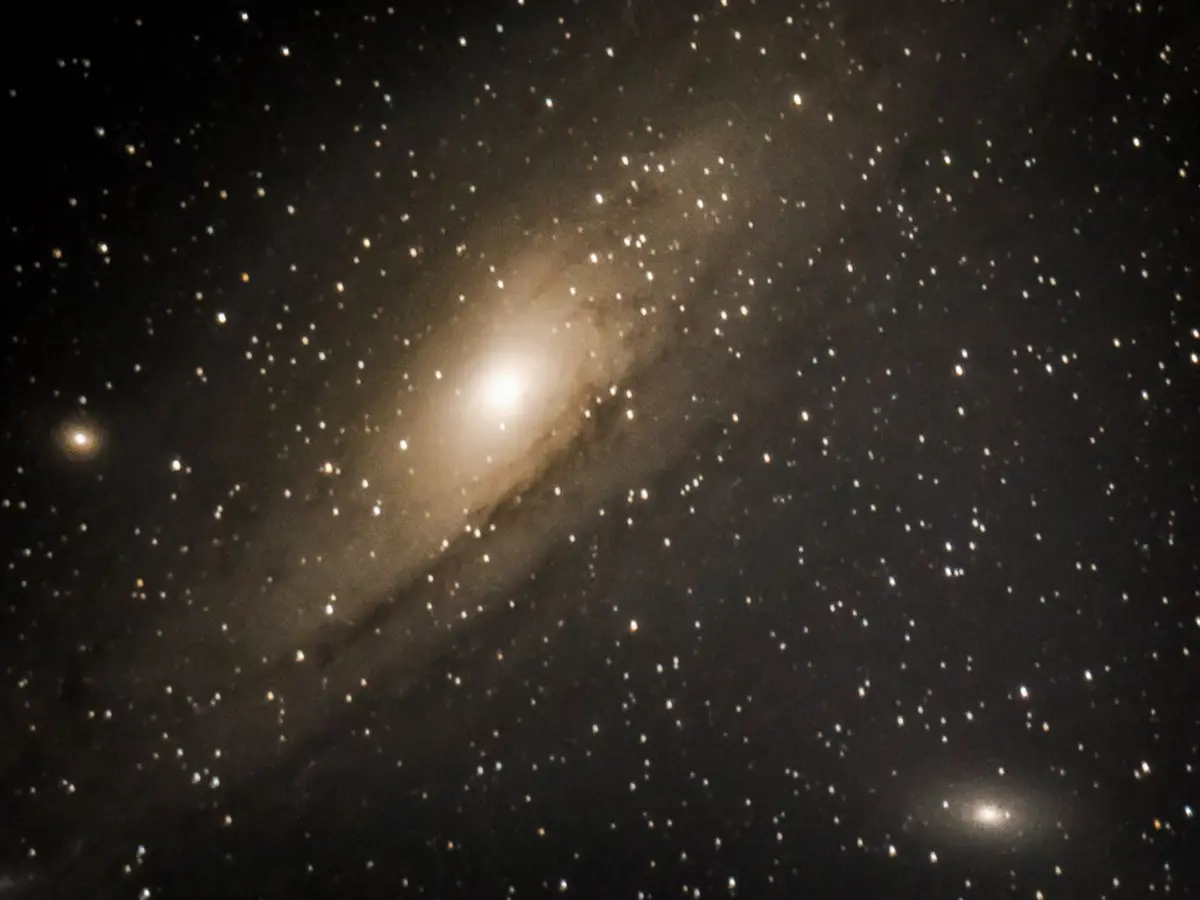
From October 7 to 13, the Andromeda Galaxy should be easier to see because there will be little moonlight.
The Orionid meteor shower will be strongest around October 21 and 22, with up to 10 to 20 meteors per hour.
On October 24, the Moon will appear near Saturn.

Saturn will be opposite the Sun on October 3-4, making it visible all night and suitable for telescope viewing.
Mars will appear beside the crescent Moon on October 5, while the Moon will occult Jupiter on October 6 in some locations.
The zodiacal light and Draconid meteor shower will be visible around October 8, with the shower producing about 5-10 meteors per hour.
The Andromeda Galaxy and other deep-sky objects will be especially visible from October 7-13 during moonless skies.
The Orionid meteor shower will peak around October 21-22, followed by a waxing Moon near Saturn on October 24.
- Who
- Stargazers and observers in the Northern and Southern Hemispheres.
- What
- A guide to October’s visible planets, Moon events, galaxies, zodiacal light, and meteor showers.
- Where
- In the night sky; visibility varies by hemisphere and location, with some events requiring dark skies.
- When
- October, with events listed from October 3 through October 24; the Orionid shower remains active from October 2 to November 7.
- Why
- Longer, darker nights and limited moonlight will create favorable conditions for observing celestial objects.
Key facts
- Saturn opposition
- October 3-4; Saturn will be visible throughout the night.
- Mars and Moon
- October 5; Mars will appear within one degree of the crescent Moon near the Beehive star cluster.
- Jupiter occultation
- October 6; Jupiter will disappear at 4:20 a.m. ET and reappear at 5:24 a.m. ET, but the event will occur during daytime in India.
- Zodiacal light
- Around October 8; visible before dawn in the east in the Northern Hemisphere and after sunset in the west in the Southern Hemisphere.
- Draconid meteor shower
- Peaks October 8, with approximately 5-10 meteors per hour.
- Andromeda viewing
- October 7-13; the Andromeda Galaxy, Triangulum Galaxy, Double Cluster in Perseus, and California Nebula should be visible under moonless skies.
- Orionid meteor shower
- Peaks around October 21-22, with approximately 10-20 meteors per hour and best viewing around 3 a.m.
Sources
Related news
Five Spectacular Autumn Night-Sky Events to Watch For
Skywatchers in Uttar Pradesh See Moon and Venus Together

September 2026 Venus Reaches Its Brightest Point Of The Year

AlUla's Odysseus Asterism Turns Desert Skies Into Storybook

Scientists Spot Giant Ten-Sided Wave Over Saturn’s South Pole

Bir Billing Offers October Paragliding Beneath Himalayan Peaks
Monk Eilmer of Malmesbury saw Halley's Comet 600 years before Edmond Halley

Amazon's AI Shopping Trial Sparks Retailer Backlash

Amazon Sues AI Startup Over Autonomous Browser