

7 months ago
Monk Eilmer of Malmesbury saw Halley's Comet 600 years before Edmond Halley
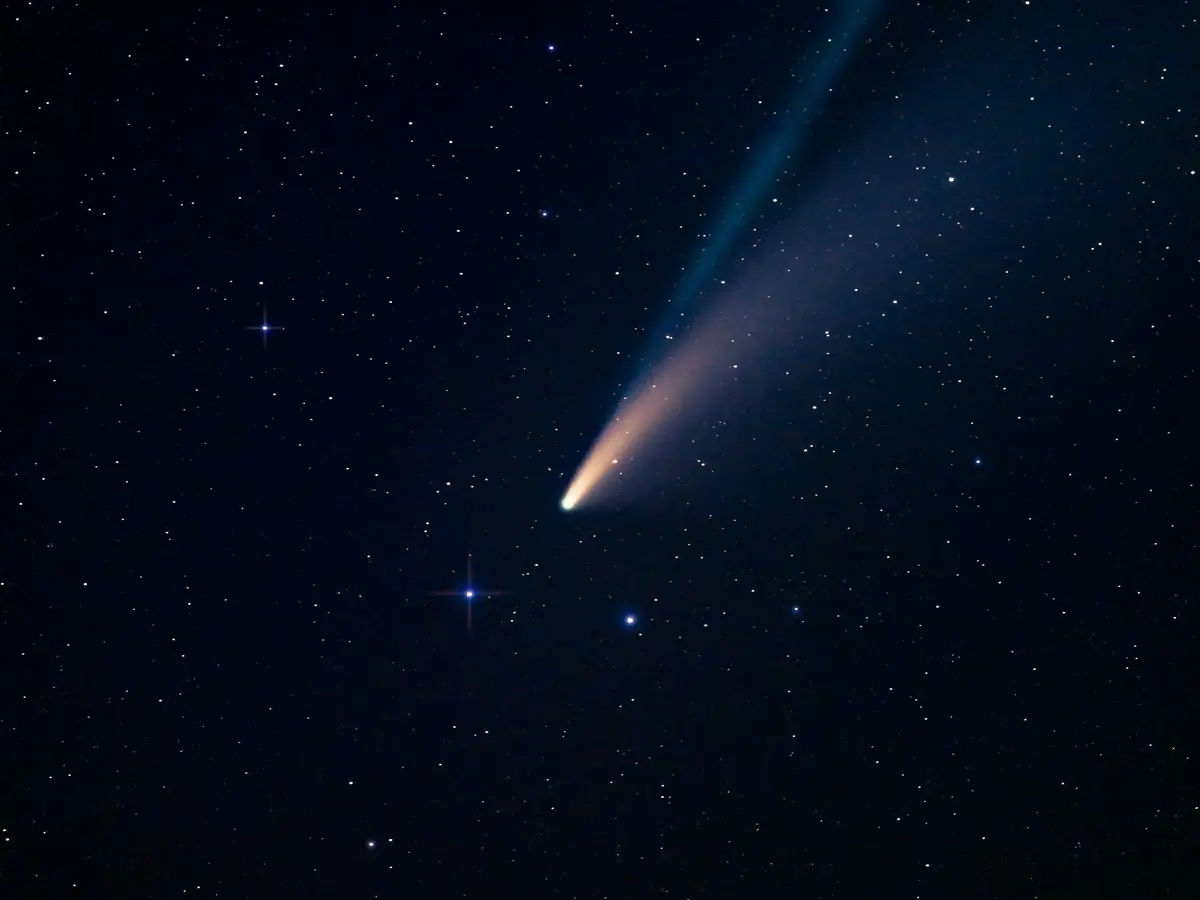
A long time ago, a monk named Eilmer saw a special comet in the sky.
He saw it twice, once when he was young and again when he was older.
This comet is now called Halley's Comet.
A scientist named Edmond Halley later figured out that this comet comes back every 76 years.
But Eilmer saw it first, even though most people didn't know about his discovery.
The comet was also seen in other places like China and was even drawn on a famous tapestry.
In old times, people thought comets brought bad luck, like the death of kings or wars.
Eilmer even said the comet made many mothers cry.
Edmond Halley used science to show how the comet moves, but he didn't live to see his prediction come true.

Eilmer of Malmesbury, an 11th-century English Benedictine monk, observed Halley's Comet in 989 CE and 1066 CE, recognizing its periodic nature.
Edmond Halley scientifically proved that Halley's Comet returns every 76 years, predicting its return in 1758 CE.
The comet was visible in China for over two months in 1066, reaching peak brightness on 22 April.
The comet was illustrated on the Bayeux Tapestry, depicting its appearance in 1066.
In ancient times, comets were associated with bad occurrences, such as the deaths of kings, war, or famine.
- Who
- Eilmer of Malmesbury, a 11th-century English Benedictine monk, and Edmond Halley, a 17th-18th century astronomer
- What
- Observation and recognition of Halley's Comet
- Where
- Eilmer's observations were in England, and the comet was visible in China and the British Isles in 1066
- When
- Eilmer saw the comet in 989 CE and 1066 CE, while Edmond Halley predicted its return in 1758 CE
- Why
- Eilmer recognized the comet's periodic nature, while Edmond Halley scientifically proved its 76-year orbit
Key facts
- Eilmer of Malmesbury
- 11th-century English Benedictine monk
- Edmond Halley
- 17th-18th century astronomer
- Halley's Comet
- Periodic comet with an orbit of approximately 76 years
- First Observation
- 989 CE by Eilmer of Malmesbury
- Second Observation
- 1066 CE by Eilmer of Malmesbury
- Edmond Halley's Prediction
- 1758 CE
- Comet Visibility in 1066
- Over two months in China, reaching peak brightness on 22 April
- Bayeux Tapestry
- Illustrates Halley's Comet
Quotes

Eilmer of Malmesbury
An 11th-century English Benedictine monk who observed Halley's Comet twice in his lifetime.
“You've come, have you? ... It is long since I saw you... You source of tears to many mothers.”
 wionews.com
Sources
Related news

Amazon's AI Shopping Trial Sparks Retailer Backlash

Amazon Sues AI Startup Over Autonomous Browser

Mozilla Introduces 'AI Window' to Firefox Amid AI Browser Competition

Amazon Sues Perplexity AI Over Shopping Bot, Challenging Future of Online Commerce
