27 mins ago
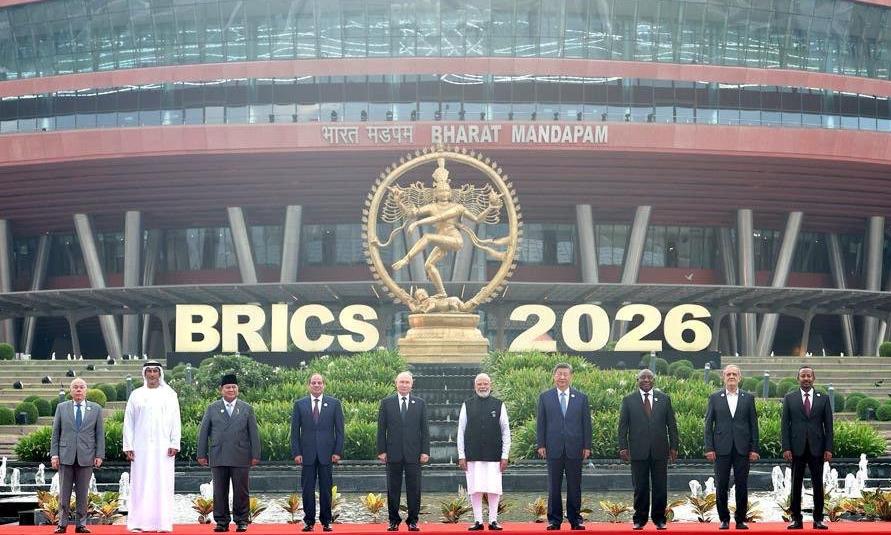
Delhi BRICS Summit Tests India’s Balancing Act Among Rival Powers
BRICS is a group of countries that do not always agree with one another.
At a summit in Delhi, they still agreed on one joint statement.
The statement strongly rejected terrorism and mentioned the Pahalgam attack in India.
It also criticized tariffs and sanctions imposed by individual countries.
India tried to keep BRICS from becoming a group formed mainly against the United States.
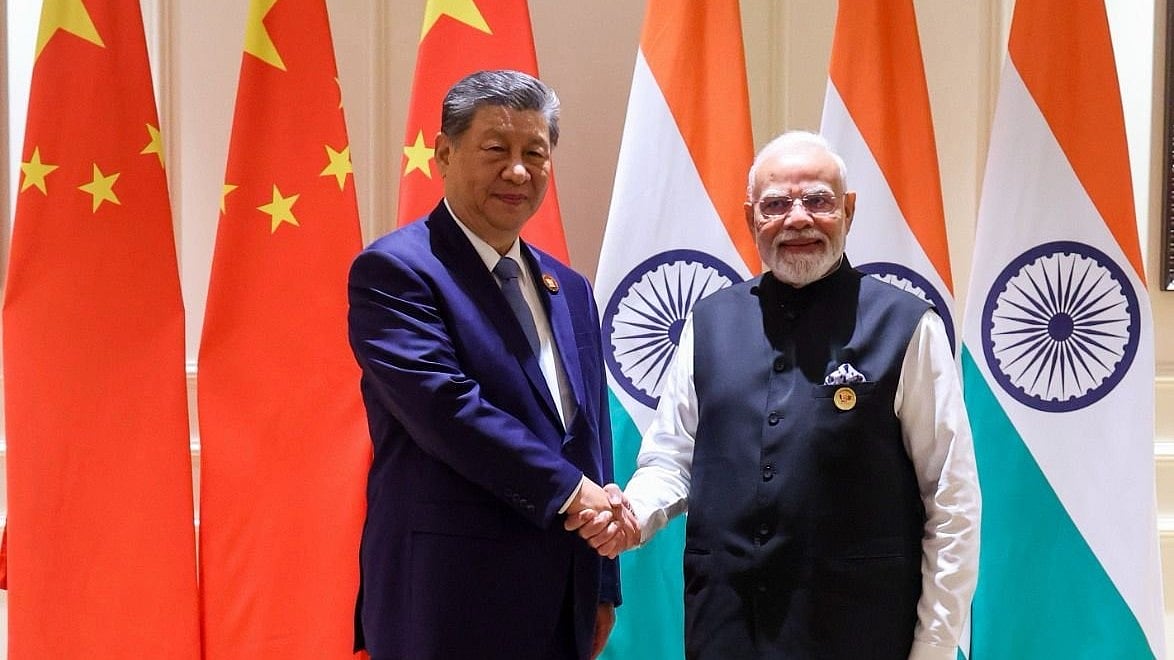
Narendra Modi and Xi Jinping also met to improve India-China relations after years of tension.
They said disagreements should not turn into disputes, but they did not solve the border problem.
Russia and Iran remain important to India for security, energy and regional connections.
India’s main goal is to work with all these countries without joining a bloc controlled by any one of them.

BRICS members unanimously adopted the New Delhi Declaration despite disagreements over Ukraine, West Asia, Iran, Russia and the United States.
The declaration condemned the April 2025 Pahalgam terrorist attack, which killed 26 civilians, and called for action against terrorist financing and safe havens.
India helped ensure that BRICS criticized unilateral tariffs and sanctions without becoming an explicitly anti-Western alliance.
Narendra Modi and Xi Jinping agreed that differences should not become disputes and backed a fair, reasonable and mutually acceptable boundary settlement.
India now faces the challenge of turning BRICS declarations into practical cooperation while maintaining ties with the United States, Russia, China and Iran.
- Who
- India, BRICS member states, Narendra Modi, Xi Jinping, Vladimir Putin and Donald Trump are central to the discussion.
- What
- BRICS adopted the New Delhi Declaration and highlighted counterterrorism, opposition to unilateral economic measures and cooperation among developing countries.
- Where
- The summit took place in Delhi, India.
- When
- The declaration was adopted at the Delhi BRICS summit; it referred to the April 2025 Pahalgam attack, while China is scheduled to chair BRICS in 2027.
- Why
- India sought to build consensus among divided countries, oppose political selectivity on terrorism and preserve strategic relationships without joining a competing bloc.
Broader, Inclusive BRICS
More Confrontational BRICS
Relationship with the West
Broader, Inclusive BRICS
BRICS should remain inclusive, consensus-driven and focused on development rather than becoming an anti-Western alliance.
More Confrontational BRICS
BRICS could be strengthened as a counterweight to Western influence through criticism of tariffs and sanctions and greater financial resilience.
India-China engagement
Broader, Inclusive BRICS
Engagement can reduce tensions, preserve economic ties and prevent border differences from paralyzing the wider relationship.
More Confrontational BRICS
China remains a strategic competitor and security challenge, so improved dialogue should not be treated as a border breakthrough.
From declarations to action
Broader, Inclusive BRICS
Local-currency settlements, alternative payment systems and stronger intra-BRICS trade could make cooperation more effective.
More Confrontational BRICS
BRICS members’ disagreements over conflicts, trade, energy and relations with the West may make practical implementation difficult.
Key facts
- Declaration
- BRICS unanimously adopted the New Delhi Declaration.
- Terrorist attack cited
- The declaration condemned the April 2025 Pahalgam attack, in which 26 civilians were killed.
- Economic measures
- The declaration criticized unilateral tariffs, non-tariff barriers and sanctions.
- India-China meeting
- Narendra Modi and Xi Jinping discussed preventing differences from becoming disputes and pursuing a boundary settlement.
- India’s strategic approach
- India aims to engage simultaneously with the United States, China, Russia, Iran and the wider Global South.
- Future chairmanship
- China is due to assume the BRICS chair in 2027.
Sources
Related news
Delhi Keeps BRICS Focused on Practical Cooperation

BRICS Gives India Strategic Room to Maneuver
India Secures Unanimous BRICS Declaration After Overnight Diplomacy
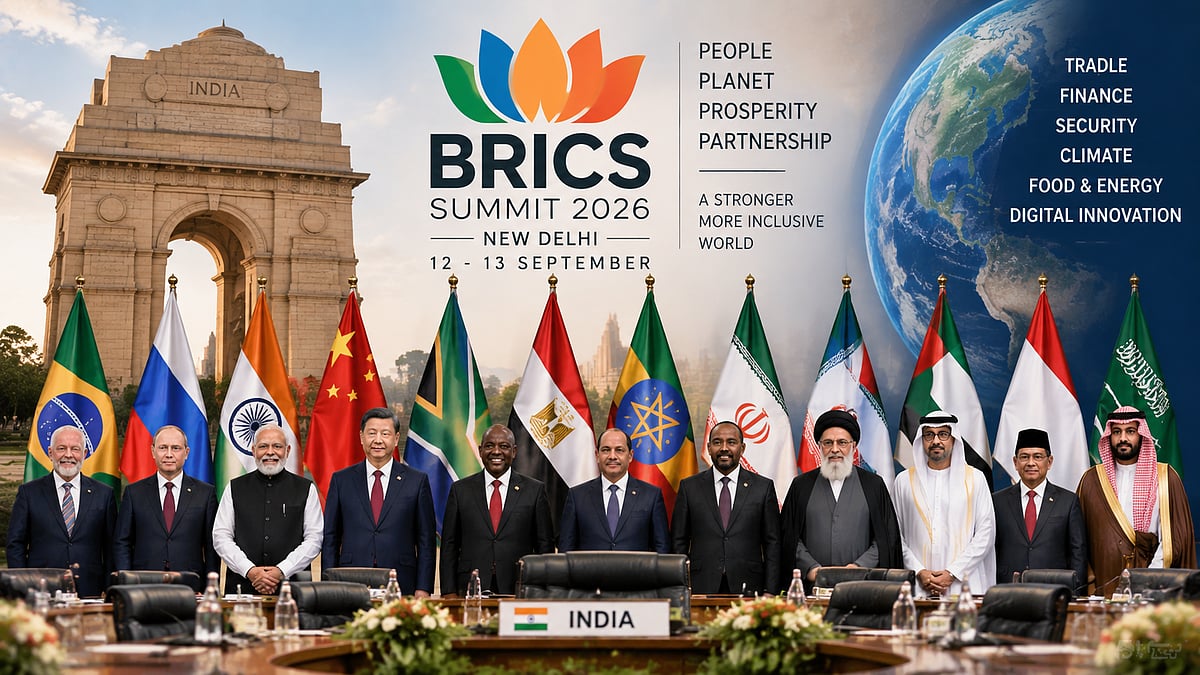
India Faces Strategic Test As BRICS Summit Opens In Delhi
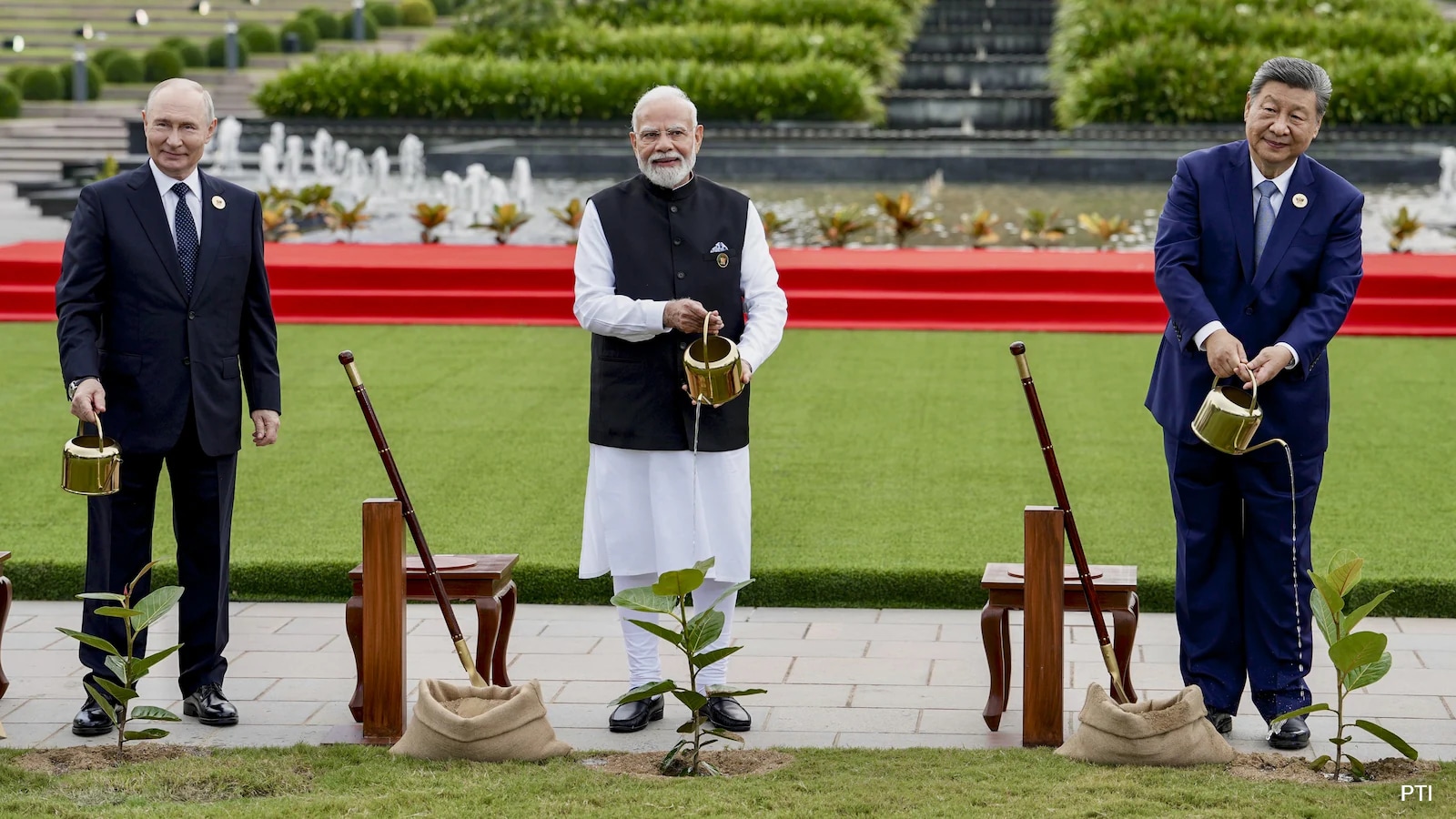
BRICS Summit Reaches Consensus Amid Global Tensions

Four Opposition-Ruled State CMs Skip BRICS Gala Dinner
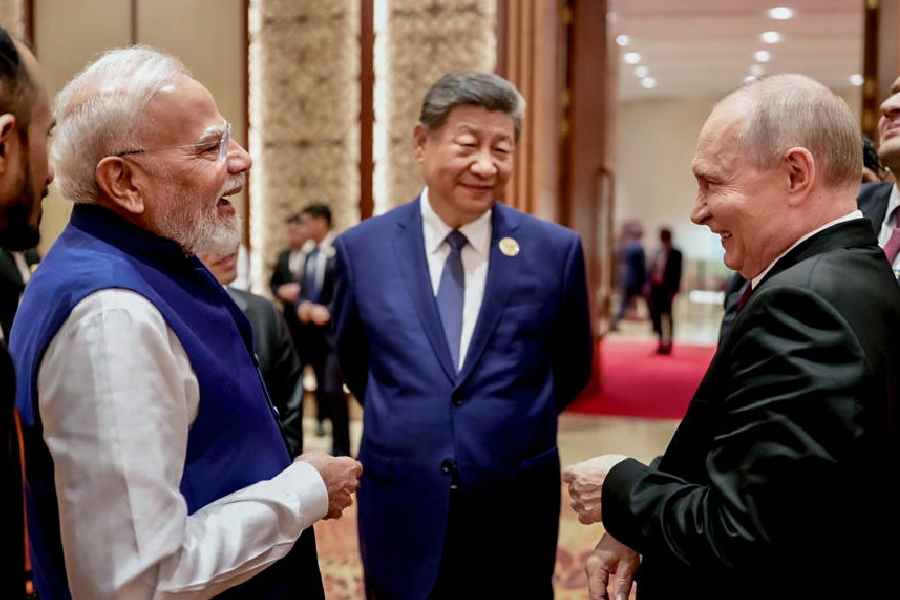
India Balances Ties With Rivals Amid Global Turmoil

Book Examines Social Media’s Role in India’s Hate-Speech Epidemic

PM Modi, President Murmu Praise Women’s Asia Cup Triumph