2 hrs ago
Xi Expected to Press Trump Over Taiwan Arms Sales

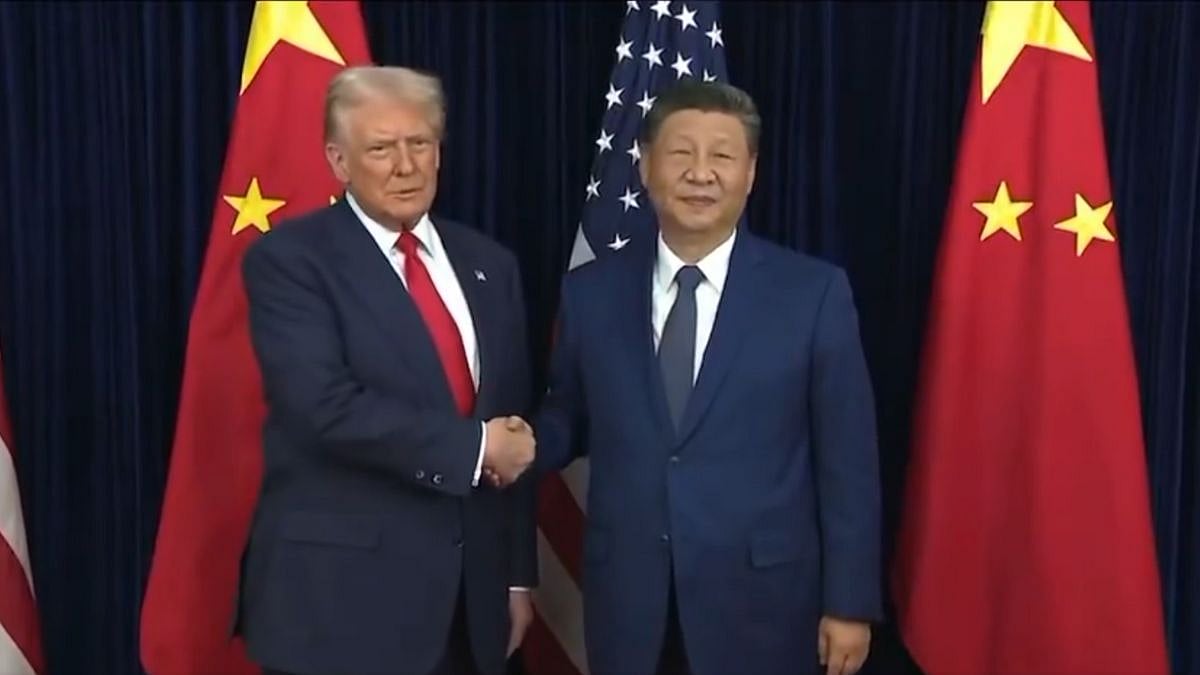
Xi Jinping and Donald Trump are expected to meet in Washington this week.
China wants the United States to stop selling weapons to Taiwan.
China says a 1982 agreement supports its request.
That agreement said the United States intended to reduce arms sales over time.
A separate memo said this depended on China continuing to seek a peaceful solution with Taiwan.
Taiwan’s government rejects China’s claim that Taiwan belongs to China.
The United States does not officially decide Taiwan’s sovereignty but continues to provide defensive support.
China has increased military activities around Taiwan in recent years.
The two leaders may discuss whether arms sales should continue.

Xi Jinping is expected to urge Donald Trump to halt Taiwan arms sales during a Washington summit this week.
China is likely to cite the 1982 joint statement, which says the United States intends to gradually reduce arms sales to Taiwan.
A Reagan-era memo conditioned reductions on China’s continued commitment to resolving differences with Taiwan peacefully.
China has also asked the United States to stop deliveries of weapons already ordered by Taiwan.
The Trump administration approved an $11 billion Taiwan arms package in December, while a separate package worth about $14 billion remains on hold.
- Who
- Chinese President Xi Jinping and United States President Donald Trump are expected to discuss Taiwan arms sales; Taiwan and China are the central parties to the dispute.
- What
- China is expected to press the United States to halt new arms sales and deliveries to Taiwan, citing the 1982 joint statement.
- Where
- Washington, United States; the possible archives visit is at the United States National Archives.
- When
- Xi is scheduled to arrive in Washington on Wednesday, with formal talks on Thursday and a National Archives visit on Friday.
- Why
- China views Taiwan as its territory and says the 1982 agreement calls for reducing United States arms sales, while the United States continues supporting Taiwan’s ability to defend itself.
China’s Position
United States and Taiwan’s Position
Taiwan arms sales
China’s Position
China is expected to argue that the United States should halt new arms sales and deliveries to Taiwan under its interpretation of the 1982 joint statement.
United States and Taiwan’s Position
The United States is legally required to provide Taiwan with the means to defend itself, and senior Republican figures have urged the administration to continue supporting Taiwan.
Taiwan’s status
China’s Position
China regards Taiwan as its own territory and may argue that Taiwan is changing the status quo and causing instability in United States-China relations.
United States and Taiwan’s Position
Taiwan rejects Beijing’s sovereignty claims, while the United States officially takes no position on Taiwan’s sovereignty and does not endorse Beijing’s position.
Use of force
China’s Position
China’s government has repeatedly called for arms sales to Taiwan to stop, while its military has increased activity around the island.
United States and Taiwan’s Position
United States officials and lawmakers have said China should not be allowed to take Taiwan by force and have called for unchanged support for Taiwan.
Key facts
- 1982 joint statement
- The United States said it intended to gradually reduce arms sales to Taiwan and did not seek long-term weapons sales to Taipei.
- Reagan-era condition
- United States willingness to reduce arms sales was described as conditioned on China’s continued commitment to a peaceful solution with Taiwan.
- December arms package
- The Trump administration approved an $11 billion arms sales package to Taiwan.
- Pending package
- A second Taiwan arms package worth about $14 billion has been on hold for months.
- China’s additional request
- Sources said China also wants the United States to stop deliveries of arms already ordered by Taiwan.
- United States policy
- The United States officially takes no position on Taiwan’s sovereignty and acknowledges, but does not endorse, Beijing’s position that Taiwan is part of China.
- Military activity
- China has conducted increased military activity around Taiwan, including live-missile war games, over the past five years.
Quotes
Anonymous source familiar with US-China discussions
A source briefed on discussions between the United States and China before the summit
“Xi could “emphasize to Trump that Taiwan is the provocateur and the sole source of instability in US-China relations, and that Taiwan is the one changing the status quo,””
 theprint.in
“I would bet that Xi Jinping is going to lecture at length President Trump on Taiwan as he has in the last meetings and as he has with other presidents,”
theprint.in

Pete Ricketts
Republican US senator and chair of the Senate Foreign Relations subcommittee on East Asia
“We need to continue just to again let them know that they’re not going to be allowed to take Taiwan by force. That we are not changing our position on that. We’re continuing to support Taiwan,”
theprint.in
Sources
Related news
Why Taiwan Remains a Crucial and Sensitive Issue for China
Allies Fear Trump Could Soften Taiwan Stance Before Xi Summit
Trump and Xi Prepare for High-Stakes September 24 Summit

Trump and Xi Prepare for High-Stakes White House Talks
Trump-Xi Washington Summit Focuses on Trade, Taiwan and Security
Rubio Meets Asian Allies Ahead of Trump-Xi White House Summit
South Korea, US and Japan Renew North Korea Dialogue Push

AMD Reaches $1 Trillion as Lisa Su Drives AI Expansion