3 hrs ago
Netherlands Moves Gold to London Amid Europe-US Strains
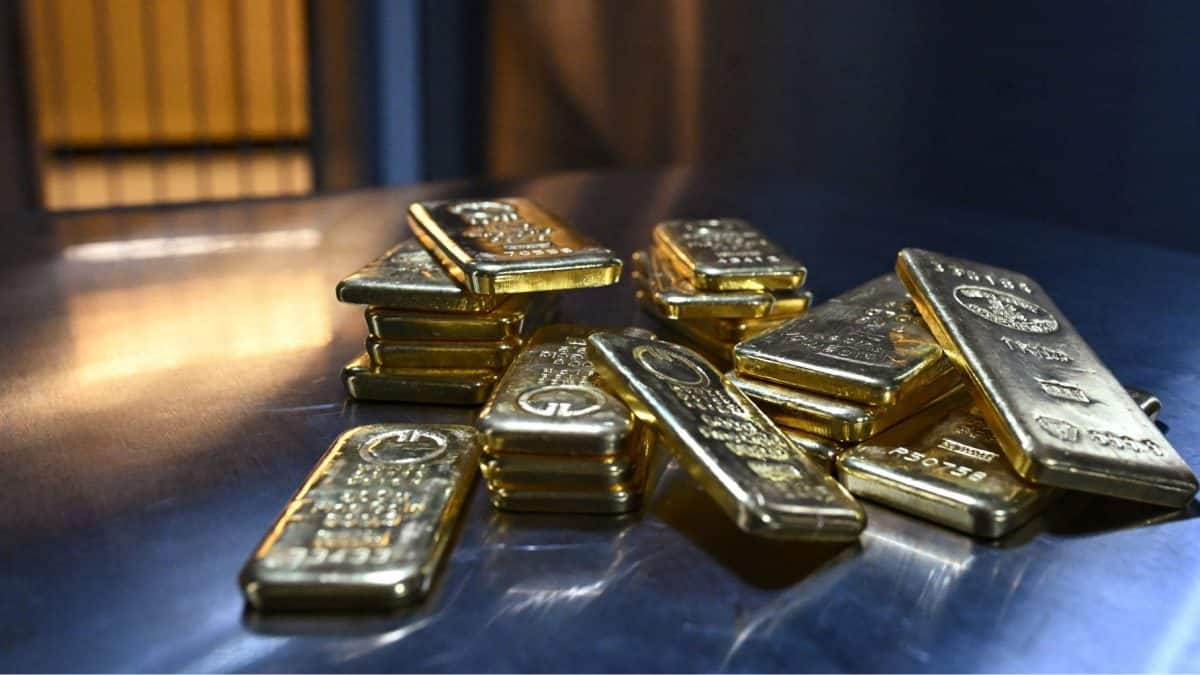
The Netherlands keeps gold in several places around the world.
It recently moved about 86 tonnes so more of its gold would be in London.
The Dutch central bank said this makes the gold easier to trade and helps prepare for a serious crisis.
It also wants to avoid relying too much on any one country.
The bank did not say that the United States planned to take the gold.
However, the move happened while Europe and the United States were arguing about tariffs, Iran and military cooperation.
France has also moved some gold away from New York.
Some people therefore wonder whether European countries are becoming less comfortable keeping important reserves in the United States.

The Netherlands moved about 86 tonnes of gold from North America and Zeist, mostly into London.
London now holds 32.1% of Dutch gold, while New York and Ottawa each hold 18.5%.
De Nederlandsche Bank said the relocation improves diversification, crisis preparedness and tradability.
The move comes amid tensions between European governments and Donald Trump’s administration over trade, Iran and security.
France moved 129 tonnes from New York earlier this year, while Germany continues to hold about 1,236 tonnes there.
- Who
- De Nederlandsche Bank, the Netherlands’ central bank, moved the gold.
- What
- About 86 tonnes of Dutch gold were shifted from North America and Zeist, with most ending up in London.
- Where
- The gold was moved among New York, Ottawa, Zeist in the Netherlands and London.
- When
- The operation took place between March and August; France made a similar move in January.
- Why
- De Nederlandsche Bank cited risk diversification, crisis preparedness and improved tradability.
Official Reserve-Management View
Geopolitical-Risk View
Reason for the Dutch relocation
Official Reserve-Management View
De Nederlandsche Bank described the move as a practical effort to diversify locations, improve crisis preparedness and make the reserves easier to trade.
Geopolitical-Risk View
The timing may reflect wider concerns about dependence on the United States and Canada amid trade disputes and worsening political relations.
Safety of gold held in New York
Official Reserve-Management View
The Bundesbank has said Germany’s gold is safely stored at the Federal Reserve Bank of New York and benefits from special legal protections.
Geopolitical-Risk View
Some European politicians argue that foreign reserves could become vulnerable during geopolitical disputes, citing the freezing of Russian central bank assets after Russia’s invasion of Ukraine.
Whether the move is political
Official Reserve-Management View
The Netherlands did not accuse the United States of planning to seize foreign gold, and France said its own transfer was motivated by technical and financial considerations.
Geopolitical-Risk View
Analysts and some policymakers say Donald Trump’s approach to allies, trade and international payment systems has increased interest in gaining more physical control over national gold.
Key facts
- Dutch gold reserves
- The Netherlands holds 612.4 tonnes of gold valued at about $83.8 billion, according to De Nederlandsche Bank.
- Gold moved
- About 86 tonnes were relocated; 59 tonnes were sold in New York and replaced in London, while 27 tonnes were physically moved from North America to Zeist.
- New Dutch distribution
- London holds 32.1%, New York 18.5%, Ottawa 18.5% and Zeist 30.8% of the Netherlands’ gold.
- France’s transfer
- Banque de France moved 129 tonnes from the Federal Reserve Bank of New York in January.
- Germany’s reserves
- Germany holds about 3,350 tonnes of gold, including approximately 1,236 tonnes, or 36.6%, in New York.
- Official Dutch rationale
- De Nederlandsche Bank said gold in London is particularly tradable because its bars meet international market standards.
Quotes
Olaf Sleijpen
President of the Dutch central bank, De Nederlandsche Bank
“Trump is erratic and one cannot rule out that someday he will come up with creative ideas how to treat foreign gold reserves.”
 firstpost.com
“We expect that we will never need to use them, but we do need to strengthen our resilience and preparedness.”
firstpost.com
Sources
Related news

Dutch Central Bank Moves 86 Tonnes of Gold to London

Dutch Central Bank Moves Billions in Gold Amid Tensions

Gold Surpasses US Treasuries, But Dollar Dominance Persists

Gold Tops $4,600 as Central Banks Fuel Further Rally

Gold Slips as Mideast Tensions Sustain Federal Reserve Hike Bets

Gold Holds Gains as Trump Comments Ease Inflation Fears

Melenchon Debt-Cancellation Plan Triggers French Political Backlash