2 weeks ago
Seoul's Incheon overtakes Heathrow, Dubai as world's busiest airport
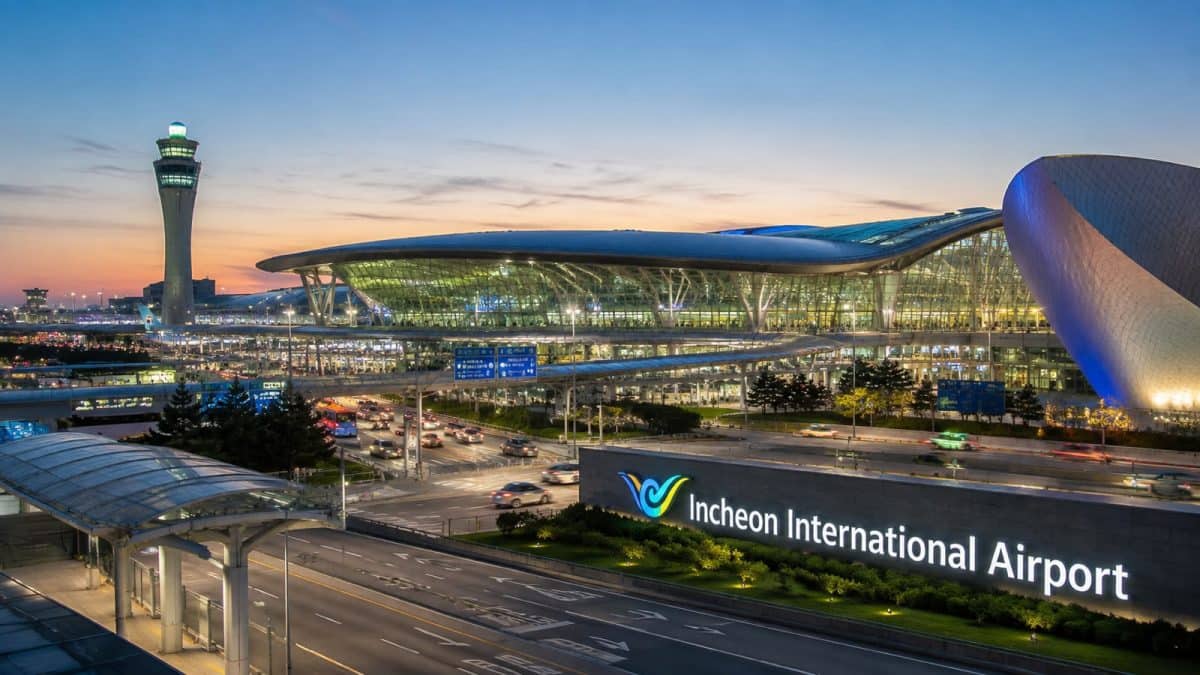
Airports are places where people catch planes to visit other countries.
A big airport called Incheon, near Seoul in South Korea, has just become the busiest airport in the world for international travellers.
That means more people flew through Incheon than through any other airport in the first half of 2026.
It passed two very famous airports: London Heathrow and Dubai International.
One reason is that there is trouble in the Middle East involving Iran, so some flights chose new routes that go through East Asia instead of Dubai.
Another reason is that lots more people want to visit South Korea because they love Korean music, movies, and food.
In just six months, 38.39 million people travelled through Incheon from other countries.
The airport got a big new part added in 2024, so now it can welcome up to 106 million passengers every year.
Incheon works with more than 100 airlines and flies to almost 200 cities around the world.

Incheon International Airport handled 38.39 million international passengers in the first half of 2026, becoming the world's busiest international airport.
London Heathrow followed with 37.79 million passengers, while Singapore Changi was third with 34.53 million.
Dubai International, the top-ranked international airport in 2024 and 2025, was hit by disruptions from the conflict involving Iran that shifted connecting traffic toward East Asia.
Incheon's transfer traffic rose 18.1% to 4.24 million passengers, with Europe-bound transfers rising particularly sharply.
Growth was also driven by South Korea's tourism recovery, including more visitors from China and Japan and the global popularity of Korean culture, while the airport serves 101 airlines and 183 cities.
- Who
- Incheon International Airport, alongside London Heathrow, Singapore Changi, and Dubai International airports, based on preliminary data from Airports Council International.
- What
- Incheon overtook Heathrow and Dubai to become the world's busiest airport for international passenger traffic, a first for the airport since it opened in 2001.
- Where
- Incheon, located around 48 km west of Seoul, South Korea.
- When
- In the first half of 2026 (January to June).
- Why
- Disruptions from the conflict involving Iran redirected connecting traffic from Middle Eastern hubs like Dubai toward East Asian routes, while South Korea's tourism recovery and the global popularity of Korean culture boosted demand.
Geopolitical disruption view
Organic growth view
Cause of Incheon's rise
Geopolitical disruption view
The conflict involving Iran disrupted Middle Eastern aviation and redirected connecting traffic from hubs like Dubai to alternative routes through East Asia, giving Incheon an extra boost.
Organic growth view
Incheon was already growing strongly before the conflict, driven by South Korea's tourism recovery, rising visitor numbers from China and Japan, and the global popularity of Korean culture and entertainment.
Defining 'world's busiest airport'
Geopolitical disruption view
By international passenger traffic, Incheon is the world's busiest airport in the first half of 2026, ahead of Heathrow and Dubai.
Organic growth view
Rankings depend on the metric used; by total passengers or seat capacity the picture differs, and Heathrow still recorded its busiest first half on record while Istanbul overtook it as Europe's busiest by total passengers.
Key facts
- International passengers (H1 2026)
- 38.39 million at Incheon
- Runner-up
- London Heathrow with 37.79 million
- Third place
- Singapore Changi with 34.53 million
- Previous leader
- Dubai International (No. 1 in 2024 and 2025)
- Transfer passengers
- 4.24 million, up 18.1% year on year
- Airlines served
- 101
- Cities connected
- 183
- Annual passenger capacity
- 106 million after late-2024 expansion
Sources

Related news
Delhi Airport Ranks 11th Among World’s Busiest Airports
Atlanta Airport Holds Top Spot in August 2026 Rankings

Dubai Airport Traffic Falls 31.3% Amid Iran War Disruptions
Indian International Passenger Traffic Falls as Foreign Airlines Gain
Middle East Conflict Hits Indian Aviation; Delhi Defies Downturn

Indian Airlines Lose International Traffic Share Amid Q2 Decline

Bangladesh Recall Shanto, Mahmud for Asian Games T20 Squad

Japan Cricket Boss Defends Asian Games Facilities Against Concerns

Mitsubishi Revives Pajero With 201PS Fifth-Generation SUV

Europe's Bond Selloff Deepens as Middle East Tensions Lift Oil

Uday Kotak Warns Global Bond Markets Face Roller-Coaster Volatility