2 hrs ago
Supreme Court Links Unpaid Traffic Challans to Vehicle Services

The Supreme Court has ordered consequences for people who do not pay traffic fines.
Unpaid fines could affect vehicle registration, pollution certificates and driving licences.
Officials may also impound vehicles belonging to repeat offenders.
The article says a very large amount of e-challan fines remains unpaid.
It argues that fines only work when they are enforced fairly and on time.
Drivers should receive clear notices and enough information to pay or challenge a fine.
If a driver disputes a fine, the dispute should be decided before officials use force to collect it.
The process should be clear and easy for people to follow.

The Supreme Court has linked unpaid traffic challans to restrictions on vehicle registration, PUC certificates and driving licences.
Officials have also been directed to act against repeat offenders by impounding vehicles.
The article cites nearly Rs 50,000 crore in outstanding e-challan dues nationwide.
Uttar Pradesh accounts for 21 per cent of total challans, while major cities using CCTV-based e-challans have many pending cases.
The editorial calls for clear notices, payment and objection deadlines, timely adjudication of disputes, and predictable enforcement.
- Who
- The Supreme Court, government officials and motorists with unpaid traffic challans.
- What
- An order links unpaid challans to restrictions on vehicle registration, PUC certificates and driving licences, and directs action against repeat offenders.
- Where
- Across India.
- When
- The article does not specify when the order was issued.
- Why
- To improve accountability and enforcement of traffic penalties.
Stronger enforcement
Procedural safeguards
Consequences for unpaid challans
Stronger enforcement
The editorial supports linking unpaid challans to vehicle-service restrictions and impounding vehicles of repeat offenders, arguing that penalties must be enforced.
Procedural safeguards
The editorial says motorists should receive regular notices and a reasonable opportunity to pay before consequences follow.
Disputed challans
Stronger enforcement
Once liability is settled and the payment period expires, prescribed consequences should follow predictably.
Procedural safeguards
A disputed challan should receive timely adjudication before coercive recovery, and drivers should not have to navigate an onerous process.
Key facts
- Outstanding e-challan dues
- Nearly Rs 50,000 crore nationwide, according to the article.
- Uttar Pradesh share
- 21 per cent of total challans.
- Possible consequences
- Restrictions involving vehicle registration, PUC certificates and driving licences.
- Repeat offenders
- Officials have been ordered to take action, including impounding vehicles.
- Current notification method
- Motorists are currently informed through text messages alone, the article says.
- Proposed process
- A transparent timetable for notification, payment, objections, adjudication and recovery.
Sources
Related news

Supreme Court Orders Restrictions for Vehicles With Unpaid Traffic Challans
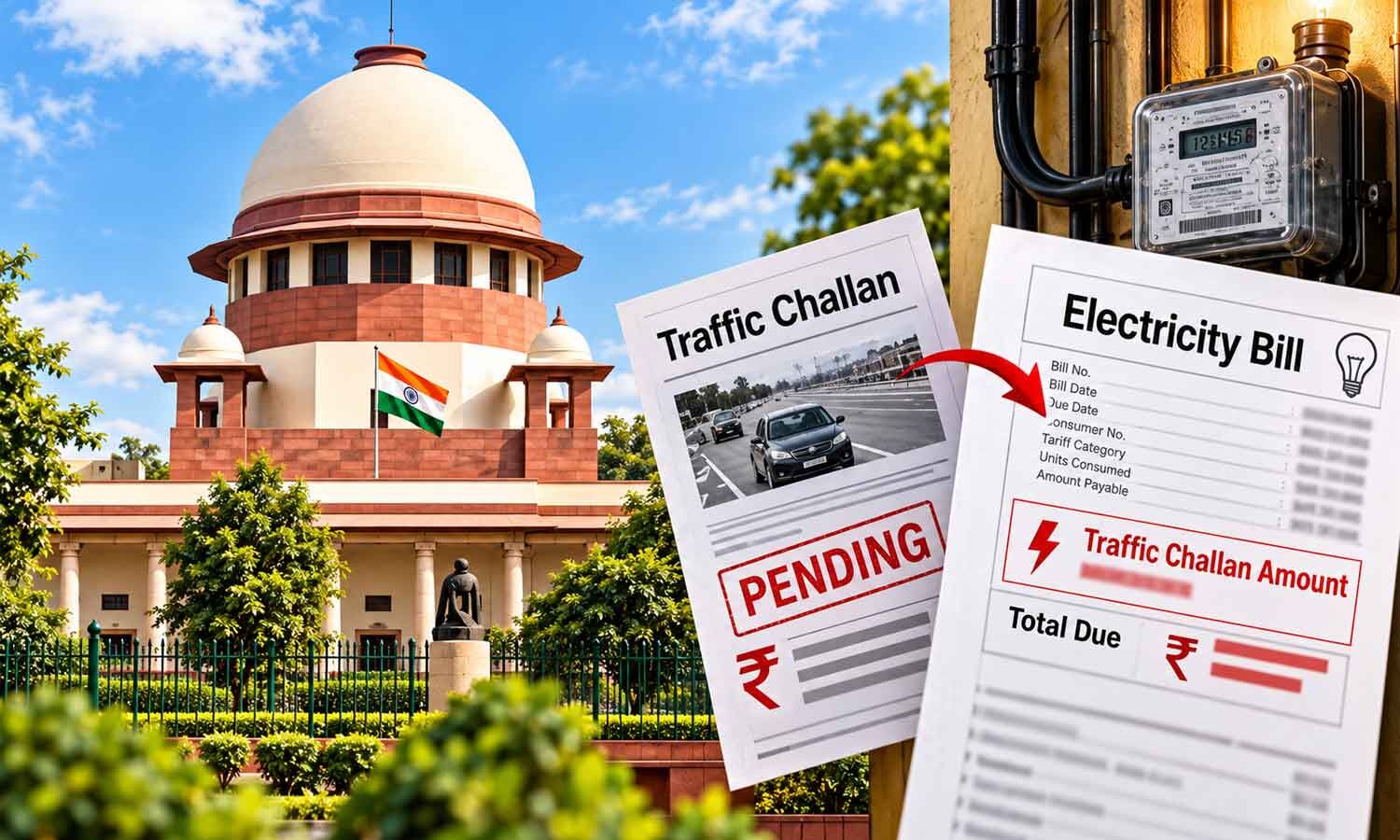
Supreme Court Weighs Power Bills And Vehicle Restrictions For Fines
India's Unpaid Traffic Challan Gap Widens as Violations Surge
High Court Warns Traffic Police Against Turning Challans Into Revenue Drive

Gurugram Traffic Police Seize SUV With Six Pending Challans

Delhi Lawyers Protest Amended Traffic Challan Rules and 50% Deposit

Supreme Court Cancels Bail in Doctor Assault Case

Mamata Banerjee Gives Trinamool Rebels 15 Days to Return
Justice Bhuyan Praises NALSAR Students as Brilliant, Bold and Brave

IIT Delhi PhD Scholar Dies After 45 Days; FIR Filed