2 weeks ago
Vande Mataram and Inquilab Zindabad: Competing Visions of Indian Nationalism
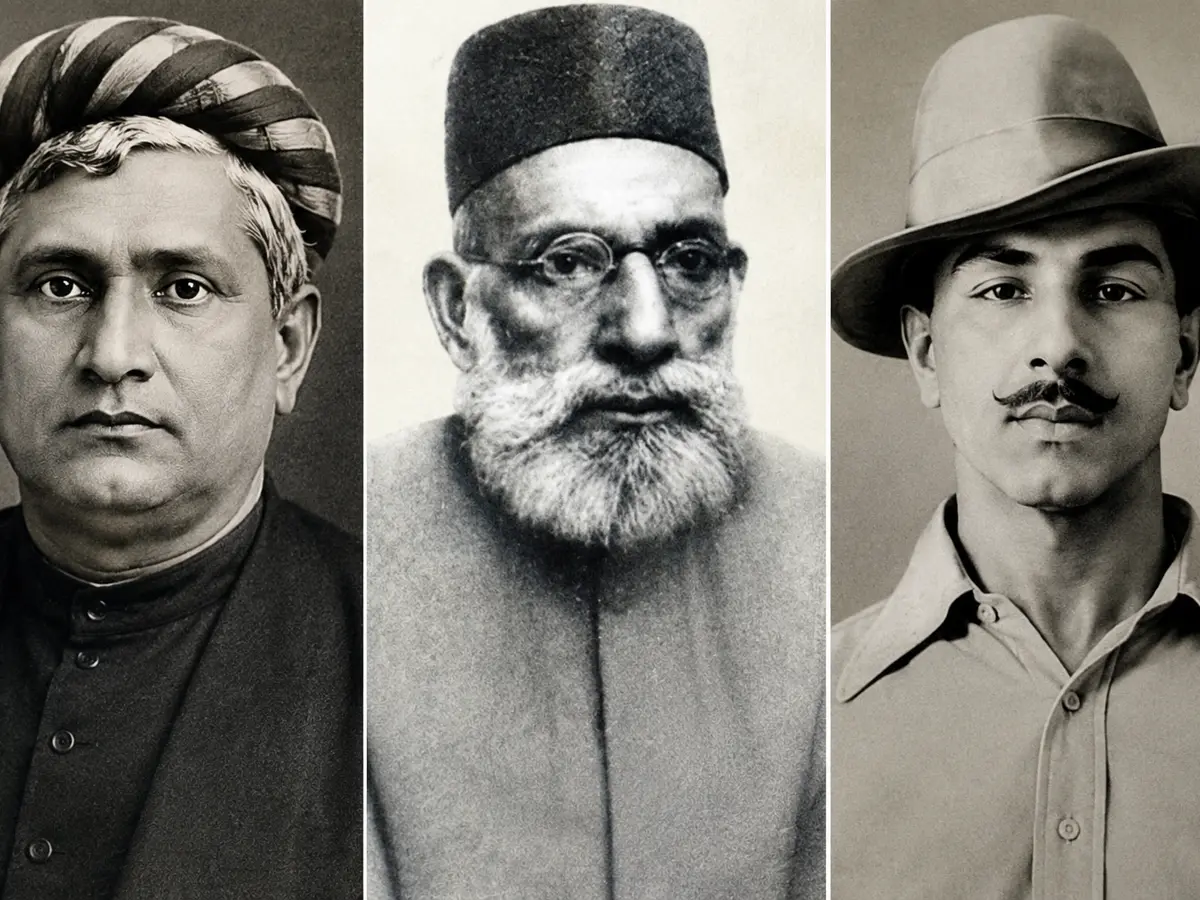
This story is about two famous sayings, or slogans, from India's history.
One slogan is "Vande Mataram," which means "I bow to thee, Mother."
It was first written in a book called Anandamath by a writer named Bankim Chandra Chattopadhyay.
People started shouting it because they wanted India to be free.
The other slogan is "Inquilab Zindabad," which means "Long Live the Revolution."
A man named Hasrat Mohani came up with it about a hundred years ago.
Brave freedom fighters like Bhagat Singh shouted it too.
These two slogans show two different ideas about India.
One idea sees India like a mother to be loved and honored.
The other idea wants to change the whole country to make things fair for everyone.
Even today, people still remember both slogans.

"Vande Mataram," meaning "I bow to thee, Mother," began as a song in Bankim Chandra Chattopadhyay's novel Anandamath before becoming a movement slogan.
Rabindranath Tagore set "Vande Mataram" to music and sang it at an Indian National Congress session, and it became a resistance anthem during the 1905 partition of Bengal.
"Inquilab Zindabad," Urdu for "Long Live the Revolution," was coined by activist Hasrat Mohani around 1921.
Bhagat Singh and Batukeshwar Dutt shouted "Inquilab Zindabad" after throwing non-lethal bombs in Delhi's Central Legislative Assembly and again at their 1931 execution.
The two slogans represent competing visions: one personifies India as a mother with Hindu devotional imagery, while the other is a secular, socialist call for a new social order.
- Who
- Bankim Chandra Chattopadhyay, Rabindranath Tagore, Hasrat Mohani, and revolutionaries Bhagat Singh and Batukeshwar Dutt
- What
- The origins and competing visions of two Indian nationalist slogans, "Vande Mataram" and "Inquilab Zindabad"
- Where
- India, notably Bengal and Delhi
- When
- From the late 19th century through the 1920s and 1930s; the article is written 80 years after Indian Independence
- Why
- The slogans crystallized two different visions of Indian nationalism: devotional reverence for the motherland versus a secular, socialist call for revolutionary change
Revolutionary Secular Nationalism
Devotional Cultural Nationalism
Vision of the nation
Revolutionary Secular Nationalism
Invokes revolution as a means of transforming society and envisions the future through a new social order.
Devotional Cultural Nationalism
Personifies the nation as a mother and expresses devotion to the motherland through sacred imagery.
Religious and community framing
Revolutionary Secular Nationalism
A class rallying cry addressed to workers and peasants, secular by design and not aimed at any single religious community.
Devotional Cultural Nationalism
Draws heavily from Hindu devotional tradition, with later stanzas that unsettled Muslim leaders within the nationalist movement.
Path to change
Revolutionary Secular Nationalism
Uncompromising revolutionary sacrifice, as embodied by Bhagat Singh's act of making the deaf hear.
Devotional Cultural Nationalism
Reverent public singing and devotion, where singing the anthem itself became an act of defiance.
Key facts
- Vande Mataram meaning
- "I bow to thee, Mother"
- Inquilab Zindabad meaning
- "Long Live the Revolution"
- Origin of Vande Mataram
- Song in the novel Anandamath by Bankim Chandra Chattopadhyay, set against the Sanyasi Rebellion of 1770
- Vande Mataram's public debut
- Sung by Rabindranath Tagore at an Indian National Congress session
- Resistance anthem
- Opposed the 1905 partition of Bengal; the British banned public renditions in some provinces
- Coiner of Inquilab Zindabad
- Hasrat Mohani, around 1921
- Central Legislative Assembly incident
- Bhagat Singh and Batukeshwar Dutt threw non-lethal bombs and shouted the slogan in 1929-era Delhi assembly
- Execution year
- 1931, when the slogan was shouted again at execution
Quotes
Song lyric from Anandamath
Excerpt from the hymn in Bankim Chandra Chattopadhyay’s novel
“"Vande Mataram" - "I bow to thee, Mother"”
 wionews.com
Sources
Related news

Vande Mataram Debuts At Red Fort On 80th Independence Day

Vande Mataram Lyrics Explained: Meaning of India's Iconic Patriotic Song

Vande Mataram’s National Song Compromise and Its Six Stanzas
Kangana Ranaut Challenges Sharmila Tagore Over Vande Mataram Stanzas

Amit Shah Says Modi Government Restored Vande Mataram Recognition
Vande Mataram awakened patriotism, united Indians, says VP Radhakrishnan

80th Independence year marks women's economic freedom: Punjab CM

1930 Letter Shows Schoolchildren Wore Buttons With Bhagat Singh

Hyderabad Man Sentenced to Life for 2022 Murder

Bankipur Bypoll: Police Detain Jan Suraaj Workers, BJP Defends Law