

1 year ago
NASA-ISRO's NISAR: A Groundbreaking Earth Observation Mission
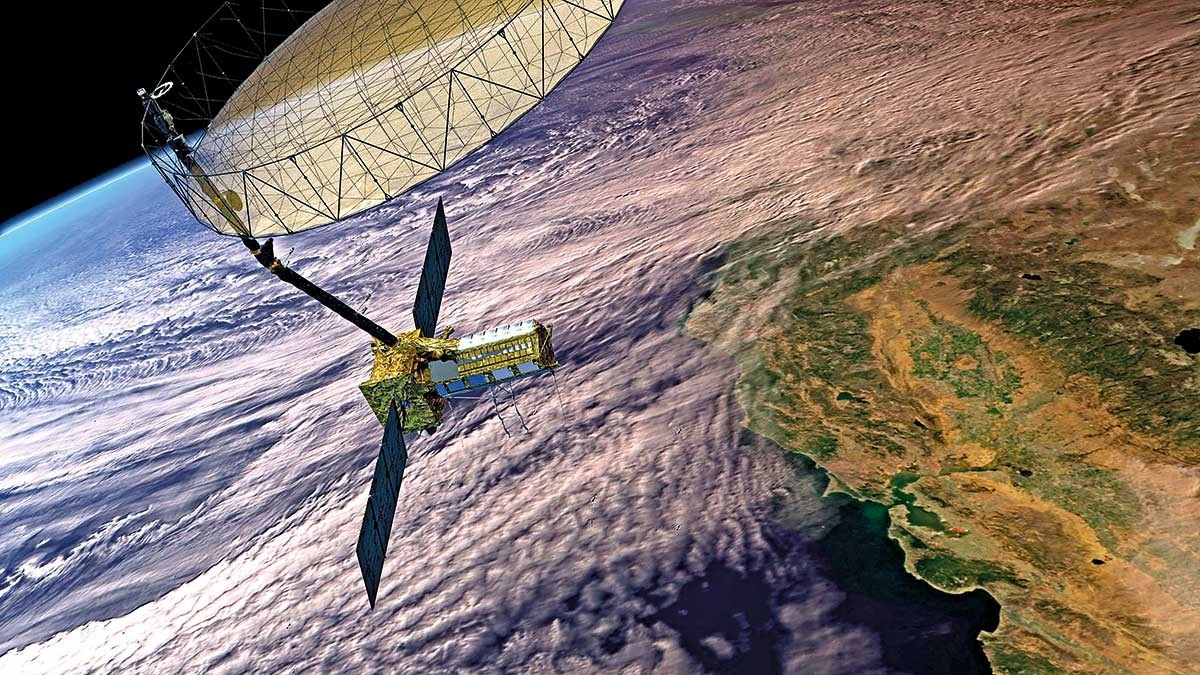
Imagine a super-powered satellite named NISAR that's like a global eye, built together by the US and India.
It has special radar that can see through clouds and darkness to watch Earth.
It's launching in July 2025.
NISAR will measure tiny changes on Earth, like how the ground moves during earthquakes, or how much ice is melting.
Scientists will use the data to study climate change, track natural disasters, and understand our planet better.
Anyone can use the information NISAR collects.

The NISAR mission is a collaboration between NASA and ISRO to observe Earth.
Scheduled to launch on July 30, 2025, using ISRO's GSLV-F16 rocket.
It features dual-frequency radar for comprehensive Earth surface data.
NISAR will monitor earthquakes, ice melt, and ecosystem changes.
Data from NISAR will be publicly accessible for research and disaster response.
- Who
- A collaboration between NASA and ISRO.
- What
- A joint NASA-ISRO Earth-observing satellite mission.
- Where
- Will be placed in a sun-synchronous orbit at ~743–747 km altitude.
- When
- Scheduled to launch July 30, 2025.
- Why
- To monitor Earth's ecosystems, surface deformation, and climate change.
Key facts
- Mission Name
- NISAR
- Partners
- NASA and ISRO
- Launch Date
- July 30, 2025
- Rocket
- ISRO’s GSLV‑F16
- Orbit
- ~743–747 km altitude
- Cost
- $1.5 billion
- Data Access
- Publicly Accessible
Sources
Related news
India’s Space Journey Enters a Commercial, Human-Spaceflight Era

Scientist Became India’s Bridge Between Laboratory and State

Modi Urges Space Startups to Attract Global Talent

India weighs Moon Base invite, actor ad notices, lawmaker trials
India registers 440 space startups as private investment surges
