

58 mins ago
South Korea's Lee Faces Record Low Approval Amid Housing Woes
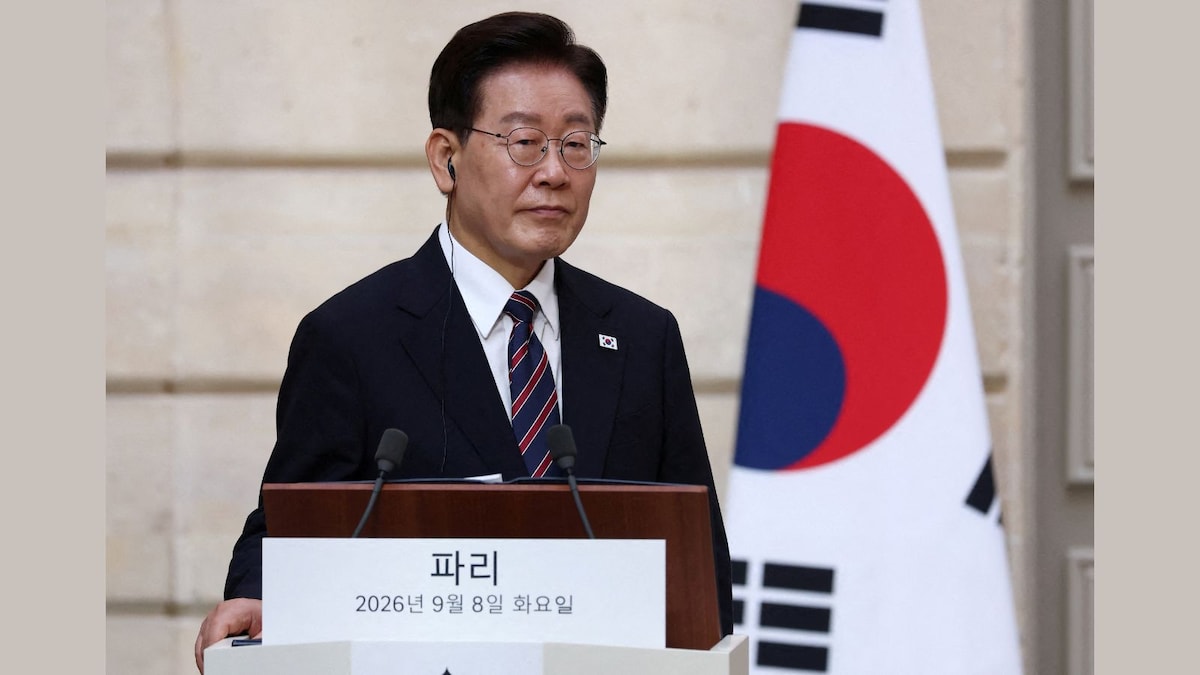
South Korean President Lee Jae-myung's approval rating has dropped to a new low.
A recent survey shows that 63.3% of people disapprove of his performance, while only 33.8% approve.
People are unhappy with his housing policies and some of his cabinet appointments.
Lee has not commented much on his falling popularity but says he focuses on long-term goals.
Some of his supporters are worried that this decline might affect the next election in two years.
The main issue is housing, where Lee has tried to control property prices but critics say this has made it harder for people to buy homes.
There's also a debate about turning a large area in Seoul into a park or more housing.

South Korean President Lee Jae-myung's approval rating fell to 33.8%, the lowest of his presidency.
63.3% of respondents disapproved of his performance, citing housing policies and cabinet appointments.
Lee has not publicly addressed the decline but focuses on long-term goals.
Housing policies, including tax increases and borrowing restrictions, have sparked public dissatisfaction.
A debate over developing 2,800 acres in Seoul's Yongsan district highlights competing demands for housing and green space.
- Who
- South Korean President Lee Jae-myung
- What
- Approval rating fell to a new low
- Where
- South Korea
- When
- Monday, September 14
- Why
- Public discontent with housing policy and cabinet appointments
Key facts
- President
- Lee Jae-myung
- Approval Rating
- 33.8%
- Disapproval Rating
- 63.3%
- Key Issue
- Housing policy
- Term Duration
- Five years
- Next Election
- Two years
- Yongsan District Land
- 2,800 acres
- Parkland Size
- 740 acres
Quotes
Lee Jae-myung
President of South Korea
“There's no point talking about a goal for what kind of support I'd like to get. I'm going to do my best with the expectation that it'll be higher when I finish.”
 CNBC TV 18
 theprint.in
“We look at this as a compound result of various policy issues such as real estate and the stock market as well as political issues.”
CNBC TV 18
theprint.in
Sources
Related news

South Korea’s Lee Drops Top Adviser as Housing Concerns Grow
South Korea Names Three Officials in Major Cabinet Reshuffle

South Korean President Proposes Talks to End Korean War

South Korea Party, Government Seek Tax Relief for Homeowners

Nepal’s New Populist Government Faces Doubts Five Months On

Trump's approval rating hits all-time low ahead of US midterms

CBS Poll Finds Democrats Driven More by Opposition to Trump
Trump's $5,000 Adult Payout Promise Faces Funding And Approval Questions
Trump Reiterates Promise of $5,000 Dividend for Adult Citizens

Trump’s $5,000 Promise Raises Legal and Funding Questions
