1 hr ago
Election Chief Reaffirms Indian Voting Machines Cannot Be Hacked
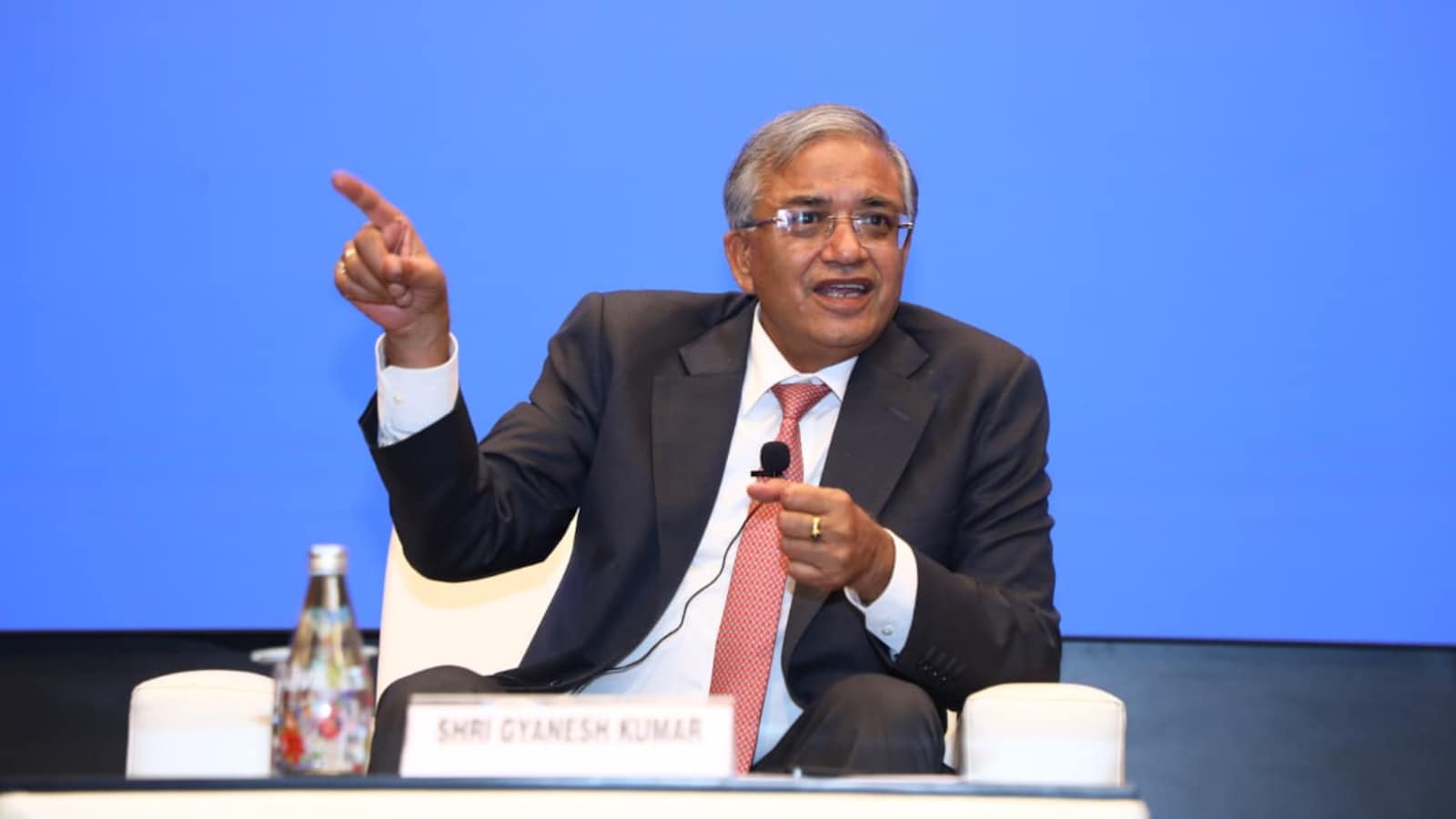
Chief Election Commissioner Gyanesh Kumar said electronic voting machines in India cannot be hacked remotely.
He explained that the machines do not connect to the internet or wireless networks.
Before voting begins, election workers and party representatives check the machines in a mock poll.
Each electronic vote also produces a paper record called a VVPAT slip.
Kumar said officials have not found a mismatch between machine totals and paper records across billions of votes counted.
After voting, officials record the total number of votes and seal the machines.
Candidate representatives can observe important checking and counting steps.
He also said a digital system called ECI Net helps election officials communicate.
Kumar pointed to high turnout in several Indian states as evidence that many people participate even though voting is voluntary.

Chief Election Commissioner Gyanesh Kumar said Indian EVMs are standalone devices without internet, Wi-Fi, Bluetooth, infrared, or electricity connectivity.
He described safeguards including electoral-roll verification, mandatory mock polls, VVPAT records, Form 17C documentation, sealing, and counting-agent verification.
Kumar said no mismatch has occurred between EVM counts and VVPAT receipts across billions of counted votes.
He said the Election Commission uses ECI Net to improve communication across its election network.
Kumar cited high turnout in several Indian states, including 93.7% in West Bengal, as evidence of strong voluntary participation.
- Who
- Chief Election Commissioner Gyanesh Kumar, election officials, political-party representatives, and polling personnel.
- What
- Kumar reaffirmed that India’s Electronic Voting Machines are not remotely hackable and outlined election safeguards and digital communication improvements.
- Where
- At the Ahmedabad Management Association in Ahmedabad, Gujarat, with additional scheduled visits and meetings elsewhere in Gujarat.
- When
- During Kumar’s official two-day tour of Gujarat; the specific date is not stated.
- Why
- To explain election-management procedures, respond to claims about EVM vulnerability, and reinforce confidence in electoral operations.
EVM Vulnerability Concerns
Election Commission’s Defense
Possibility of hacking
EVM Vulnerability Concerns
Claims have been raised about whether Electronic Voting Machines could be vulnerable.
Election Commission’s Defense
Gyanesh Kumar said EVMs have no electricity, internet, Wi-Fi, Bluetooth, or infrared connectivity and therefore cannot be hacked remotely.
Verification of results
EVM Vulnerability Concerns
Concerns about machine reliability imply that electronic results should be independently checked.
Election Commission’s Defense
The Election Commission uses mock polls, VVPAT records, Form 17C, machine sealing, and verification in the presence of candidate representatives.
Public confidence
EVM Vulnerability Concerns
Questions about EVMs can raise doubts about the credibility of election results.
Election Commission’s Defense
Kumar said the layered safeguards and absence of reported EVM-VVPAT mismatches demonstrate the integrity of India’s voting process.
Key facts
- Speaker
- Chief Election Commissioner Gyanesh Kumar
- Main claim
- EVMs are standalone devices, making remote hacking technically impossible, according to Kumar.
- Paper verification
- Every vote is mirrored by a Voter Verifiable Paper Audit Trail record.
- Reported mismatches
- Kumar said no mismatch has occurred between EVM counts and VVPAT receipts across billions of counted votes.
- Electoral-roll verification
- Around 12 lakh Booth Level Officers verify electoral rolls by visiting voters’ homes.
- Digital platform
- ECI Net is used to improve communication across the election network.
- Highest cited turnout
- West Bengal recorded 93.7% turnout among the figures cited by Kumar.
Quotes

Gyanesh Kumar
Chief Election Commissioner of India
“After polling, the total number of votes cast is recorded in Form 17C and the EVMs are sealed according to the prescribed procedure. During counting, the EVM results are also verified in the presence of counting agents of candidates.”
 NDTV
NDTV
“Around 12 lakh Booth Level Officers (BLOs) verify electoral rolls by visiting voters' homes. Continuous verification is carried out to ensure that eligible voters are included while ineligible names are removed.”
NDTV
Sources
Related news

CEC Kumar Says Indian EVMs Offline, Urges Youth Voting
Election Chief Defends Voter Roll Revision Amid Political Criticism
India’s Election Commission Details Voter Cards and Election Oversight
Trump Cites India’s Election System to Back SAVE Act

Election Chief Praises Booth Officers, Urges Youth Voting Literacy

Uttar Pradesh, Goa Begin EVM Checks Ahead of Polls
Two arrested after black flags waved at CEC convoy
Trinamool Seeks Urgent SIR Appeals Resolution Before Bengal Bypolls

High Court Quashes Student Detention, Congress Targets Election Chief’s Daughter