3 weeks ago
1989 Parliamentary Miracle: Ideological Enemies United to Back V.P. Singh Government
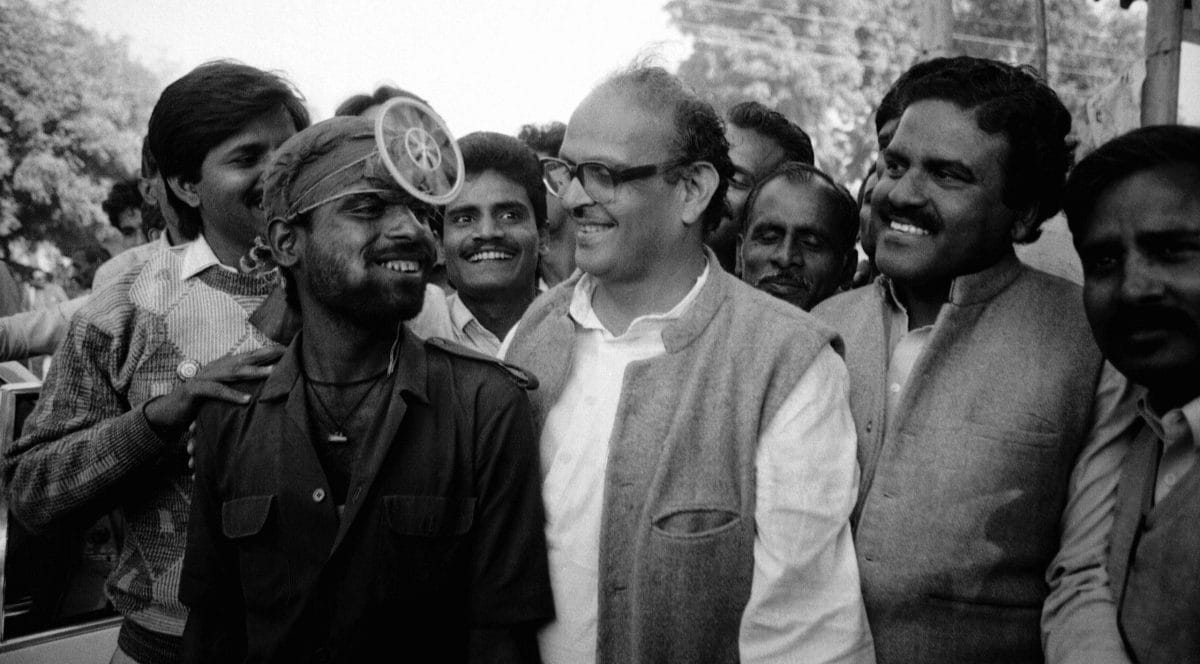
A long time ago, in 1989, one big political party in India lost most of its power, and no single party had enough votes to run the country by itself.
The person who became the leader of the country needed help from other parties, even parties that did not like each other at all.
Two of those rival parties agreed to help him, but they refused to work together in the same cabinet or even sit in the same room.
The clever plan was called 'outside support,' meaning they voted to keep the government going but stayed outside of it.
The leader had dinner with the leaders of one party one night and the leaders of the other party the next night to talk about plans.
Many people thought this strange arrangement would fail quickly, but it actually worked.
This unusual teamwork showed that India could be run by many parties working together, not just one.
In the years after that, several other governments used the same kind of teamwork.
The story reminds us that even people who disagree can cooperate when they care about keeping things running smoothly.

In December 1989, BJP and Communist Party of India (Marxist) extended outside support to the same minority government under V.P. Singh despite being bitter ideological rivals.
The arrangement created the 'outside support' model, in which neither supporting party took ministerial portfolios, preserving their distinct ideological identities.
V.P. Singh initiated alternating dinner diplomacy, hosting Left leaders one evening and Right leaders the next to coordinate legislative agendas.
The experiment proved coalition politics could work, reversing the narrative set by the breakup of the Janata Party government in the late 1970s.
The 1989 model laid the groundwork for later alliances, including the United Front in 1996, Atal Bihari Vajpayee's 24-party NDA in 1998, and the UPA in 2004.
- Who
- Prime Minister V.P. Singh, BJP leader L.K. Advani, CPI(M) leader Jyoti Basu, and former Prime Minister Rajiv Gandhi
- What
- India's rival BJP and Communist Party of India (Marxist) extended outside support to the same minority National Front government, creating a model of coalition support
- Where
- India
- When
- December 1989, following Congress's loss of its parliamentary majority in late 1989
- Why
- To provide parliamentary stability and prove that Indian governance could survive beyond the era of single-party dominance
Key facts
- Event
- 1989 Left-Right convergence supporting the V.P. Singh government
- Support model
- Outside support, with no ministerial portfolios for supporting parties
- Key leaders
- V.P. Singh (Prime Minister), L.K. Advani (BJP), Jyoti Basu (CPI-M)
- Coordination method
- Alternating dinner diplomacy at the Prime Minister's residence
- Common agenda
- Constitutional reforms, anti-corruption measures, and restoring state authority
- Predecessor
- Janata Party government of the late 1970s, whose rapid dissolution made coalitions seem fragile
- Successors
- United Front (1996), NDA (1998), UPA (2004)
Sources
Related news

Athawale Invites CJP Founder Dipke as Dipke Questions 'Anti-National' Label
India's Enduring Answer to Collapse Predictions on 79th Independence Day

Rijiju escalates 'dimagi Naxal' row, attacks Congress and Rahul Gandhi

BJP-SAD Alliance’s Long Political History Shapes Possible Patch-Up

Why India’s Parties May Need Their Own Thatcher Moments
Siddaramaiah Vows to Continue Fight for Internal Reservation

Athawale, Akhilesh Yadav Defend Constitutional Reservation After Delhi Protest
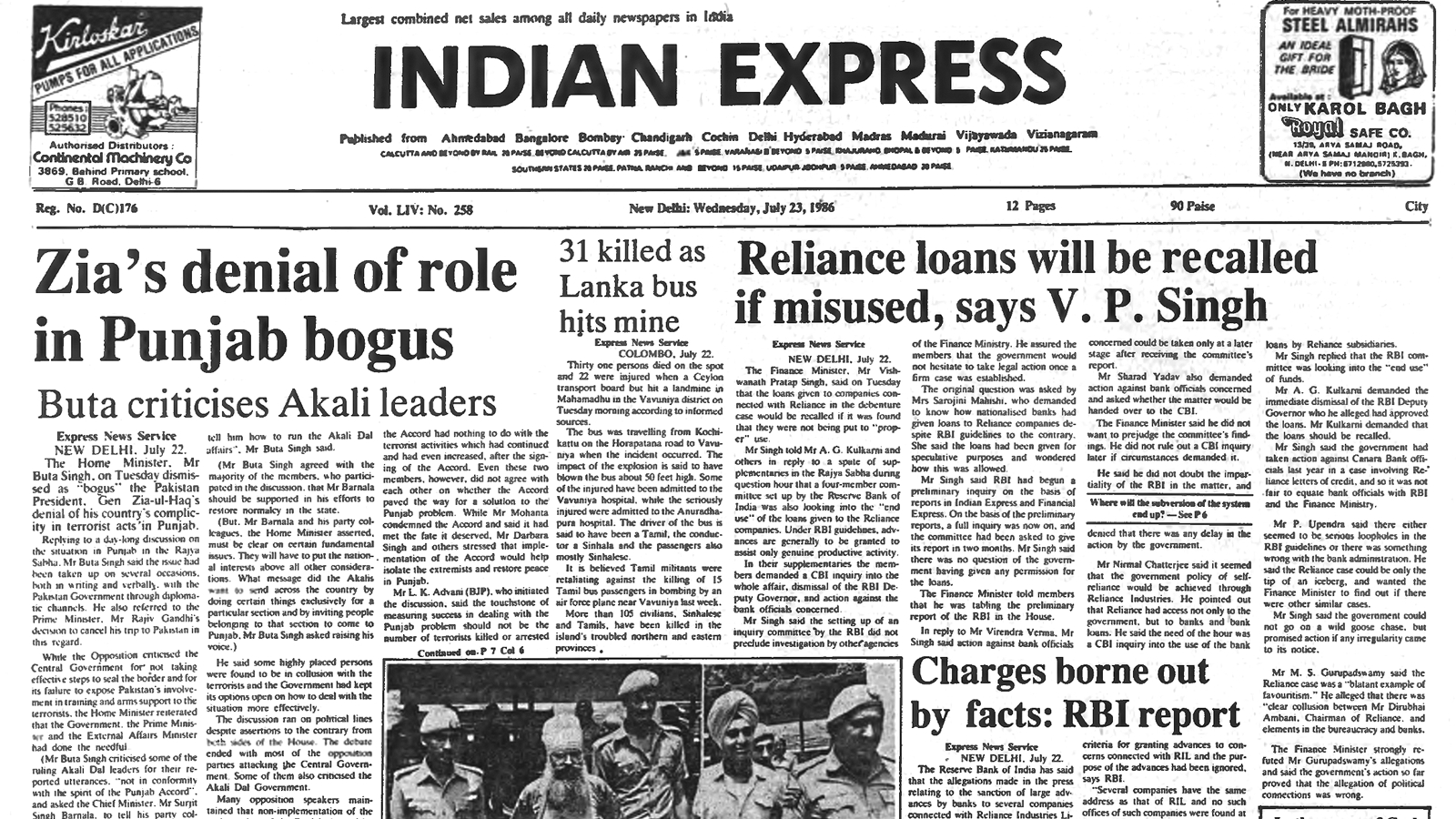
July 23, 1986: Key Events in India