

6 days ago
Gurumurthy Links Ancient Indian Philosophy to Modern Challenges
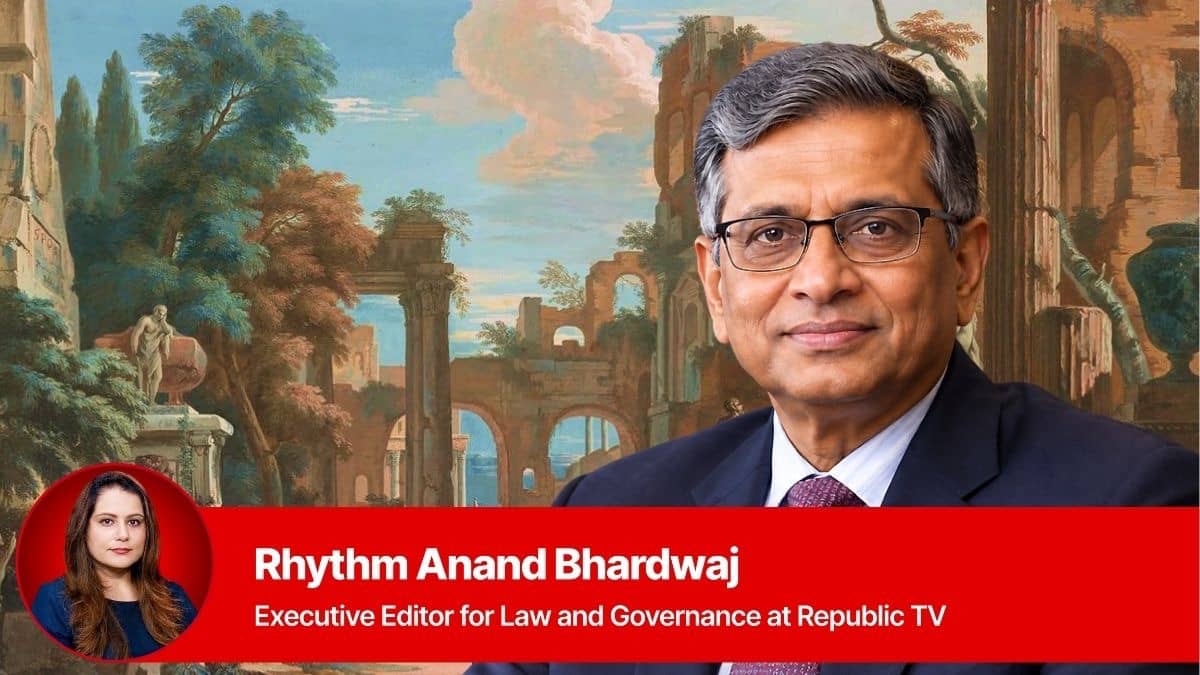
S Gurumurthy spoke about why ancient Indian ideas may still matter today.
He said many old ideas became part of ordinary life instead of staying in books.
Families, festivals, food traditions and village customs helped pass knowledge from one generation to another.
He also said information is not the same as knowledge, and knowledge is not always wisdom.
In his view, families and communities often help people because of duty, not just rules or payments.
He connected some ideas about consciousness and the universe with questions studied by modern science.
He did not say ancient writings should replace science.
He said India can learn from its past while continuing to modernize.

S Gurumurthy delivered the Sri S G Sundaraswamy Memorial Lecture 2026 at Prasanthi Nilayam on September 20.
He argued that ancient Indian philosophy became everyday practice through families, customs, festivals, agriculture and community institutions.
Gurumurthy distinguished information, knowledge and wisdom, warning that modern specialization can fragment understanding.
He presented family and community obligations as forms of social security rooted in dharma and duty.
His discussion connected Advaita and consciousness with questions explored by contemporary physics, while rejecting the idea that ancient texts should replace modern science.
- Who
- S Gurumurthy, who delivered the lecture.
- What
- A lecture examined the relevance of ancient Indian philosophical thought to contemporary life.
- Where
- Sai Hira Global Convention Centre, Prasanthi Nilayam.
- When
- September 20, 2026.
- Why
- To consider how ancient Indian ideas about knowledge, duty, family, nature and restraint might inform modern challenges.
Key facts
- Speaker
- S Gurumurthy
- Event
- Sri S G Sundaraswamy Memorial Lecture 2026
- Date
- September 20, 2026
- Venue
- Sai Hira Global Convention Centre
- Location
- Prasanthi Nilayam
- Central argument
- Ancient Indian philosophy was embedded in everyday cultural practices and remains relevant to contemporary questions.
Sources
Related news
Chandrasekaran Proposes University Blending Hindu Shastras With Modern Sciences
Angmo Urges Government to Treat Education Protests as Wake-Up Call

Amit Shah Urges Asiatic Society to Spread Indian Knowledge

UNESCO Highlights Indigenous Knowledge as India’s Sustainable Future

Sundar Sarukkai’s New Book Explains Logic for a Digital World

Hosabale Presents Integral Humanism as a Global Guiding Model

Gurumurthy Addresses Swara’s Jauhar Remark and Manusmriti Row

Maran Telephone Exchange Case: Gurumurthy's Long Battle Reaches Supreme Court
Gurumurthy: Western Interests Mischaracterise Indian Gen Z as Rebels

Gurumurthy Decodes Reservation Debate, Says Skill Matters More Than Quotas
