2 hrs ago
Germany's Balcony Solar Helps Renters Cut Electricity Bills
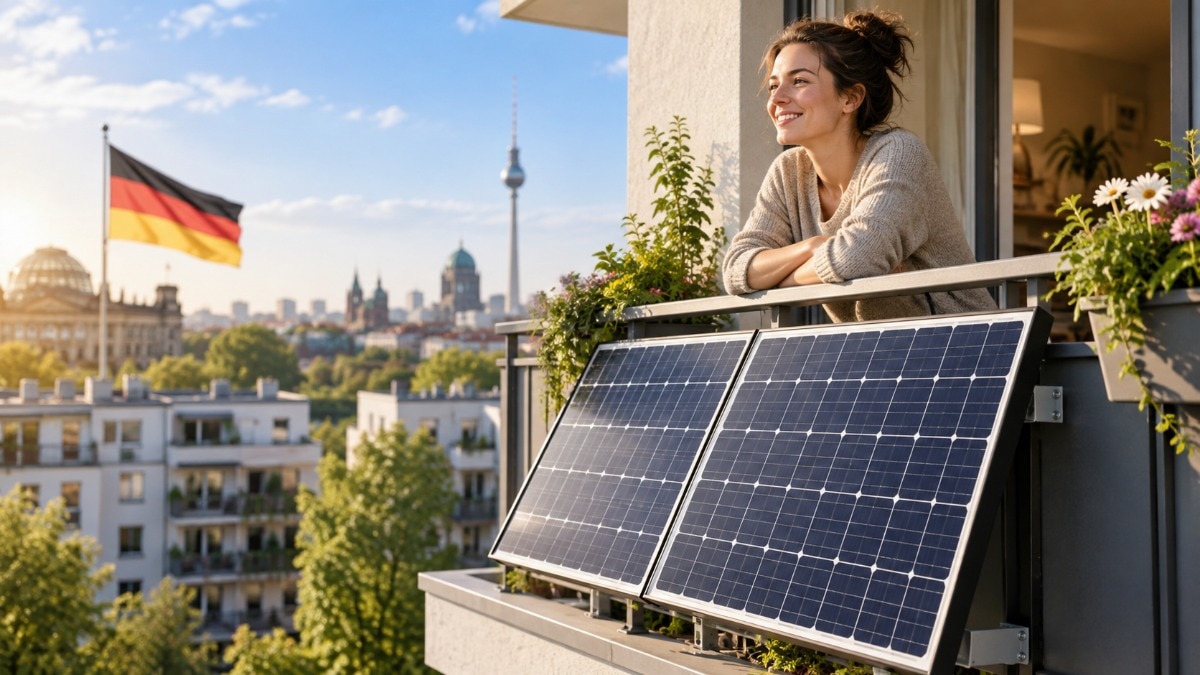
Balcony solar lets people make a small amount of electricity at home.
A renter can attach one or two solar panels to a balcony or wall.
A small device called a microinverter changes the electricity so household appliances can use it.
A basic system costs about 500 euros.
Germany recorded more than 550,000 of these systems by 2024.
New rules made them easier to register and harder for landlords to reject without a good reason.
The systems cannot power an entire country or usually an entire home.
They work best when the sun is shining and appliances are running at the same time.
For some renters, the panels provide savings and a visible way to take part in renewable energy.

More than 550,000 plug-in balcony solar systems were recorded across Germany by 2024.
A typical setup costs around 500 euros and uses one or two panels with a microinverter.
Technical rules introduced in 2019 helped permit standard plugs for feeding power into household circuits.
Germany simplified registration in April 2024 and strengthened renters’ ability to install systems.
The systems are limited to 800 watts but can reduce household bills, depending on sunlight and usage.
- Who
- German renters, homeowners, landlords, property managers, manufacturers and local authorities are involved.
- What
- Small plug-in solar systems are helping apartment residents generate some of their own electricity and reduce power bills.
- Where
- Across Germany, especially on apartment balconies; Berlin and Kiel have offered subsidies.
- When
- Technical rules changed in 2019; a court supported one tenant in October 2023; registration and tenant-rights changes followed in 2024.
- Why
- The systems give renters access to solar power without owning a building’s roof, while helping reduce electricity costs.
Renters and Solar Supporters
Landlords and Property Managers
Access to Solar
Renters and Solar Supporters
Renters say balcony panels provide a relatively affordable way to generate electricity when they cannot install rooftop solar.
Landlords and Property Managers
Landlords and managers may object because tenants’ installations alter apartment buildings and can raise questions about appearance, safety and inspections.
Installation Rules
Renters and Solar Supporters
Supporters favor simplified registration, subsidies and stronger tenant protections against unjustified refusals.
Landlords and Property Managers
Some property managers have required additional inspections or imposed conditions they considered necessary before approving installations.
Household Benefits
Renters and Solar Supporters
Users can reduce electricity bills, monitor production and become more aware of when they consume power.
Landlords and Property Managers
The systems have limited output, depend on placement and weather, and generally cannot meet a household’s entire electricity demand.
Key facts
- Recorded systems
- More than 550,000 balcony solar systems had been recorded in Germany by 2024.
- Typical cost
- A basic setup costs around 500 euros.
- Typical equipment
- One or two solar panels connected to a plug-in microinverter.
- Power limit
- German regulations at the time limited balcony solar installations to 800 watts.
- 2024 capacity
- Balcony photovoltaic capacity reached about 200 megawatts in the first six months of 2024.
- Estimated savings
- One 600-watt system owner estimated annual savings of roughly 100 dollars and a payback period of about five years.
- Potential household share
- The Federal Network Agency estimated that a large, well-positioned system could supply around 15 percent of a household’s electricity.
Sources
Related news
Delhi Approves Free Rooftop Solar Panels for 2.3 Lakh Homes

GK Energy Wins ₹454.50-Crore Solar Deal for 100,000 Homes

Delhi Revises Solar Policy With Free Rooftop Systems
Delhi Expands Rooftop Solar Scheme, Cuts Metering Time

Why Appliance Rentals Follow India’s 11-Month Lease Cycle

Karnataka Accelerates Rooftop Solar Projects for Government Buildings

German watchdog files criminal complaint against Meta over AI glasses