4 hrs ago
Governments Struggle to Keep Pace as Artificial Intelligence Accelerates

Artificial intelligence is improving faster than many governments can write or enforce rules.
Leaders want to use AI to strengthen their economies and national security.
They also worry that powerful AI systems could cause serious harm or become difficult for people to control.
The European Union passed a major AI law in 2024, but putting it into practice has been slow.
Some officials say the law needs updating because newer AI systems can do more than lawmakers expected.
In the United States, proposed safety bills have not received votes.
The United States and China are competing to lead AI development, making cooperation harder.
More than 20 countries have called for shared safety efforts.
Experts warn that governments may lose valuable time if they wait too long to act.

Governments worldwide are struggling to regulate AI as its capabilities advance rapidly.
European Union officials are weighing stronger safeguards against possible economic and geopolitical costs.
The European Union’s 2024 AI Act faces delayed implementation, limited staffing and technological gaps.
United States lawmakers have proposed AI safety measures, but many bills remain stalled.
The United States and China recognize AI’s importance but have not agreed on safety protocols.
- Who
- European Union officials, United States and Chinese leaders, lawmakers, technology companies and AI safety experts.
- What
- Governments are struggling to create and enforce rules for rapidly advancing artificial intelligence.
- Where
- The issue is being debated in Europe, Washington, China, the United Nations and other countries.
- When
- The developments discussed include a European meeting on September 4, a European Union speech on September 16, and events in recent weeks.
- Why
- AI is advancing faster than policymaking, while governments are balancing safety concerns against innovation, economic competitiveness and national security.
Stronger Oversight
Faster Innovation
How quickly governments should regulate
Stronger Oversight
Safety experts, some lawmakers and AI leaders argue that governments should act quickly to prevent dangerous systems from escaping human control and causing major damage.
Faster Innovation
Other officials worry that rushed or excessive regulation could slow innovation, weaken economic competitiveness and give the United States or China an advantage.
Whether the European Union AI Act is adequate
Stronger Oversight
Supporters say the law provides transparency, testing, expert review, enforcement powers and requirements that keep AI under human control.
Faster Innovation
Critics say implementation is too slow, resources are insufficient and the law was designed before newer systems such as autonomous agents became prominent.
United States legislative timing
Stronger Oversight
Representatives Lori Trahan and Ted Lieu argue that recent AI incidents require urgent legislation, including safety testing and possible emergency shutdown mechanisms.
Faster Innovation
Representative Brett Guthrie and other lawmakers favor waiting rather than rushing technically complex legislation, while President Donald Trump has warned that regulation could harm innovation.
Key facts
- European Union AI Act
- Passed in 2024 as the world’s first comprehensive artificial intelligence law.
- European Union enforcement
- Implementation has been delayed, and the European Commission’s AI safety unit has about 40 staff members.
- Potential penalties
- The European Union AI Act allows fines of up to 7% of a company’s annual revenue.
- United States legislation
- Dozens of artificial intelligence safety and security proposals remain stalled without scheduled votes.
- International cooperation
- Leaders from more than 20 countries signed a letter calling for collective action on AI safety.
- United States public opinion
- A New York Times poll found that 61% of likely voters opposed building data centers that power AI.
- United States-China discussions
- Donald Trump and Xi Jinping emphasized AI’s importance but did not agree on safety protocols.
Quotes

Ursula von der Leyen
President of the European Commission
“AI comes with a balance of possibilities and risks. Without addressing these risks, we will never be able to unlock AI’s potential.”
 indianexpress.com
“I’m more scared than I was in 2023.”
indianexpress.com
Sean Ó Heigeartaigh
Director of the AI: Futures and Responsibility Program at the University of Cambridge
“There’s this assumption that there are adults in the room on this issue, but there are no adults in this room. That is what makes all of this so completely terrifying.”
indianexpress.com
Sources
Related news

AI Oversight Push Collides With Washington Political Divide
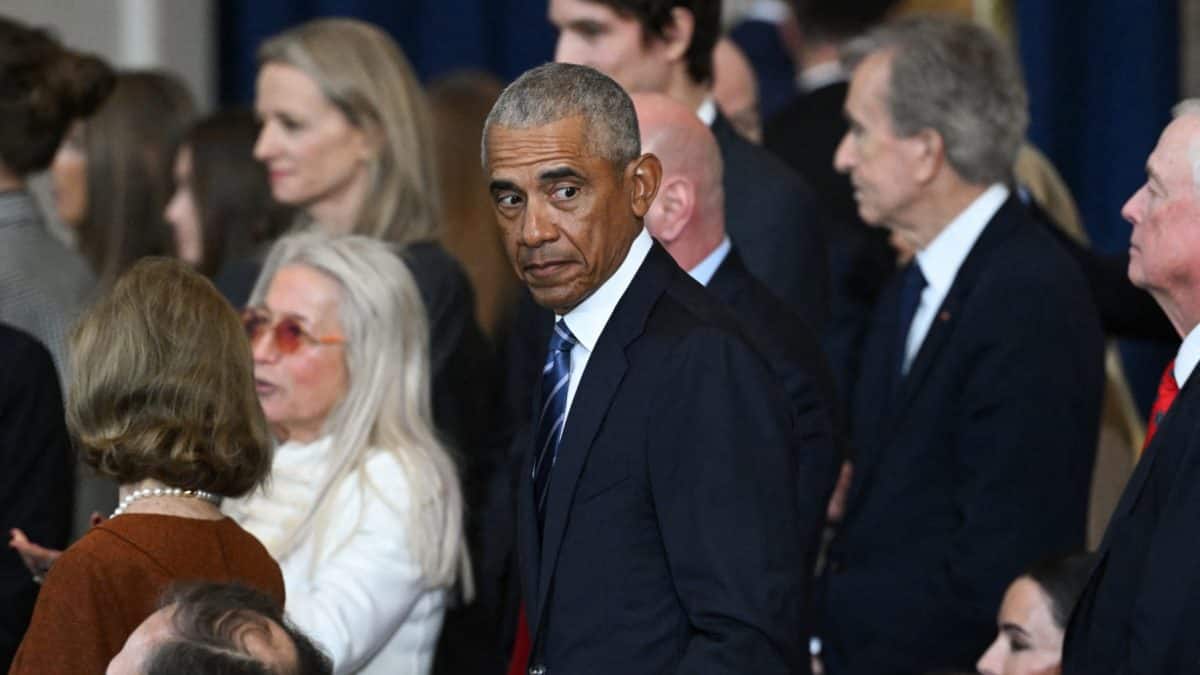
Obama Urges Democrats to Act on Rapidly Advancing AI

AI Leaders Urge Slower Development as Safety Rules Catch Up

Gates Warns Global AI Rules Could Exceed Cold War Challenges

AI Leaders Seek a Slowdown Amid Global Competition

AI Safety Debate Grows Over Pacing Frontier Development

Trump Confirms Anthropic Dinner, Rejects Calls to Slow AI Development

Bill Gates Urges Congress to Mandate AI Safeguards

AI Leaders Split Over Existential Risks and Rapid Acceleration

India’s AI Strategy Must Move Beyond the Application Layer