1 hr ago
UN Projects Slower Global Growth as Geopolitical Risks Rise
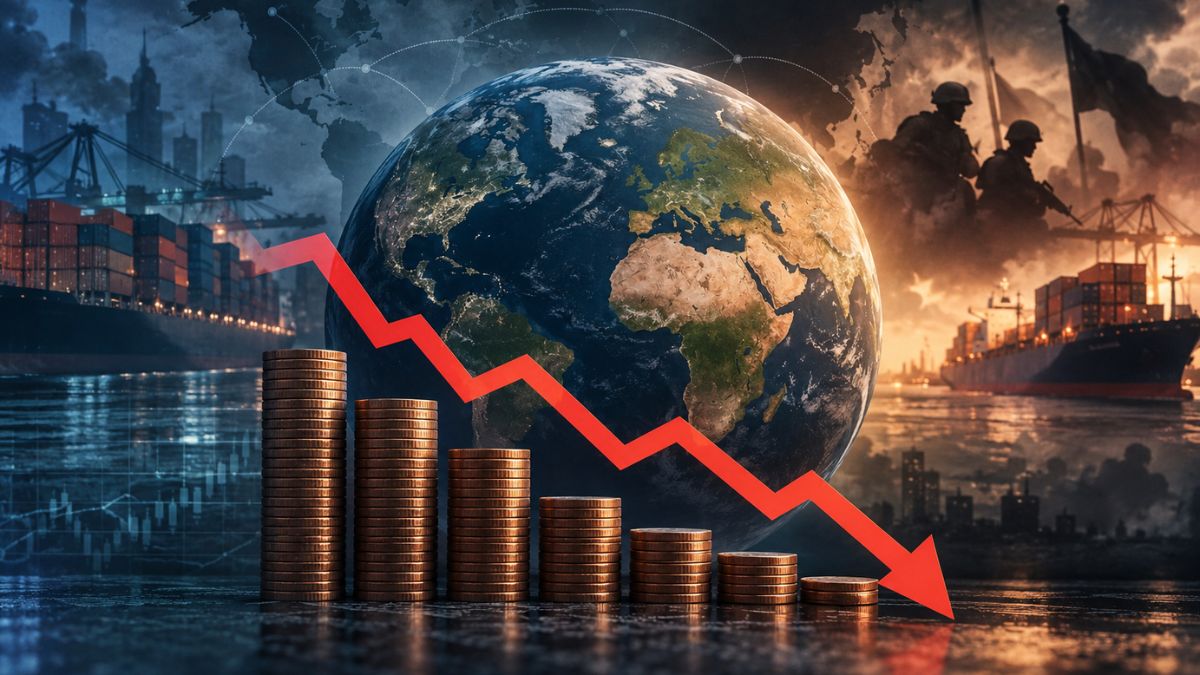
The United Nations says the world economy is likely to grow more slowly in 2026.
Conflicts and higher energy prices make it more expensive for people and businesses to buy and make things.
Trade is worth more money than before, but that does not mean many more goods are being traded, because prices have gone up.
Asia is expected to contribute the biggest share of global growth.
Some developing countries may miss out on the most valuable parts of industries such as technology and clean energy.
UNCTAD says countries can benefit more by building local industries, working together regionally and using more renewable energy.

UNCTAD projects global economic growth will slow to 2.6% in 2026, from 2.9% in 2025.
Geopolitical tensions, higher energy costs, borrowing costs and financial uncertainty are weighing on growth.
Asia is expected to generate 59% of global growth, with India forecast at 7.3%, Indonesia at 5.2% and China at 4.5%.
Global trade reached a record $35 trillion in 2025, but rising prices—especially for energy—are lifting trade values faster than trade volumes.
UNCTAD urges developing countries to build higher-value industries, strengthen regional trade and diversify energy sources.
- Who
- The United Nations Conference on Trade and Development (UNCTAD), which issued the Trade and Development Report 2026.
- What
- UNCTAD projects global economic growth will slow to 2.6% in 2026, while highlighting trade, investment and development challenges.
- Where
- The forecast concerns the global economy, with particular discussion of Asia and developing economies.
- When
- The report forecasts growth for 2026 and compares it with 2025.
- Why
- Geopolitical tensions, higher energy prices, borrowing costs, volatile capital flows and uncertainty over trade and investment policies are cited as pressures.
UNCTAD's assessment
Trade and policy trends
Meaning of rising trade values
UNCTAD's assessment
UNCTAD warns that higher trade values do not necessarily mean a similar rise in the volume of goods traded; price increases are a major factor.
Trade and policy trends
The report also expects global trade in goods and services to expand by about 4% at constant prices in 2026.
Policy approaches to growth
UNCTAD's assessment
UNCTAD recommends coordinated industrial, financial and technology policies, regional cooperation, and investment in domestic capabilities.
Trade and policy trends
The report describes governments using different tools: trade policy is prominent in many economies, while financial policy and, in the United States, public procurement and local-content measures also play substantial roles.
Addressing inflation
UNCTAD's assessment
UNCTAD argues that easing supply constraints, particularly in energy, can be more effective against supply-driven inflation than relying only on broad monetary and fiscal tightening.
Trade and policy trends
The report notes that higher energy costs are contributing to inflation and that borrowing costs and financial uncertainty are already weighing on investment and growth.
Key facts
- Global growth forecast
- 2.6% in 2026, down from 2.9% in 2025.
- Global trade
- Reached a record $35 trillion in 2025; goods and services trade is expected to expand by about 4% at constant prices in 2026.
- Asia's contribution
- Expected to account for 59% of global economic growth in 2026.
- Selected growth forecasts
- India: 7.3%; Indonesia: 5.2%; China: 4.5%.
- Development assistance
- Official development assistance is projected to fall by almost 7% in 2026, its third consecutive annual decline.
- US-China trade
- Trade between the United States and China has fallen by more than 20% since 2024.
- Greenfield investment
- Developed economies captured around 70% of announced greenfield investment in high-value strategic sectors between 2020 and 2025.
Sources
Related news
WTO Raises 2026 Global Trade Growth Forecast to 3.9%

Shaktikanta Das Urges Global South to Seize Eastward Economic Opportunities

OECD Says Global Economy Resilient Despite Mounting Threats

Global South Urged to Diversify Trade and Energy Sources
UN Report Sees India Leading Growth on Domestic Demand, Infrastructure

India’s Finance Ministry Sees 7.3% Q2 Growth Amid Risks
Sri Lanka Weighs Aid for 19 Iranian Ships Amid Sanctions Concerns

China Plans AI Risk Systems, Accountability for Reckless Tech Investment
India Uses Growing Arms Exports to Expand Strategic Influence