3 weeks ago
Punjab Police's Counterterrorism Campaign That Dismantled Khalistani Terror Networks
A long time ago, armed groups called Khalistani terrorists attacked police officers and villages in the Indian state of Punjab.
They were very dangerous and had better guns than the police.
The police were scared and could not stop them, even after a senior officer named Avtar Singh Atwal was killed.
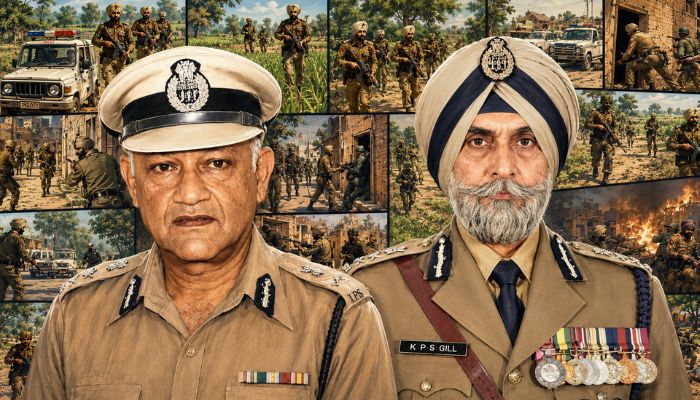
New leaders, Julio Ribeiro and KPS Gill, changed how the police worked.
Instead of staying at fixed checkpoints, police teams moved quickly and collected information from local people.
Teams found the people who hid or helped the terrorists and kept up pressure until the groups could not raise money, hide or find new fighters.
The police eventually won, and Punjab held elections again in 1992.
But some police officers did terrible things during the fight, like hurting people who were never proven guilty.
Years later, courts punished some of those officers.
People remember this hard time differently because different families suffered in different ways.

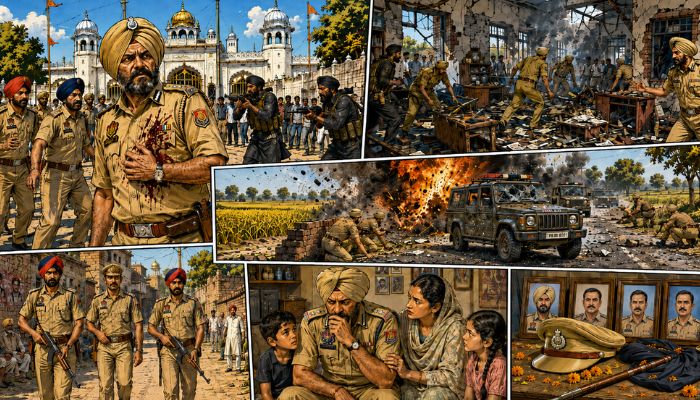
DIG Avtar Singh Atwal was shot dead outside the Golden Temple in Amritsar on 25 April 1983, an early symbol of the state's loss of authority.
Under Julio Ribeiro and KPS Gill, Punjab Police shifted from static posts to mobile patrols, local intelligence networks and better weapons, expanding from about 35,000 to roughly 60,000 personnel.
Operation Black Thunder in 1988, led by Punjab Police with the National Security Guard and other central forces, relied on containment and surrender rather than repeating the scale of Operation Blue Star.
Official Union Home Ministry figures recorded 1,196 encounters between January and November 1991, with 2,030 terrorists killed, 1,842 apprehended and 474 security force personnel killed.
Khalistani organisations were eventually suffocated through leadership targeting, disrupted financing, factionalism and the return of elected government in February 1992, yet documented police crimes and unresolved allegations remain part of the history.
- Who
- Punjab Police leaders Julio Ribeiro and KPS Gill led a force that grew from about 35,000 to roughly 60,000 personnel, opposed to Khalistani terrorist organisations; the National Security Guard, Intelligence Bureau and other central forces supported the campaign, and the CBI later pursued accountability cases.
- What
- The dismantling of organised Khalistani terrorism in Punjab through mobile patrols, local intelligence networks, targeted operations against commanders and logistics, and the eventual restoration of elected government in February 1992.
- Where
- Punjab, India, including Amritsar, the Golden Temple, Jalandhar, Tarn Taran and rural villages across the state.
- When
- From the assassination of DIG Avtar Singh Atwal on 25 April 1983 and intense violence in 1988 to the collapse of the campaign by the early 1990s; elections were held on 19 February 1992, and accountability cases continued into 2025 and 2026.
- Why
- Conventional policing failed because terrorist groups killed witnesses, informers and police personnel; the state rebuilt the police so it could protect public life and restore control against organisations that attacked the entire criminal-justice process.
Supporters of the Security Campaign
Human Rights Critics
Severity of counterterrorism methods
Supporters of the Security Campaign
Relentless pressure was necessary because terrorist organisations murdered witnesses, policemen and civilians; by its principal security objective the strategy succeeded and state control was restored.
Human Rights Critics
Unlawful methods weakened the rule of law and punished people who had never been convicted of a crime; human-rights organisations documented allegations of arbitrary detention, torture, secret custody and disappearances.
Police encounters
Supporters of the Security Campaign
Police faced organisations equipped with automatic weapons and nearly 1,800 personnel were killed; it would be wrong to present every encounter as fake.
Human Rights Critics
Families and human-rights organisations claimed some victims had already been detained and were later killed in staged operations; court judgments established that some police personnel committed serious crimes.
Recruiting informers
Supporters of the Security Campaign
Local informers and spotters were indispensable, and rewards, protection and relocation were used to keep sources alive; assistance given under fear should be distinguished from voluntary support.
Human Rights Critics
There were allegations that coercion, illegal detention and threats against relatives were sometimes used to recruit informers or obtain information.
Key facts
- Terrorism-period police deaths
- Service citations prepared for 1,784 personnel killed; nearly 1,800 police and security personnel killed overall
- Force strength
- Expanded from approximately 35,000 to around 60,000 personnel
- Atwal assassination
- 25 April 1983, outside the Golden Temple, Amritsar
- Operation Black Thunder
- 1988; police-led containment and surrender with the National Security Guard and central forces
- Official 1991 figures (Jan-Nov)
- 1,196 encounters; 2,030 terrorists killed; 1,842 apprehended; 474 security forces killed
- 1992 election
- Held 19 February 1992; elected government assumed office on 25 February after years of President's Rule
- August 2025 conviction
- A CBI court sentenced five retired Punjab Police personnel to life imprisonment in a fake-encounter case involving men abducted in 1993
- July 2026 conviction
- Ex-Punjab Police cop Kashmir Singh sentenced to 5 years' rigorous imprisonment for abducting Sikh man Baljit Singh, 35 years after the incident
Quotes

Julio Ribeiro
Former commissioner of Punjab Police, in 1986 during the early insurgency response
“The phrase "bullet for bullet" became closely associated with Ribeiro, but he later said that he had not used those precise words.”
 opindia.com
“The police would be trained to fight back and use their weapons in self‑defence.”
opindia.com
Sources
Related news
Khalistani Terror Attacks Pushed Punjab Police Toward Brutal Retaliation

Punjab Faces Alleged Rise in ISI-Linked Terror-Crime Attacks

Punjab Police busts ISI-sponsored Babbar Khalsa International terror module

Punjab Police Bust Two ISI-Backed Terror Modules Targeting Jantar Mantar

Amritsar Police Commissioner Transferred Amid Row Over ISI-Jantar Mantar Remarks
Police Brutality Against Student Protesters in Delhi

Thousands Join Mumbai Walkathon for Road Safety

Kripa Foundation's Global Impact on Addiction Recovery