

1 hr ago
BRICS Summit Tests India’s Balancing Act Amid Global Turmoil
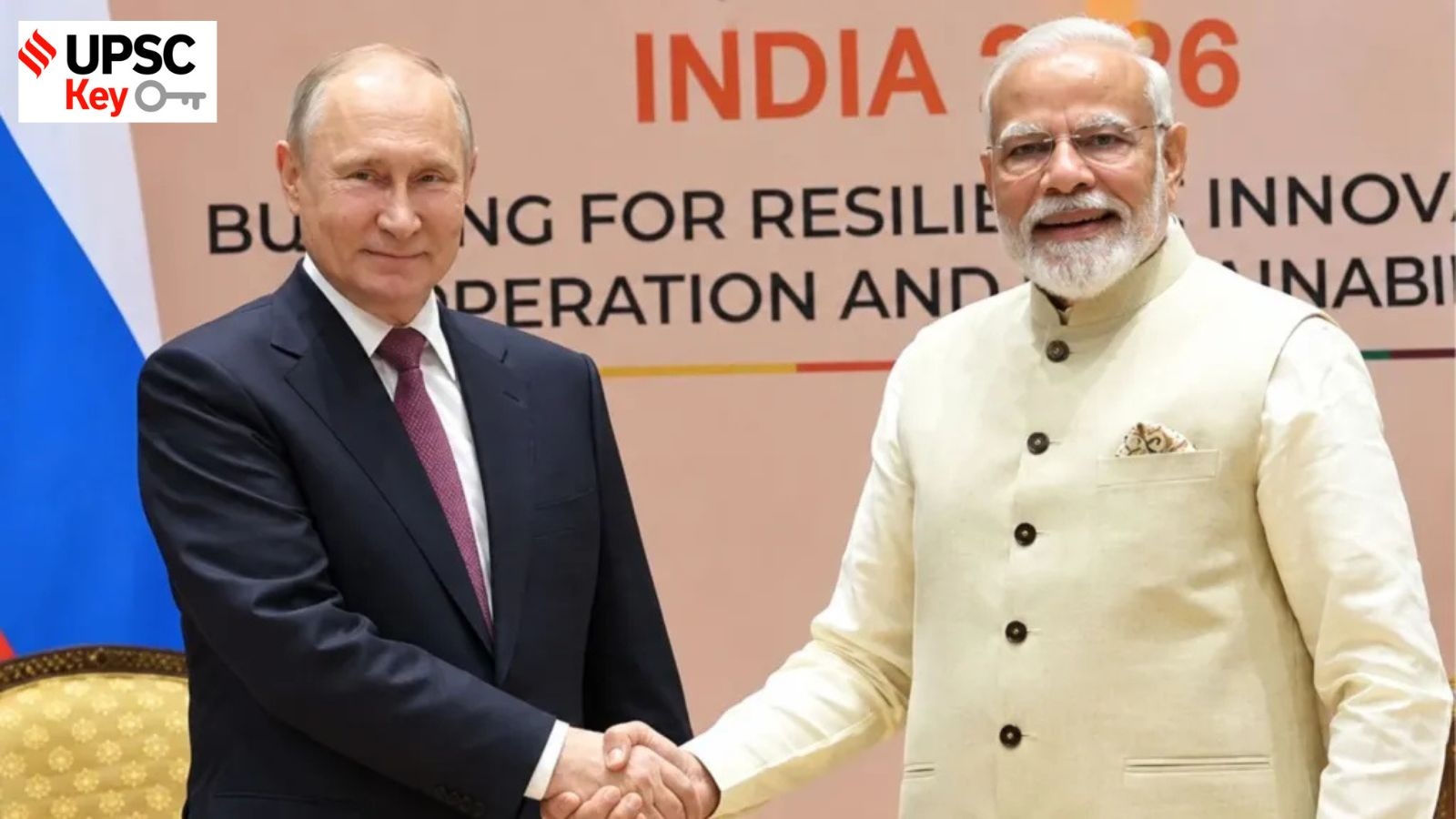
BRICS is a group of large developing countries that meet to discuss global problems.
India hosted its 18th meeting and wanted the group to give countries more choices without becoming an anti-Western alliance.
The members discussed using their own currencies and connecting digital payment systems to make trade easier.
They also talked about keeping shipping routes safe and building new transport links.
This matters because fighting near the Strait of Hormuz has disrupted energy supplies.
Reports also said that Houthi forces took control of Perim Island near the Bab el-Mandeb Strait, an important route for ships.
India and the European Union moved closer to a trade agreement, but the agreement was not yet fully approved.
India also had important talks with Russia and China during the summit.
These developments show how trade, security and diplomacy are closely connected.

India hosted the 18th BRICS Summit as members debated global governance, trade, security and the role of the Global South.
Prime Minister Narendra Modi promoted secure sea lanes, open supply routes, local-currency trade, linked payment systems and diversified supply chains.
Russian President Vladimir Putin backed energy and food-security cooperation and the Arctic and North-South transport corridors.
The European Commission forwarded the India–European Union trade agreement for approval, but it still requires further European and Indian procedures before entering into force.
Reports that Houthi forces captured Perim Island and nearby Dhubab highlighted risks to the Bab el-Mandeb, while disruption around the Strait of Hormuz continued to affect energy markets.
- Who
- The 11 BRICS members, including India, China, Russia, Brazil and Iran, participated in discussions hosted by Prime Minister Narendra Modi; the European Union and Houthi forces were involved in separate developments covered in the reports.
- What
- The 18th BRICS Summit addressed global governance, trade, payment systems, energy security, supply chains and maritime security, alongside progress on an India–European Union trade agreement and reported Houthi control of Perim Island.
- Where
- The summit was held in New Delhi, while the maritime developments concerned Perim Island and the Bab el-Mandeb Strait near Yemen, Djibouti and Eritrea.
- When
- The developments occurred around the 18th BRICS Summit, with key announcements made on the Friday and Saturday described in the reports.
- Why
- The participants sought stronger cooperation among emerging economies, more resilient trade and payment arrangements, secure transport routes and greater representation in global institutions.
BRICS as Greater Strategic Autonomy
BRICS as a Potential Counter-Bloc
Relationship with the West
BRICS as Greater Strategic Autonomy
India and Brazil view BRICS as a platform for a more representative international system, greater policy choices, trade, technology and investment, rather than as an anti-Western alliance.
BRICS as a Potential Counter-Bloc
Critics argue that the growing influence of China and Russia could turn BRICS into a counter-bloc challenging the United States and the existing international order.
Local-currency trade and payment systems
BRICS as Greater Strategic Autonomy
Supporters say local-currency trade and linked payment systems could reduce transaction costs, strengthen resilience and lessen dependence on the United States dollar.
BRICS as a Potential Counter-Bloc
The reports also highlight challenges from divergent economic systems, unequal financial weight among members and the practical difficulty of creating efficient cross-border payment arrangements.
India–China engagement
BRICS as Greater Strategic Autonomy
Improved ties, including direct flights, border trade, travel and investment measures, could support trade and help India use BRICS for economic cooperation.
BRICS as a Potential Counter-Bloc
China’s much larger economy, India’s trade deficit and unresolved security concerns make Beijing’s influence a major challenge for India and for BRICS cohesion.
Key facts
- BRICS membership
- The grouping has 11 full members: Brazil, China, Egypt, Ethiopia, India, Indonesia, Iran, Russia, Saudi Arabia, South Africa and the United Arab Emirates.
- BRICS evolution
- BRIC began in 2006 with Brazil, Russia, India and China; South Africa joined in 2010, and five additional members joined in 2024. Indonesia became a full member in January 2025.
- BRICS economic weight
- The expanded grouping accounted for approximately 36.8% of global GDP on a purchasing-power-parity basis in 2024, compared with below 29% for the G7.
- India–European Union trade
- The European Union said the proposed agreement would reduce or eliminate tariffs on 96% of its goods exports to India and could save European exporters about €4 billion annually in duties.
- Energy dependence
- The reports state that about 40% of India’s crude-oil imports, 60% of its liquefied-natural-gas imports and 90% of its liquefied-petroleum-gas imports regularly came through the Strait of Hormuz.
- Bab el-Mandeb
- The strait connects the Red Sea with the Gulf of Aden, is about 29 kilometres wide at its narrowest point and normally carries around 12% of global trade.
- Global financial concerns
- The reports said United States debt had exceeded $40 trillion, while the 10-year Treasury yield was moving toward 5% amid concerns about debt, oil prices and trade tensions.
Quotes

European Union
The European Union, in a statement on the proposed India-EU trade agreement
“If authorised by the Council, this will be the largest trade agreement ever concluded by both the EU and India. Once adopted and entered into force, the agreement will improve market access, reduce tariffs, tackle unnecessary trade barriers, as well as provide predictable rules for trade and investment between the EU and India.”
 indianexpress.com
“I would urge the BRICS member countries and partner countries to link our payment systems, trade in each other’s local currencies, make digital trade global and build together for the future emerging technologies.”
indianexpress.com
Sources
Related news

BRICS Forum Focuses on Secure Sea Lanes and Local Currencies
Why Cooperation Between India and China Could Reshape BRICS

BRICS Members Seek Alternatives, But Fall Short of Unity
India Seeks BRICS Consensus Amid West Asia War, Sanctions Pressure

India Puts Global South at Centre of BRICS Summit

Houthi Capture of Strait Island Raises Saudi Oil Risks

Iran President Rejects US Regional Police Role Amid Conflict

Energy Prices Raise Winter Crisis and Interest Rate Fears
Anwar Ibrahim Blames Initial US-Israel Aggression for Iran Conflict
