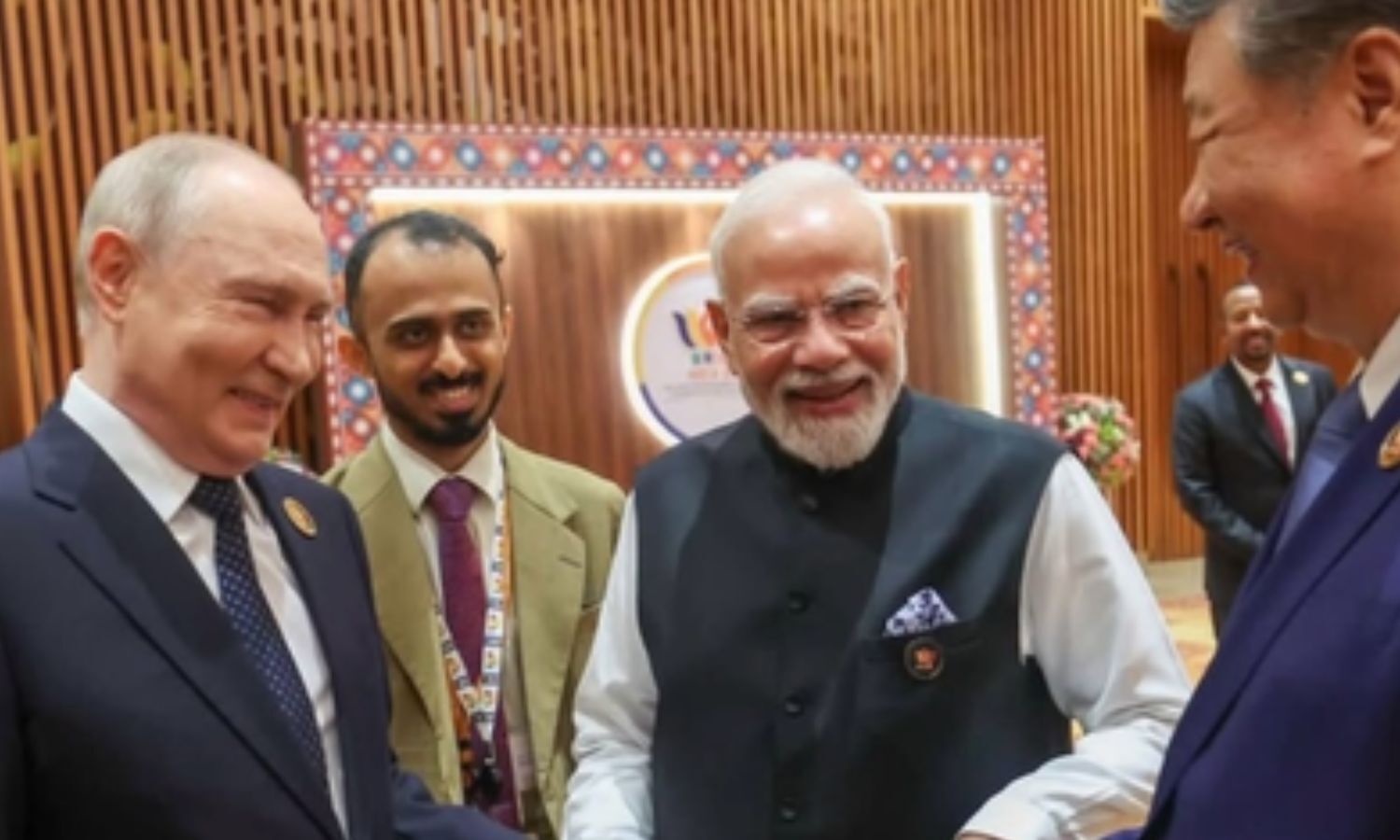
1 day ago
BRICS Members Seek Alternatives, But Fall Short of Unity

BRICS is a group of countries that cooperate on money, trade, and development.
It began after a major financial crisis in 2008.
The group now includes several large emerging economies and some newer members.
Russia values BRICS because it gives Moscow trading partners and friends while it faces sanctions.
China benefits from the group but still trades extensively with the United States.
Saudi Arabia and the United Arab Emirates see BRICS as another option, not as a replacement for their American relationships.
India wants the group to work on practical issues such as payments, climate finance, and fairer trade.
The article argues that BRICS could help the global economy, but disagreements and ongoing wars limit what it can accomplish.

BRICS began after the 2008 financial crisis to address market volatility and reform global finance.
Russia uses BRICS to reduce isolation, expand national-currency trade, and maintain diplomatic support amid the Ukraine war.
China gains influence from BRICS but remains economically tied to the United States and does not depend heavily on the grouping.
Saudi Arabia and the United Arab Emirates use BRICS to widen their options while preserving strong ties with Washington.
India wants BRICS to focus on practical cooperation, financial reform, climate finance, trade rules, and ending the two wars.
- Who
- BRICS member and partner countries, including Brazil, Russia, India, China, South Africa, Saudi Arabia, the United Arab Emirates, Iran, Egypt, Ethiopia, and Indonesia.
- What
- The article assesses what major BRICS countries want from the grouping and whether it can challenge the existing global financial order.
- Where
- The grouping operates internationally; the summit location is not specified.
- When
- The assessment comes in the run-up to a BRICS summit; no specific summit date is given.
- Why
- Members seek alternatives in trade, payments, finance, energy, and diplomacy, while pursuing greater influence and protection from geopolitical and economic pressure.
BRICS as a Global Alternative
BRICS as a Limited Forum
Challenge to Western dominance
BRICS as a Global Alternative
BRICS enables national-currency trade, creates financial alternatives, and gives members diplomatic support outside Western-led institutions.
BRICS as a Limited Forum
Members have different interests, remain economically connected to the United States and Europe, and have not demonstrated enough policy coordination to replace existing systems.
De-dollarisation
BRICS as a Global Alternative
Local-currency payments and proposed BRICS payment mechanisms could reduce dependence on the dollar and the petrodollar system.
BRICS as a Limited Forum
The article says most members are seeking flexibility rather than a common BRICS currency, and that China is the main member with a strong interest in reducing dollar dominance.
Russia's role
BRICS as a Global Alternative
BRICS has helped Russia maintain trade, political relationships, and support despite sanctions and international isolation.
BRICS as a Limited Forum
The Ukraine war creates divisions and weakens BRICS's ability to pursue financial reform; the article argues that ending the war is necessary for the group to become more effective.
Key facts
- Origin
- BRICS emerged after the 2008 global financial crisis.
- Original focus
- Market volatility, energy, and reform of the global financial system.
- Financial institutions
- The New Development Bank and Contingent Reserve Arrangement were established to support development and currency stability.
- Russia-BRICS trade
- Russia's trade with BRICS countries exceeds $330 billion, representing about 35% to 40% of its global trade, according to the article.
- Recent expansion
- Iran, Egypt, Ethiopia, the United Arab Emirates, and Saudi Arabia joined in 2024, while Indonesia joined the following year.
- Climate finance goal
- The Baku-to-Belém Roadmap seeks to scale climate finance for developing countries toward $1.3 trillion annually by 2035.
- Saudi-US investment
- Saudi Arabia has promised to invest $600 billion in the United States, while the United States has approved major arms sales to Riyadh.
Sources
Related news

BRICS Leaders Meet in New Delhi Amid Global Tensions
BRICS Summit Tests India’s Vision Amid U.S. Pressure

Trump’s Policies Are Strengthening BRICS as India Seeks Consensus

BRICS Expands While Facing Geopolitical Divisions and Challenges
BRICS Summit Reaches Consensus Amid Global Tensions

India Hosts BRICS Summit as Iran War Tests Unity

India’s Bizarre Headlines Span Textbooks, Towers, SUVs and Fake Officials
Congress Accuses Modi of Capitulation After China Talks
Sridhar Vembu Urges India to Consider Leaving UN
Mehbooba Mufti Accuses Modi of Compromising India’s Values
India, Iran Discuss Economic Cooperation as BRICS Engagement Deepens