

1 hr ago
Houthi Capture of Strait Island Raises Saudi Oil Risks

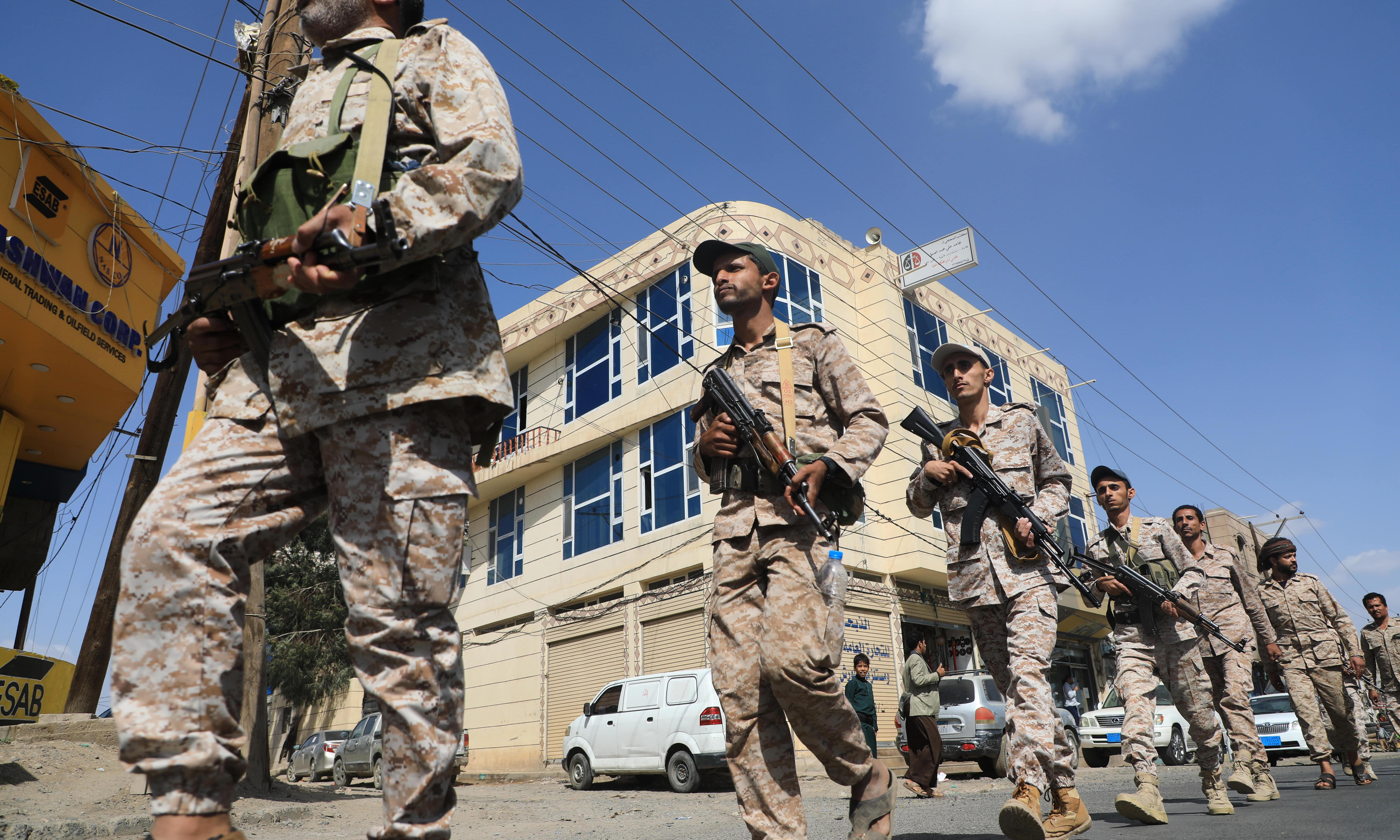
The Houthis, an armed group in Yemen, made a major advance toward the Red Sea.
They captured Mokha and then Mayyun Island in the Bab el-Mandeb Strait.
This gives them a position near an important route used by ships.
Saudi Arabia’s biggest oil facilities are still very far away and cannot be reached by the Houthis over land.
However, Saudi Arabia shut down a pipeline that normally carries oil around the Strait of Hormuz.
At the same time, the Strait of Hormuz is also largely blocked because of a separate conflict involving the United States and Iran.
This means two important oil routes are under pressure at once.
Saudi Arabia has used airstrikes, while the United States has not sent troops.
Oil prices rose as traders became more worried about possible supply disruptions.

The Houthis captured Yemen’s port city of Mokha and Mayyun Island in a nine-day offensive.
Mayyun Island gives the group visibility over both shores of the 28-kilometre Bab el-Mandeb Strait.
Saudi Arabia’s Ras Tanura and Abqaiq oil facilities remain about 1,650 kilometres away, beyond ground range.
Saudi Arabia shut its East-West pipeline after further drone strikes, removing a Red Sea bypass for oil exports.
Brent crude stayed above $100 a barrel as the advance coincided with continued disruption around the Strait of Hormuz.
- Who
- The Houthis, Yemen’s internationally recognised government, Saudi Arabia, the United States and Iran are involved in the broader crisis.
- What
- The Houthis captured Mokha and Mayyun Island after a nine-day offensive, while Saudi Arabia shut its East-West oil pipeline after further drone strikes.
- Where
- The fighting occurred in western Yemen near Taiz, Hodeidah, Mokha and the Bab el-Mandeb Strait; Saudi oil hubs lie on the opposite Gulf coast.
- When
- The offensive began on September 3, 2026; Mokha fell on September 10 and Mayyun Island was captured on September 11.
- Why
- The advance matters because it places the Houthis beside a major shipping chokepoint while Saudi Arabia’s Red Sea oil bypass is unavailable and the Strait of Hormuz remains constrained.
Immediate Intervention and Risk
Distance and Nonintervention
Whether the advance requires direct U.S. action
Immediate Intervention and Risk
Saudi Arabia sought direct U.S. military action against the Houthis, according to reports, while Saudi forces continued airstrikes.
Distance and Nonintervention
The United States had not committed forces and said it remained in continuous dialogue with Saudi Arabia.
Meaning of the advance for Saudi oil
Immediate Intervention and Risk
The pipeline shutdown and simultaneous pressure on the Bab el-Mandeb and Hormuz chokepoints increase the risk of broader oil-supply disruption.
Distance and Nonintervention
Ras Tanura and Abqaiq remain about 1,650 kilometres away and outside the Houthis’ ground range, so the capture does not represent a direct ground threat to those hubs.
Key facts
- Territorial gains
- The Houthis captured Mokha and Mayyun Island during the nine-day offensive.
- Bab el-Mandeb width
- The strait is approximately 28 kilometres wide.
- Distance to Saudi oil hubs
- Ras Tanura and Abqaiq are roughly 1,650 kilometres from Mokha and 1,715 kilometres from Mayyun.
- Saudi pipeline action
- Saudi Arabia shut its East-West pipeline as a precaution after further drone strikes.
- Oil price
- Brent crude closed above $100 a barrel for three consecutive sessions.
- Saudi casualties and damage
- Drone and missile strikes on four Saudi border cities wounded more than 70 people and caused fires at oil and utility sites.
- U.S. response
- Washington said it remained in continuous dialogue with Riyadh, but no U.S. forces had deployed.
Sources
Related news

Houthis Reach Perim as Trump Rejects Saudi Strike Request

Saudi Pipeline Shut as Houthis Seize Strategic Red Sea Island
Houthis Near Control of Strategic Bab el-Mandeb Strait

Houthis Seize Mayun, Threatening Key Red Sea Shipping Route
Houthis Seize Yemen’s Mocha, Raising Fresh Red Sea Shipping Risks

Houthi Advances Raise Stakes Around Yemen’s Red Sea Coast

Iran President Rejects US Regional Police Role Amid Conflict

Energy Prices Raise Winter Crisis and Interest Rate Fears
Modi Urges BRICS to Reform UNSC, Empower Global South

Anwar Ibrahim Blames Initial US-Israel Aggression for Iran Conflict
